

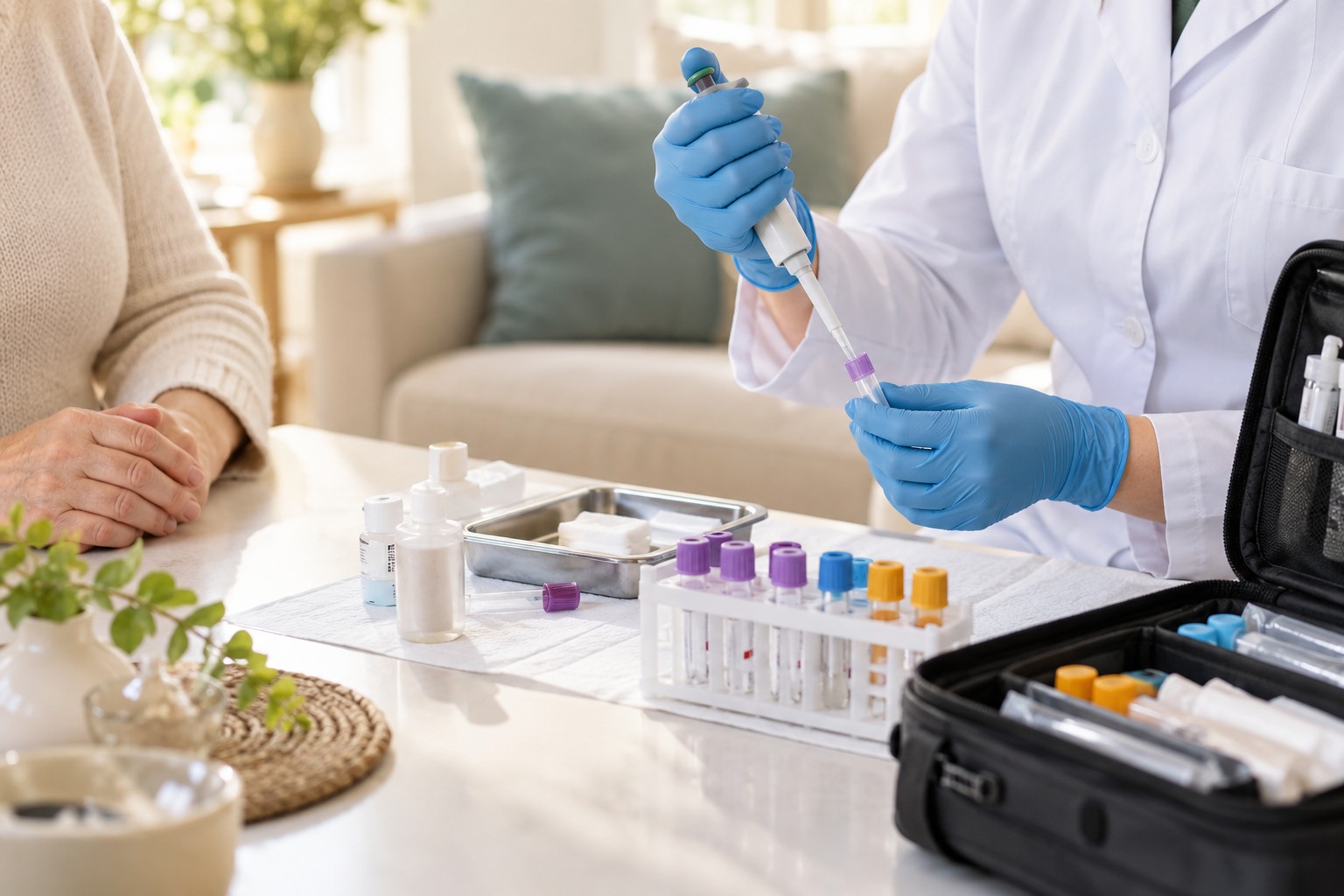
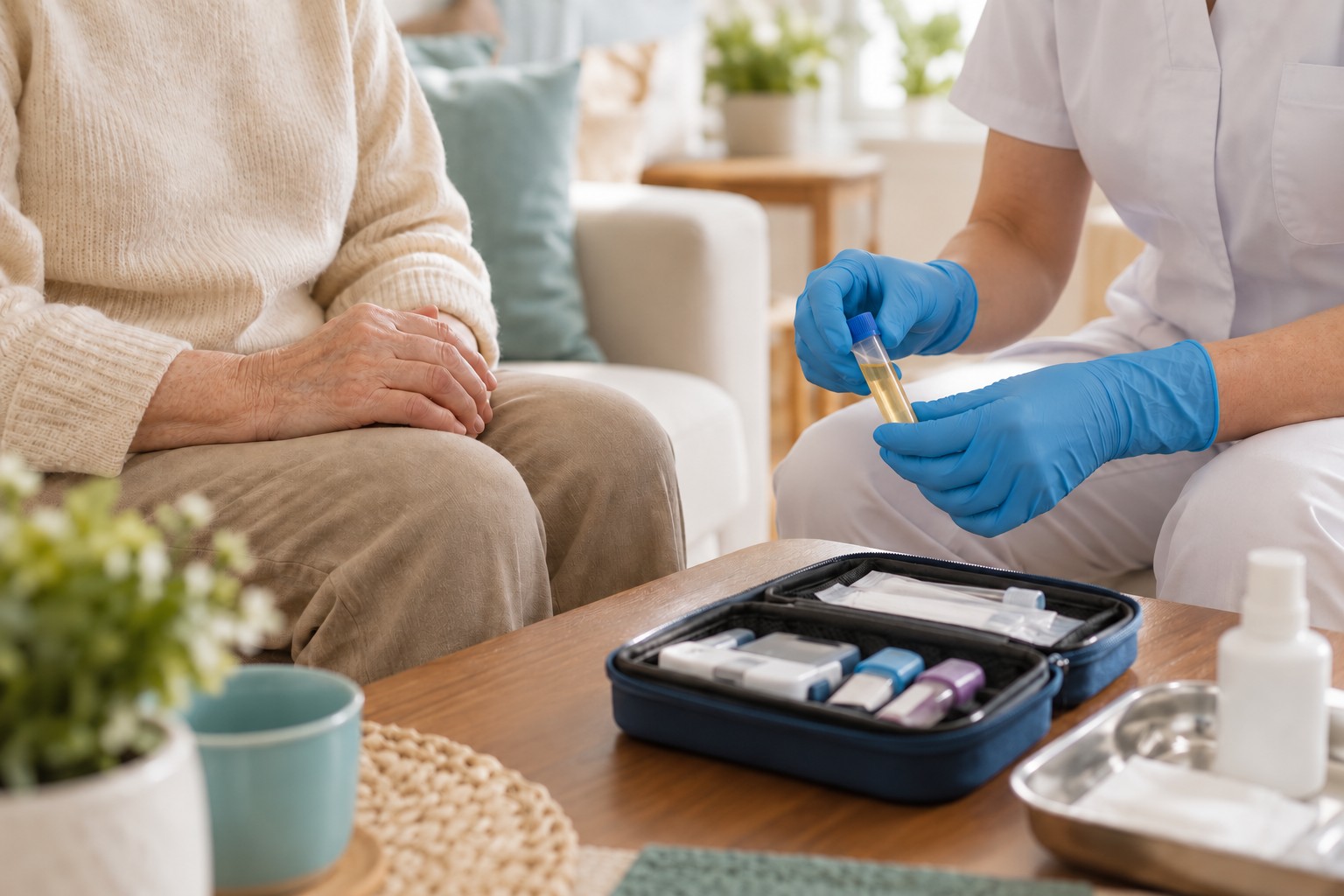
The HLA-B27 test uses PCR to look for the HLA-B27 tissue-type gene, which is associated with ankylosing spondylitis and other spondyloarthritides; the result supports a diagnosis but does not make one on its own. Your blood sample can be collected at your home or workplace.
- Sample
- Blood
- Fasting
- Not required
- Turnaround time
- As soon as possible
- Test group
- Genetic Tests
Preparation: No fasting is needed; the sample can be given at any time of day. Painkillers and rheumatism medications do not affect the result; mention it if you have had a bone marrow transplant.
Insurance: We work with private health insurers. For this test, we obtain the pre-approval and collect your sample once approval is received. Insurance and payment
Contents
What is HLA-B27?
HLA-B27 is one of the tissue-type (HLA) molecules that help the immune system tell the body's own cells apart from foreign substances. It is an inherited trait, passed on from the mother or the father. Most people who carry HLA-B27 are healthy; however, this gene is strongly associated with the inflammatory rheumatic diseases called spondyloarthritis, which affect the spine and joints, ankylosing spondylitis in particular.
The HLA-B27 test uses PCR to look for this gene in DNA extracted from blood. The result is reported as positive or negative and, because it reflects the person's genetic makeup, it does not change throughout life; for this reason, the test is usually done only once. HLA-B27 is not a marker of inflammation; it does not show disease activity or the response to treatment. For this information, other blood tests such as CRP and ESR (sedimentation rate) are used, together with examination findings.
When is the HLA-B27 test ordered?
Your doctor may order this test as part of assessing a spondyloarthritis diagnosis, especially for low back or back pain that begins in young adulthood and has inflammatory features. The test is interpreted together with findings such as the physical examination, inflammatory markers and imaging of the sacroiliac joints.
- Low back pain lasting more than three months that gets worse with rest and better with movement
- Marked low back and back stiffness in the morning
- Waking at night because of pain, and pain spreading to the buttocks
- Pain and swelling in the heel or where tendons attach to bone
- Recurrent eye inflammation (anterior uveitis)
- Joint complaints that develop with psoriasis or inflammatory bowel disease, or after an infection
The test can also be helpful when similar complaints arise in people with a family history of ankylosing spondylitis. In people without symptoms, however, HLA-B27 screening is generally not recommended, because a positive result alone does not mean disease.
How do you prepare for the HLA-B27 test?
No fasting is needed for this test, and the blood sample can be given at any time of day. Because it is a genetic test, painkillers, rheumatism medications or biological therapies do not affect the result; you do not need to pause your medications. A sample given during a painful period gives the same result as one given during a symptom-free period.
If you have had a bone marrow transplant, mention this; in that case the DNA obtained from blood may belong to the donor. Genetic tests are performed with informed consent; if you would like to learn what the result means for your family members, you can receive genetic counseling. Our nurse collects your blood sample at your home or workplace; if your doctor has also ordered tests such as CRP or ESR, samples for these can be given during the same blood draw.
How are HLA-B27 results interpreted?
A positive result shows that the HLA-B27 gene is carried. In a person with compatible symptoms and imaging findings, it supports a spondyloarthritis diagnosis; however, most people who carry HLA-B27 never develop these diseases. For this reason, a positive result does not make a diagnosis on its own and does not call for treatment in a person without complaints. Relatives of people who carry the gene may also have it; however, for them too, this alone does not mean disease.
A negative result, on the other hand, does not rule out spondyloarthritis; these diseases can also occur in people who do not carry HLA-B27. The role of the test is to provide a finding that supports or weakens the clinical picture. Diagnosis is based not on a single test but on the characteristics of the symptoms and an assessment of all the findings together. Your result should be evaluated by your doctor together with your symptoms, examination findings, inflammatory markers and imaging results.
Reference range
Stated in your laboratory report
The reference range for this test may vary depending on the method used, age and sex; it appears next to your result in your laboratory report. Review your result together with your doctor.
How is HLA-B27 done at home?
-
01
Book your appointment
Fill in the online form or call us, and let's plan a day and time that suit you together.
-
02
Your blood is drawn at home
Our nurse comes to your address and collects your blood sample using sterile, single-use supplies.
-
03
You receive your result
Your sample is transported to the laboratory under appropriate conditions; your result is sent to you when it is ready.
Frequently asked questions
The information on this page is for general information only; it does not replace diagnosis or treatment. Consult your doctor for decisions about your health.