


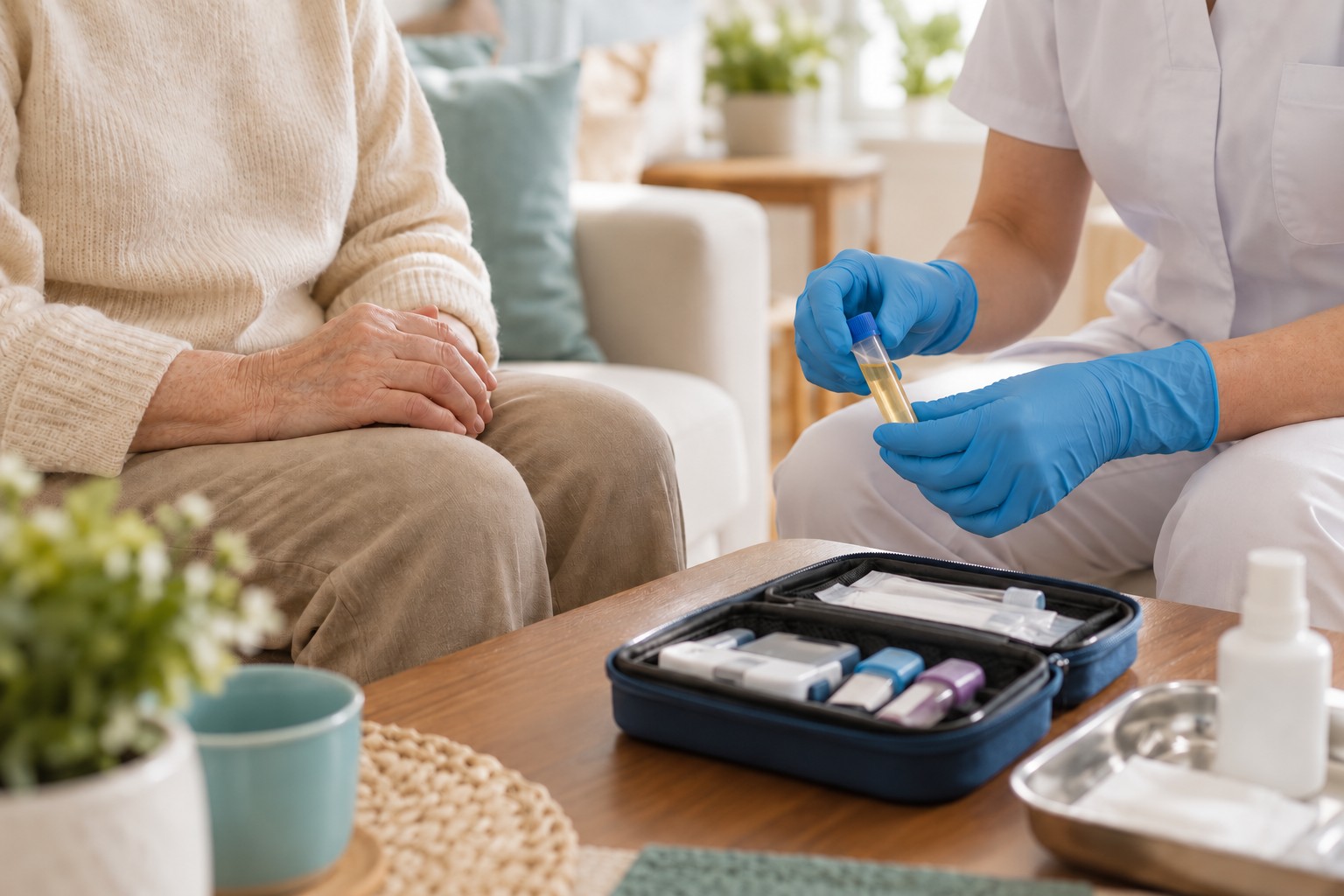
SMA (SMN1) deletion analysis uses the MLPA method to examine the copy number of the SMN1 and SMN2 genes, which are associated with spinal muscular atrophy; it is also used in carrier testing. Your blood sample can be collected at your home or workplace.
- Sample
- Blood
- Fasting
- Not required
- Turnaround time
- As soon as possible
- Test group
- Genetic Tests
Preparation: No fasting is needed; the sample can be given at any time of day. Share any SMA diagnosis or genetic test report in your family, and mention it if you have had a bone marrow transplant.
Insurance: We work with private health insurers. For this test, we obtain the pre-approval and collect your sample once approval is received. Insurance and payment
Contents
What is SMA (SMN1) deletion analysis?
Spinal muscular atrophy (SMA) is an inherited disease that affects the motor nerve cells in the spinal cord, leading to progressive muscle weakness and muscle wasting. Symptoms usually begin in infancy or childhood; there are also rarer forms that appear in adolescence or adulthood. The severity of the disease varies markedly from person to person. In mild forms the person can walk, while in severe forms the breathing and swallowing muscles may also be affected; for this reason, multidisciplinary follow-up is planned after diagnosis.
The great majority of SMA cases result from the deletion of certain parts, particularly exon 7, in both copies of the SMN1 gene. In this analysis, the copy number of the SMN1 gene is determined with a method called MLPA. The copy number of the similarly structured SMN2 gene is also examined; because SMN2 can partly make up for the missing protein, its copy number provides information on the course of the disease and on treatment planning.
When is SMA deletion analysis ordered?
This test is ordered on a doctor's recommendation to assess the diagnosis in babies and children with symptoms suggestive of SMA and to investigate carrier status in people without symptoms. Because SMA is inherited in an autosomal recessive manner, the disease can occur in children when both partners are carriers.
- Floppiness, difficulty sucking and swallowing or reduced movement in babies
- Delay in or loss of motor skills such as sitting, standing or walking in children
- Muscle weakness with no explained cause
- An SMA diagnosis in the family
- Carrier assessment in consanguineous marriages or before planning to have children
- Knowing that one partner is a carrier
In a child with symptoms, the test also helps distinguish SMA from other diseases that can cause muscle weakness. The availability of treatment options for SMA today has made early diagnosis even more important. The test is performed on the person's own blood sample; diagnosis of the baby during pregnancy is made with different samples and methods.
How do you prepare for SMA deletion analysis?
No fasting is needed for this test, and the blood sample can be given at any time of day. Medications do not affect the genetic result. For partners having carrier testing, planning the test together on a doctor's recommendation makes it easier to interpret the results together. If a family member has been diagnosed with SMA and you have their genetic report, sharing it with your doctor helps the result be interpreted correctly.
Genetic tests are performed with informed consent; genetic counseling before and after the test is recommended, especially for carrier tests and for children with symptoms. If you have had a bone marrow transplant, mention this. Our nurse collects the blood sample at your home or workplace; both partners' samples can be collected at the same appointment.
How are SMA deletion analysis results interpreted?
The report states the copy numbers of the SMN1 and SMN2 genes. Detecting no copies of the SMN1 gene strongly supports an SMA diagnosis in a person with compatible symptoms. A single copy usually means carrier status. The SMN2 copy number can give an idea of the severity of the disease; however, it does not determine the course on its own, and treatment decisions are made by the doctor together with all the findings.
Detecting two SMN1 copies markedly reduces the likelihood of carrier status but does not eliminate it entirely. In some people, the two copies may be on the same chromosome, or the gene may have a small change that this method cannot see. For this reason, the result should be evaluated together with your family history and, if needed, your partner's result by your doctor and a medical geneticist.
Reference range
Stated in your laboratory report
The reference range for this test may vary depending on the method used, age and sex; it appears next to your result in your laboratory report. Review your result together with your doctor.
How is SMA (SMN1) Deletion Analysis done at home?
-
01
Book your appointment
Fill in the online form or call us, and let's plan a day and time that suit you together.
-
02
Your blood is drawn at home
Our nurse comes to your address and collects your blood sample using sterile, single-use supplies.
-
03
You receive your result
Your sample is transported to the laboratory under appropriate conditions; your result is sent to you when it is ready.
Frequently asked questions
The information on this page is for general information only; it does not replace diagnosis or treatment. Consult your doctor for decisions about your health.