

About Esenyurt Tracheostomy Care and Tube Change at Home
Families who come home from the hospital with a loved one who has a tracheostomy usually ask the same question in the first few days: "What do we do if something goes wrong?" The answer lies in a regular care schedule, the right supplies ready at the bedside, and a family that knows what to do. Tracheostomy care at home is a partnership in which the nurse's professional procedures and the family's day-to-day observation complement each other.
In this partnership, the nurse's part is the procedures that require skill and sterility, such as stoma care, suctioning, cuff pressure measurement and tube changes. Decisions such as the type of tube, how often it is changed and how frequently care is given, however, belong to the doctor who follows your loved one; the Curavita Evde Sağlık team turns these decisions into steps that can be carried out safely at home.
What should be ready at the bedside before coming home?
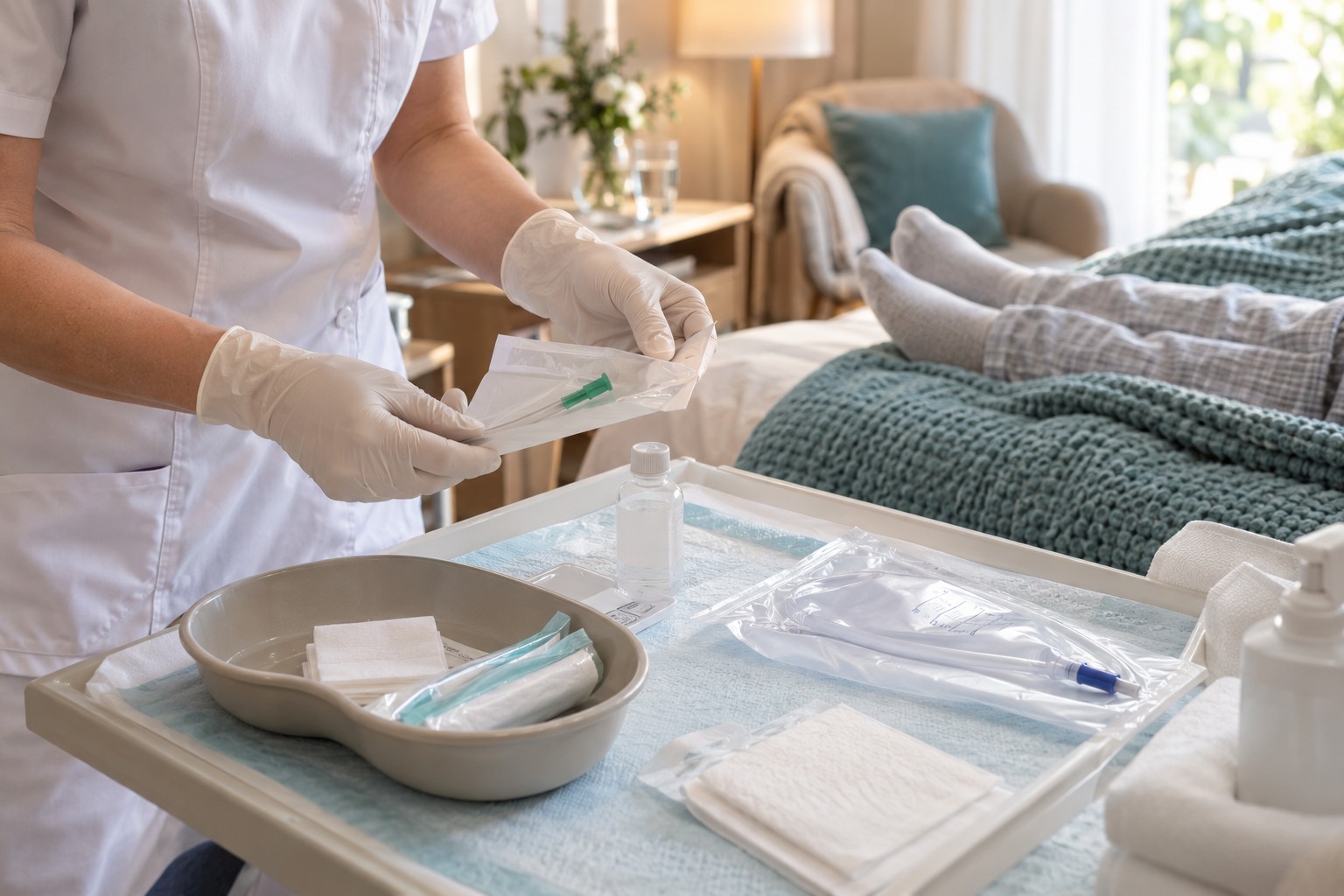
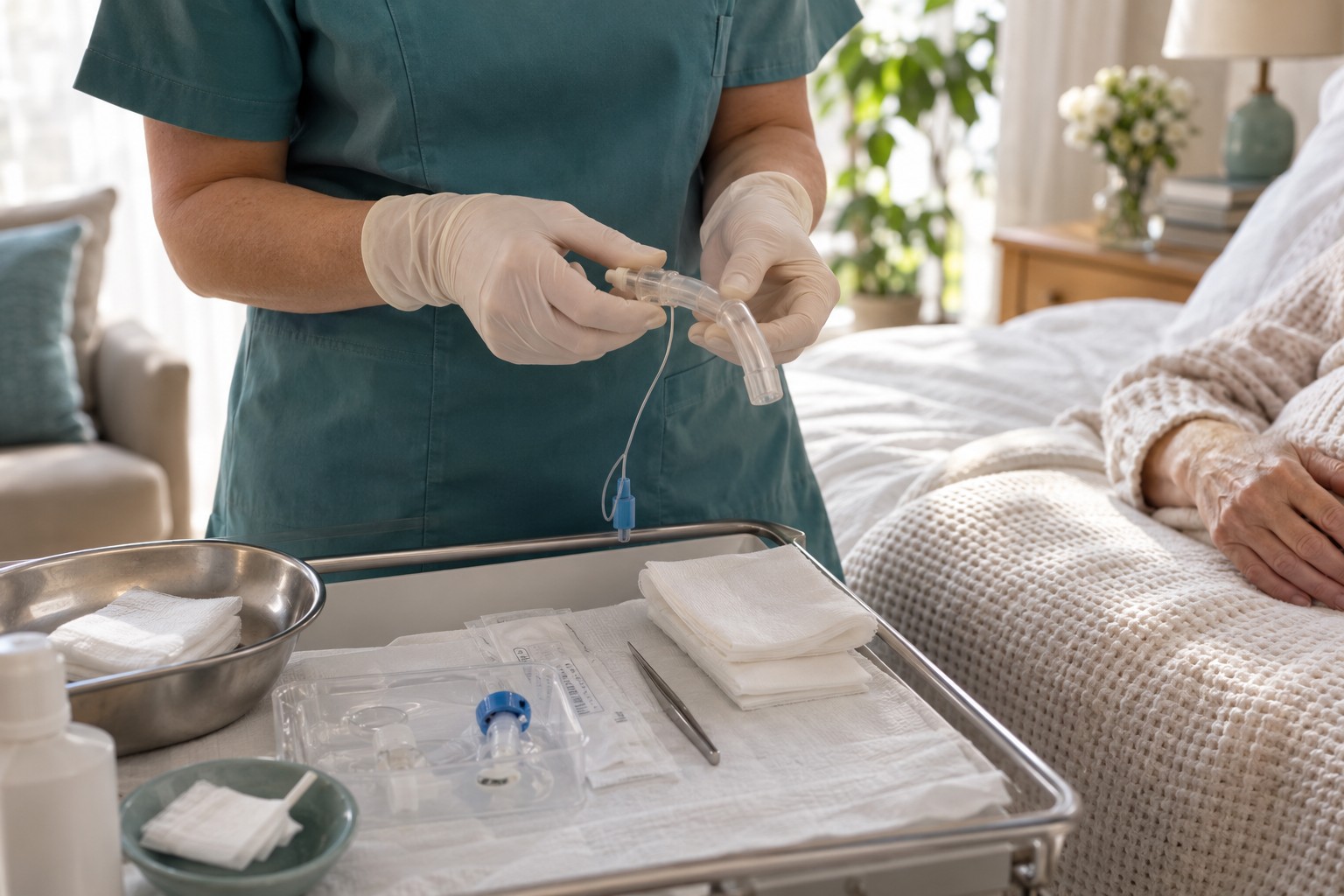
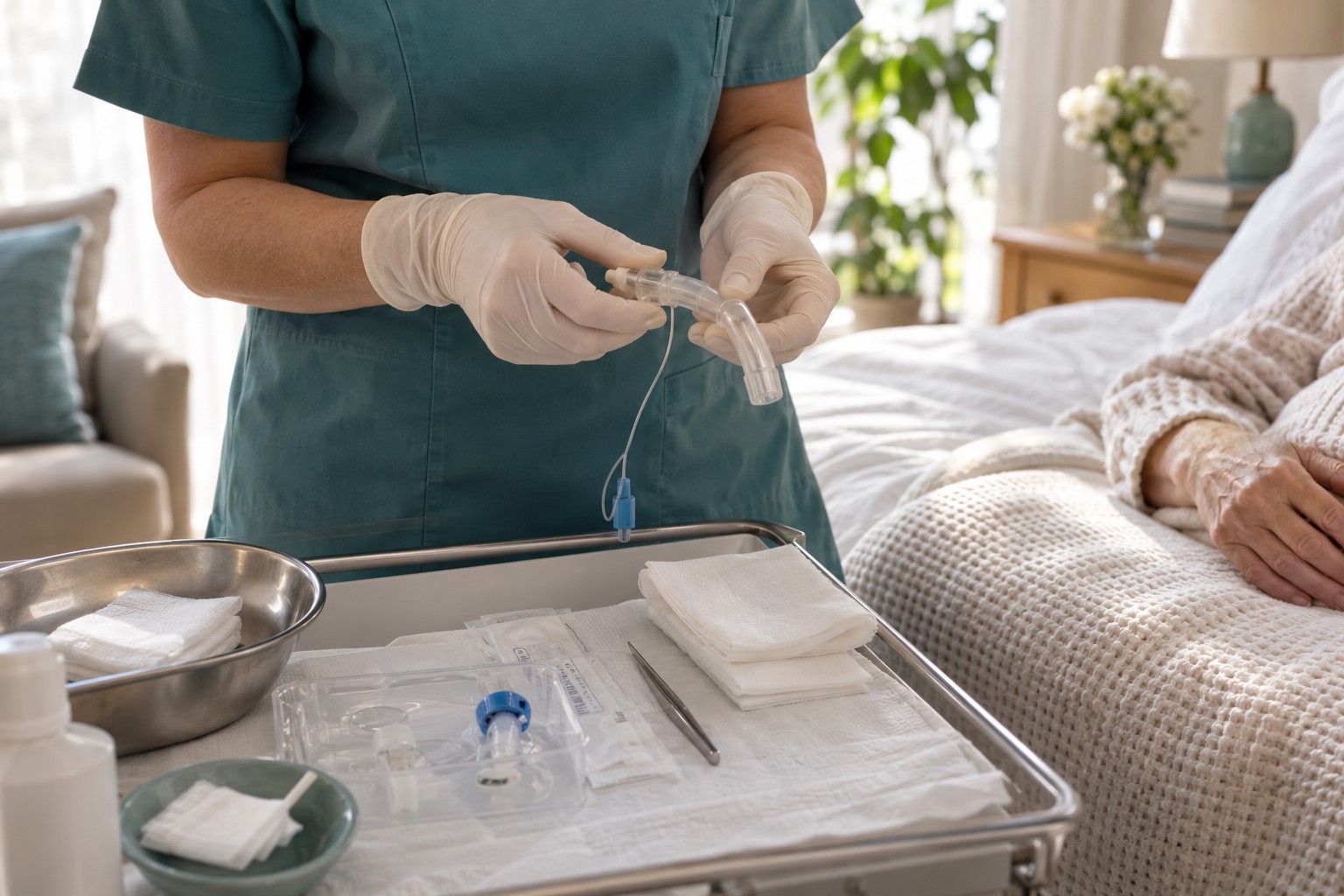
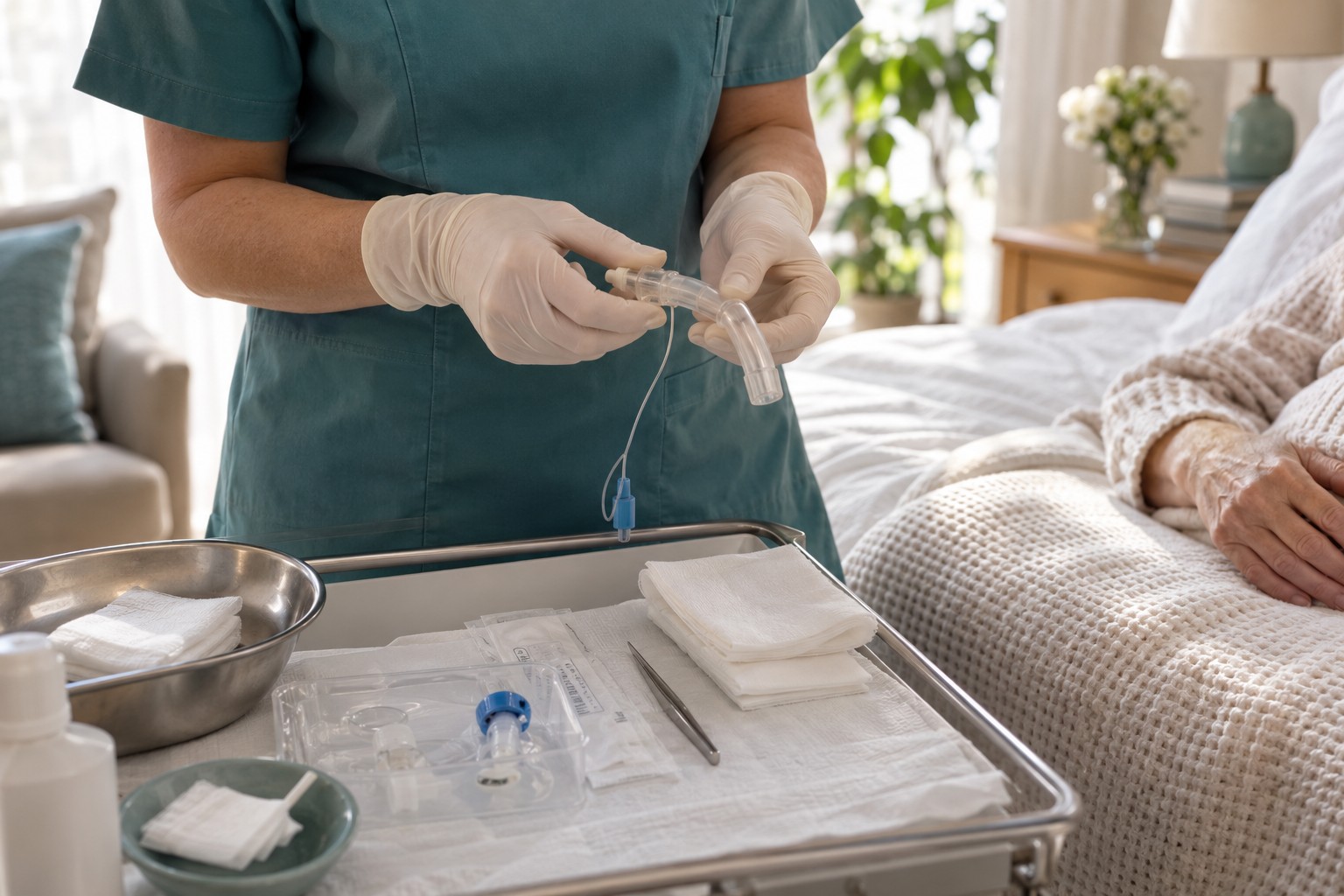
Talking in detail with the hospital team before discharge will help your first week at home go much more calmly. At the bedside you should have a working suction machine and suction catheters of the right size, two spare tubes (one in the size the patient uses and one a size smaller) together with their obturators (introducers), a syringe for a cuffed tube, a spare neck tie and dressing supplies. Keeping battery-powered devices charged at all times and having oxygen ready if the doctor has recommended it are also part of this preparation.
Because a tracheostomy bypasses the nose, where inhaled air is normally warmed and humidified, humidification is an essential part of care. The moisture filter or humidification method recommended by your doctor helps prevent secretions from thickening and blocking the tube. Keeping the patient's daily fluid intake at the level the doctor recommends also helps keep secretions thin.
Stoma care: what to check every day
The stoma is the opening through which the tube passes from the neck into the windpipe, and the skin around it is easily irritated by moisture, secretions and friction. In daily care, the area is cleaned with sterile saline and dried thoroughly, then a new dressing is applied with single-use supplies. At the same time, the area is checked for redness, swelling, a bad smell, discharge that changes color, or red tissue that grows at the edge of the tube and bleeds easily.
The neck tie should never be changed by one person alone; one person holds the tube in place while the other replaces the tie. The tie should be just tight enough to fit one finger between it and the neck; a tie that is too loose can let the tube slip, while one that is too tight can cause a sore on the skin.
The family's role in tube changes and suctioning
Tube changes are planned and carried out at intervals set by the doctor; an unhurried, well-prepared change is the one that tires the patient least. If the patient is tube-fed, ask your nurse whether feeding should be paused before the change; this matters because it reduces the risk of stomach contents getting into the airway. After the change, the expected picture is that the patient breathes comfortably, airflow can be felt from the tube and skin color looks normal.
It is the patient, not the clock, who decides when suctioning is needed. A rattling sound from the chest, secretions visible in the tube, phlegm that cannot be cleared despite coughing, or effortful breathing are signs that suctioning is needed. In every procedure, hand hygiene, a single-use catheter and not advancing the catheter beyond the depth the nurse has shown you protect the airway.
Family training: building confidence step by step
Involving the family in care gives confidence to both the patient and their loved ones. That is why nurse visits are also an opportunity for hands-on training: first you watch the nurse, then you try suctioning, tie changes and stoma cleaning yourself under their supervision. Everyone in the household needs to know where the spare tube is kept, how the devices work and whom to call in an emergency.
When day and night care rests on the shoulders of a single family member, fatigue can lead to lapses in attention. Home care support for personal care and companionship can also be added to the plan, so that the person providing care has time to rest.
Which signs in a patient with a tracheostomy need immediate attention?
The family's careful observation is one of the most important tools for catching problems early. If you notice any of the following signs, inform the doctor or the healthcare team immediately:
- Marked difficulty breathing, or rapid and shallow breathing
- Bluish discoloration of the lips or nail beds
- The tube slipping out of place or coming out completely
- The suction catheter cannot be advanced inside the tube
- Visible blood, a dark yellow-green color or a bad smell in the secretions
- Increasing redness, swelling or pain at the stoma together with fever
If the tube has come out and cannot be put back in, or if the patient cannot breathe and is turning blue, call 112 without delay. Rehearsing the steps to take in such a situation with your nurse in advance saves valuable time in a real moment of panic.
Planning tracheostomy care at home in Istanbul
The care schedule is set up to cover daily stoma care, the tube changes made at intervals recommended by the doctor, and cuff pressure checks together. Our service network covers Istanbul's 39 districts; the call center is open day and night, and requests are answered within 3 minutes on average. When your loved one needs to be assessed at home by a doctor, a doctor home visit can also be included in the same plan.