
About Fatih Doctor at Home
When you're not feeling well, the first question is often this: should you go to the hospital, or ask a doctor to come to where you are? A doctor home visit means that, for non-urgent health problems, a physician comes to your home, your office or your hotel and assesses you on the spot. Below you'll find when this option makes sense, what the doctor looks at during the examination and what to expect after the visit.
When is calling a doctor to your home the right choice?
Signs of infection such as fever, cough and a sore throat, digestive complaints, or changes you notice in the course of a chronic illness can often be assessed by a doctor who comes to you. Regular check-ups for long-term conditions such as diabetes or high blood pressure can also be planned this way. For older people who have difficulty getting around, and for patients who have recently had surgery or are bedridden, the trip to the hospital is exhausting in itself. Spending hours in a crowded waiting room only wears down a body that is already weak.
On the other hand, a home examination cannot replace the hospital in every situation. If you have symptoms such as chest pain, sudden shortness of breath, confusion, sudden weakness in the face or an arm, or bleeding that will not stop, call 112 without delay. If the situation calls for observation in hospital or advanced tests, the doctor will refer you to an appropriate healthcare facility.
What does the doctor assess during the examination?
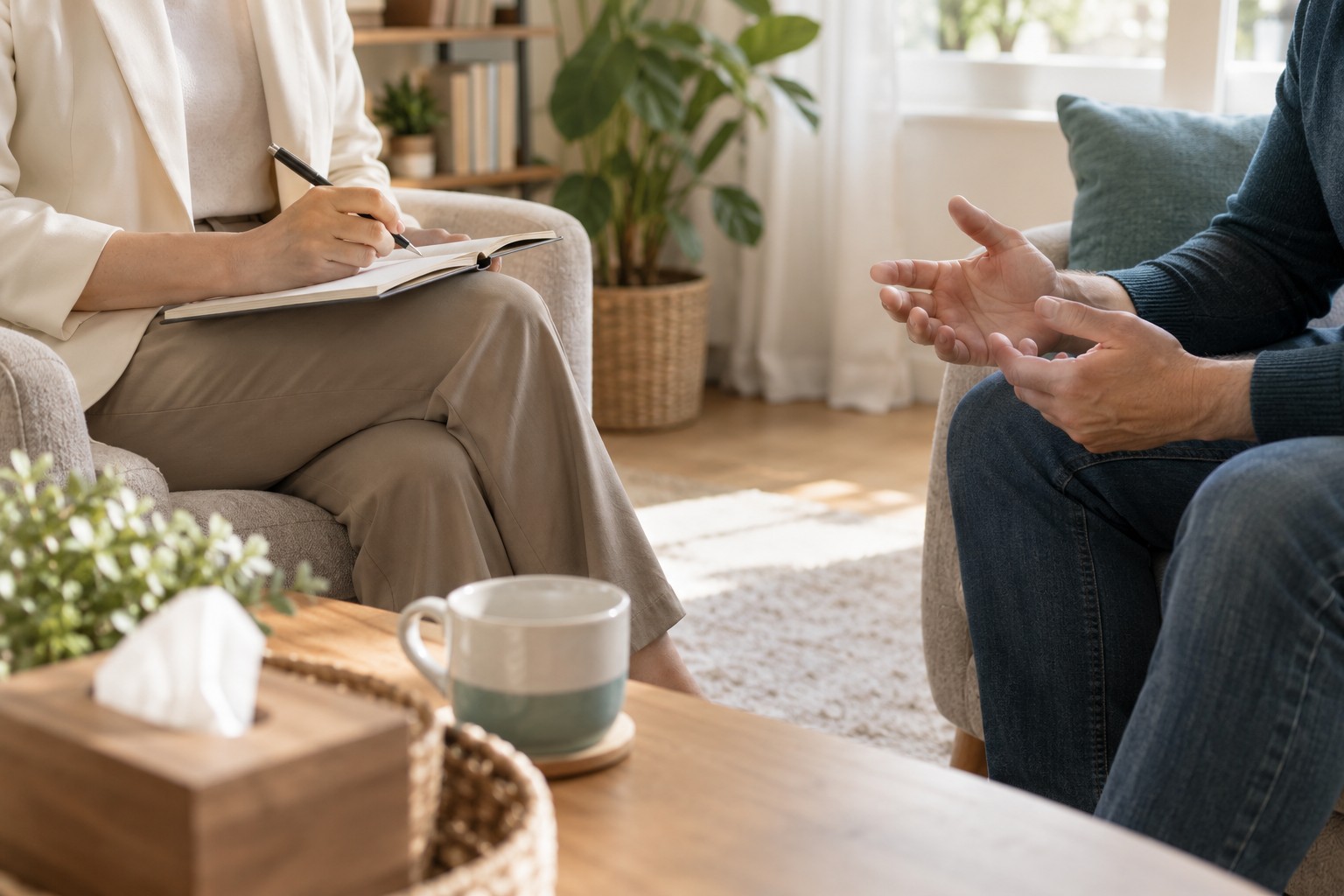
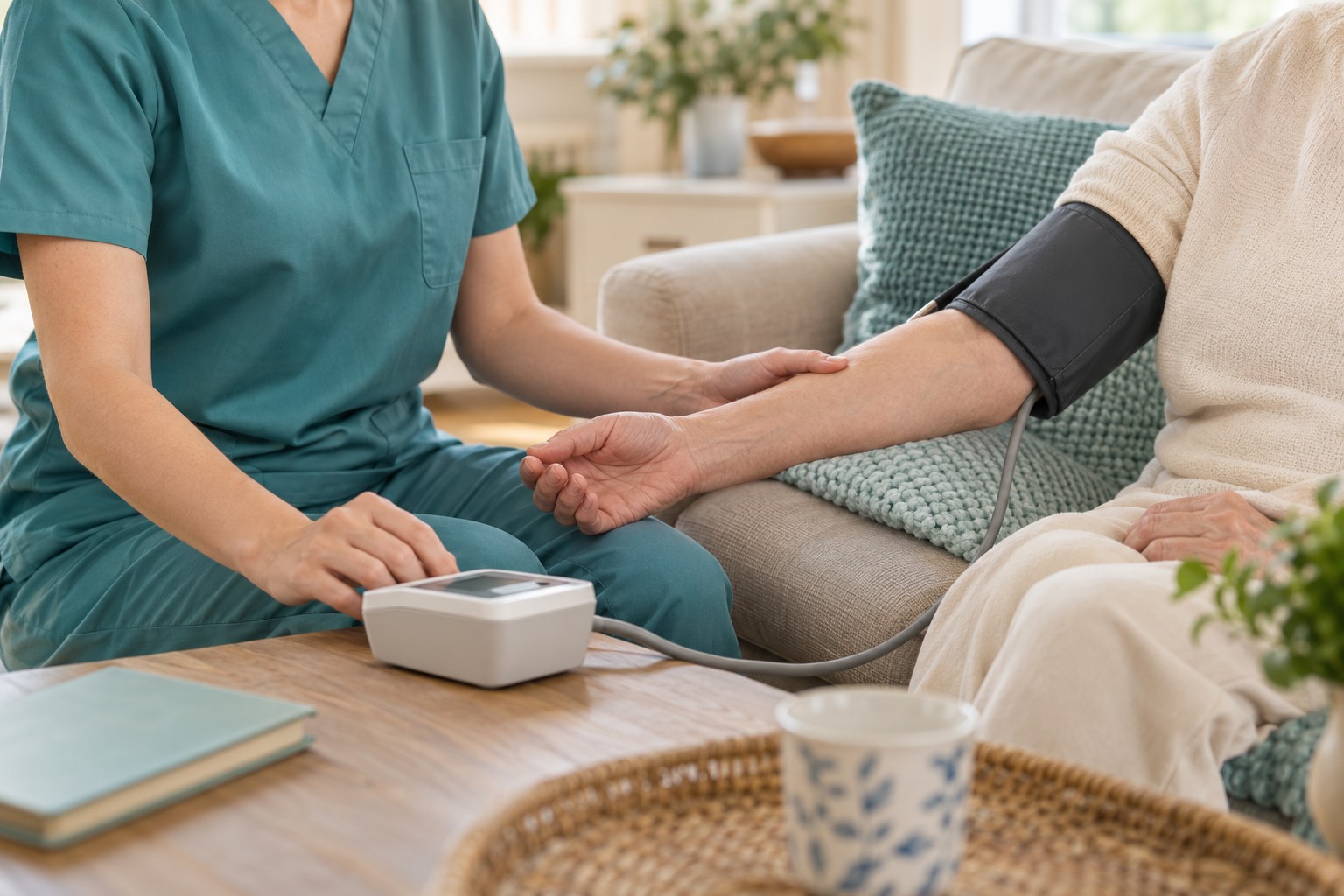
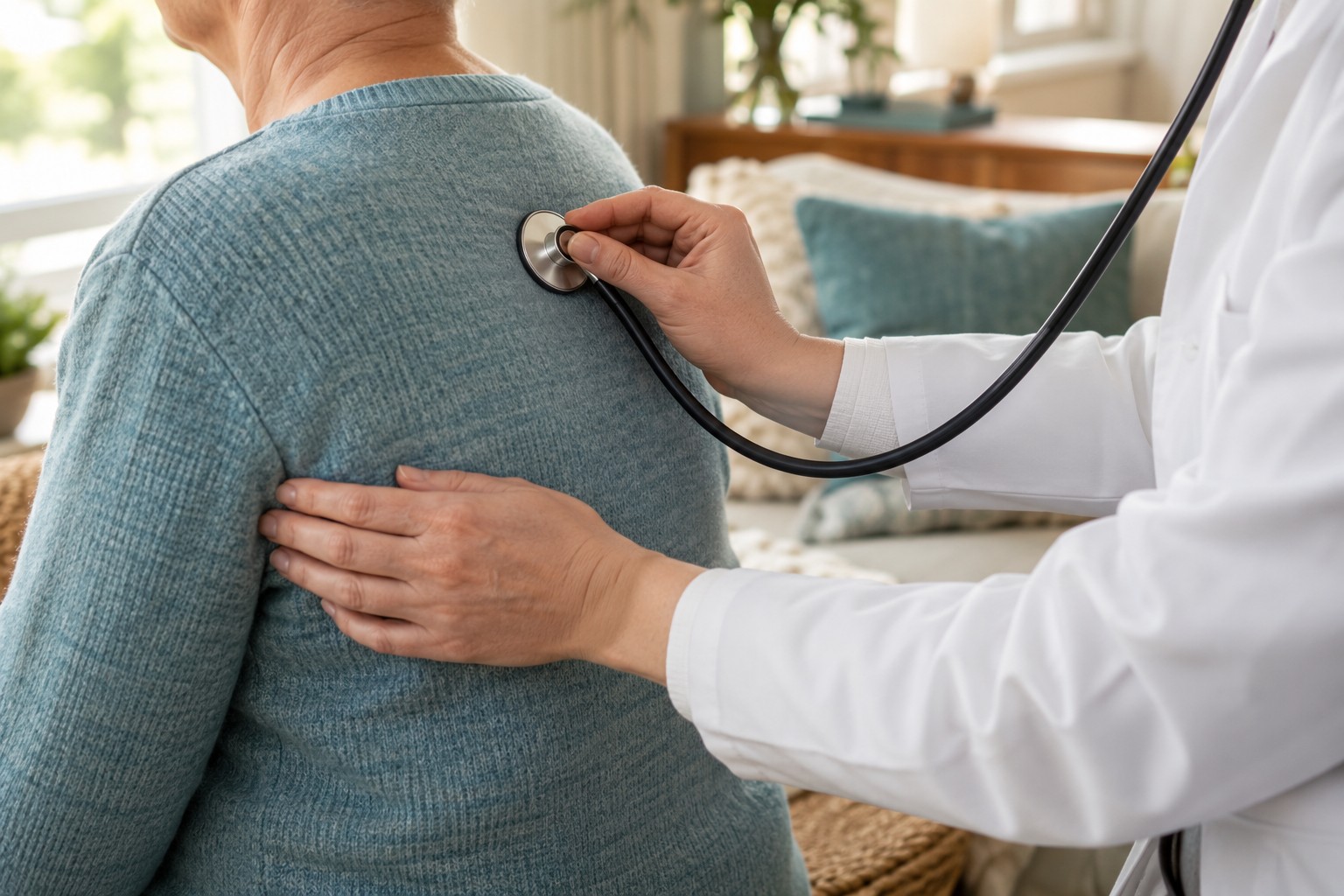
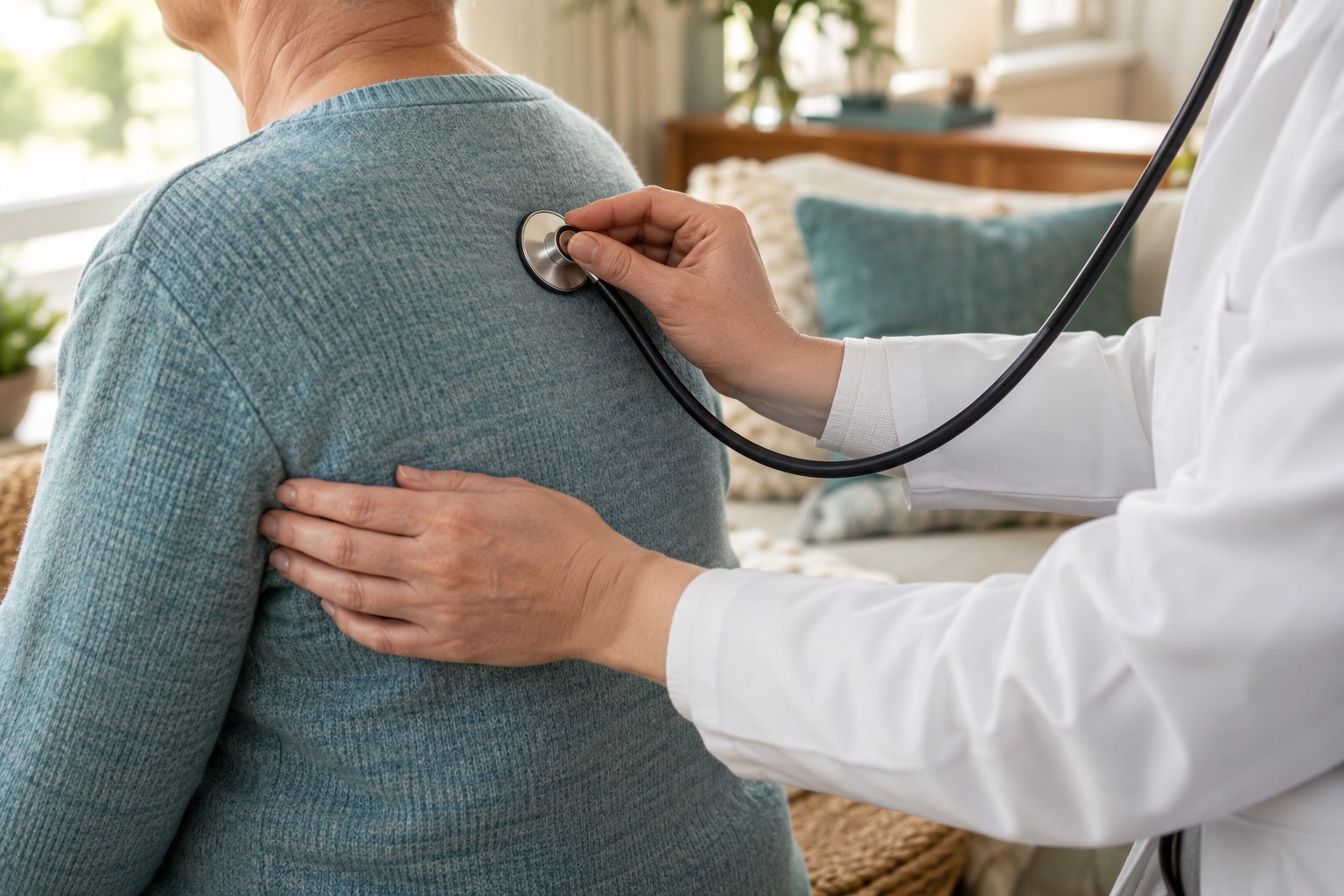
The visit begins with a conversation about when your symptoms started, how they have developed and what you have tried in the meantime. The doctor then measures vital signs such as temperature, pulse, blood pressure and oxygen level, listens to your heart and lungs, and examines the area related to your complaint. If you have a chronic illness, the medicines you take, their doses and any possible interactions are also part of this assessment.
The home setting also gives the doctor clues they could not see in an outpatient clinic. How an older patient stores their medicines, the layout of the bed and bathroom, or how mobile they are during the day are all details that shape the treatment plan. At the end of the examination, the doctor explains the findings to you in plain language and makes decisions about treatment together with you.
Prescriptions, tests and follow-up visits
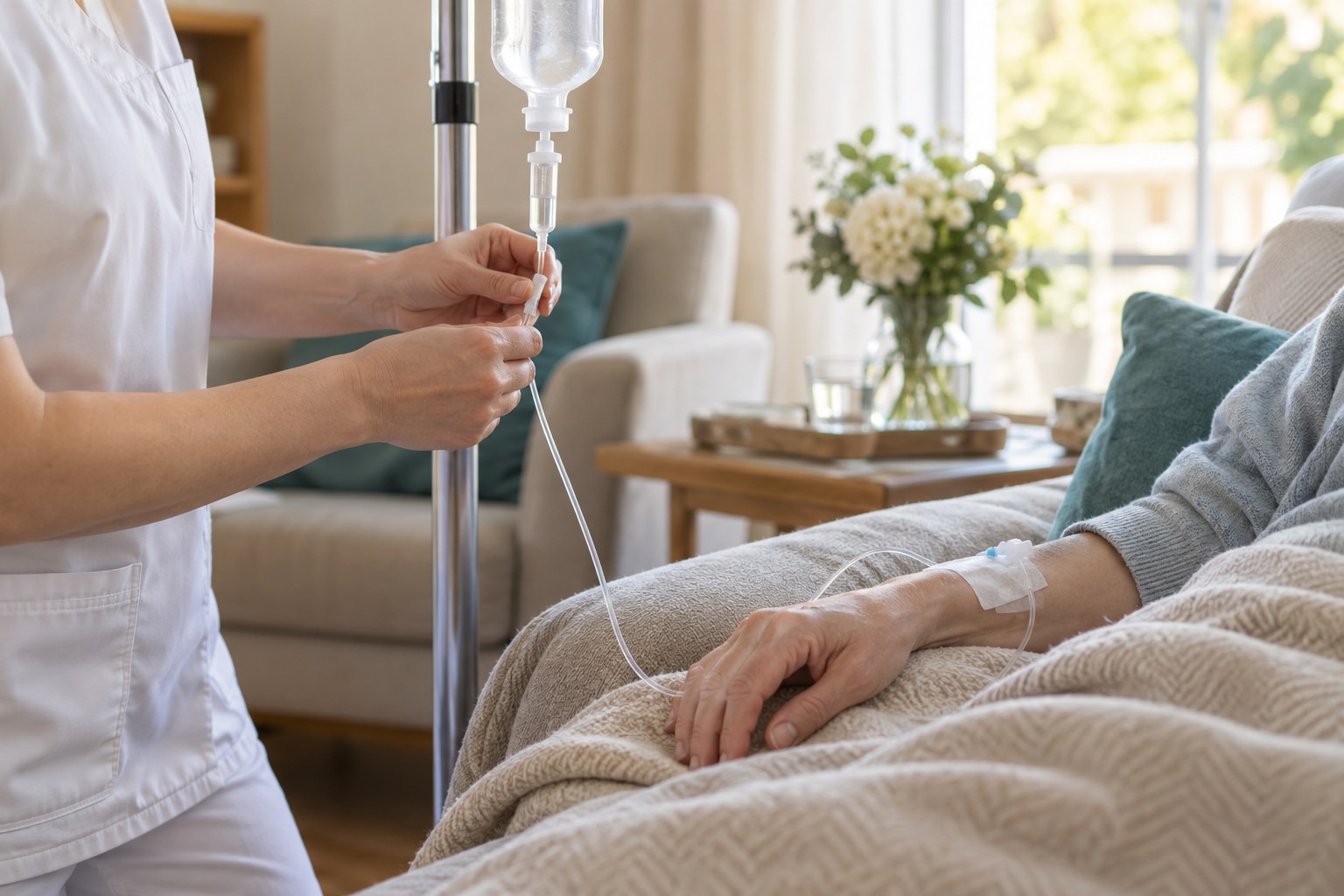
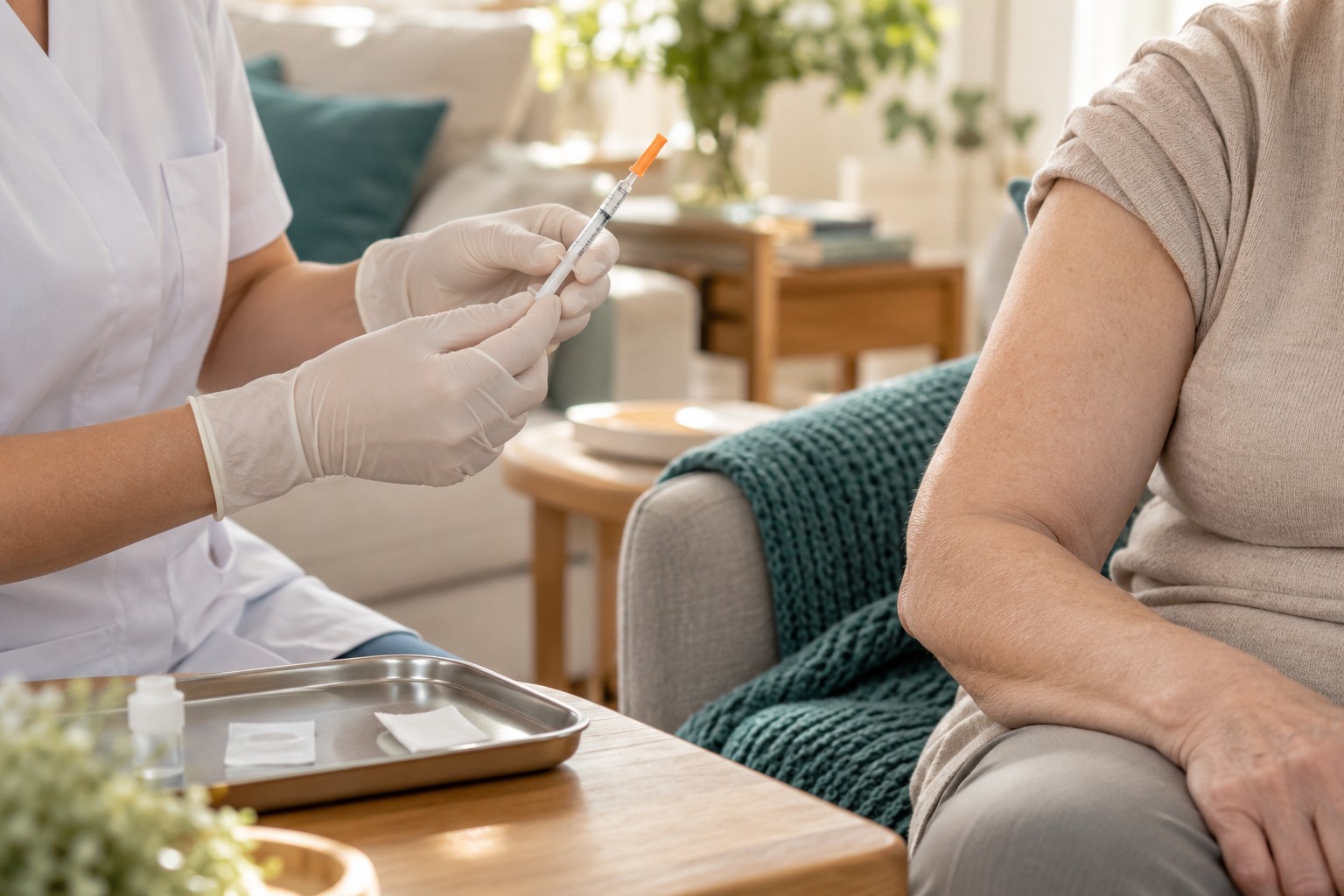
The doctor decides whether medication is needed based on the examination findings; if it is, an e-prescription is issued. If a recommended injection or IV drip is to be given at your address, it is administered by a nurse on the basis of the prescription, as part of our injections at home or IV drip service. Before administration, identity, prescription, medication, dose and expiry date are checked one by one; the materials used are sterile and single-use. When the procedure is over, the medical waste leaves your address together with the team.
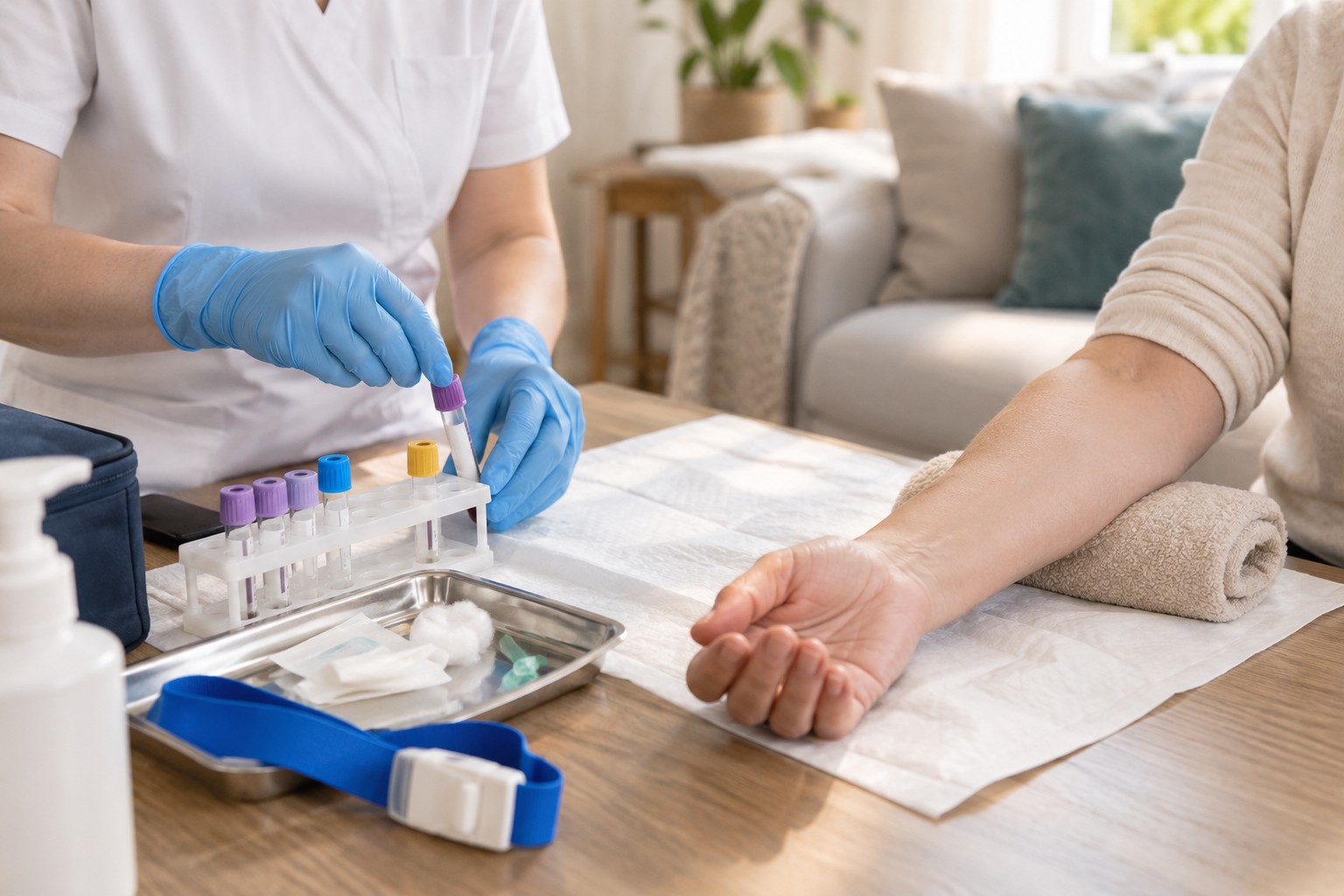
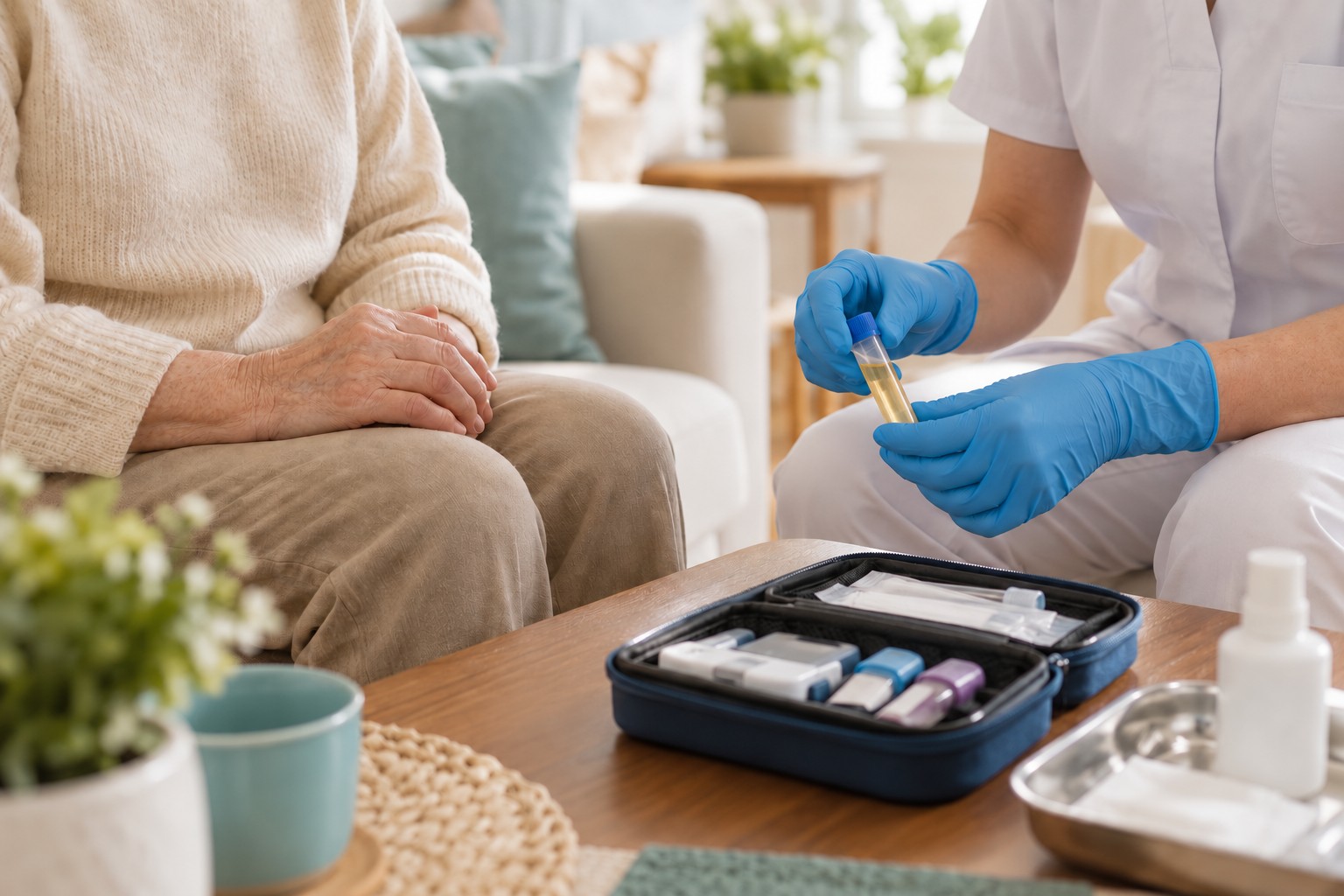
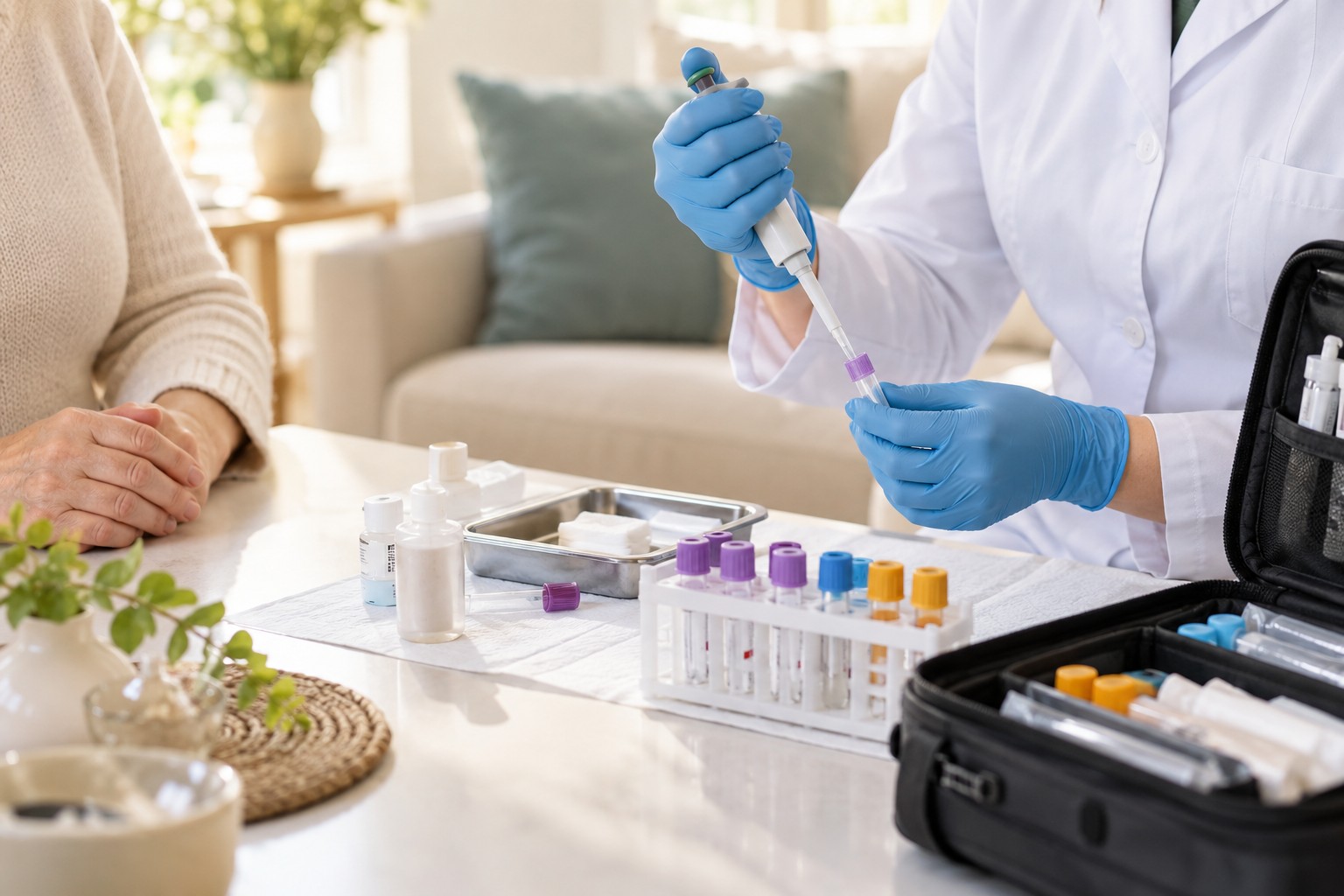
If a blood or urine test is needed to clarify the diagnosis, the sample can be taken where you are. Samples collected through our on-site laboratory service are delivered to an accredited laboratory under cold chain conditions, and the results are sent to you digitally. Once the doctor has reviewed the results, follow-up can be planned with a check-up visit or a video call; this follow-up is especially important for patients recovering from surgery. At the end of the visit, ask your doctor when the next check-up is and which symptoms should prompt you to get in touch sooner, and write it down; this makes follow-up easier.
A little preparation for a doctor home visit
To make sure most of the doctor's time is spent listening to you and examining you, it helps to prepare a few things in advance. These small steps make a difference, especially if you are calling a doctor for an older or bedridden relative:
- Gather all the medicines being taken, together with their boxes.
- Have any recent test results, discharge summaries and medical reports ready.
- Note the time the symptoms started and any temperature and blood pressure readings you have taken.
- Make sure the room where the examination will take place has enough light and somewhere to sit.
- If the patient has difficulty expressing themselves, have a relative who knows them well stay with them.
Doctor support at work or while traveling
The process works in much the same way for an employee who can't find time between meetings to go to the hospital on the day they fall ill, or for a guest from out of town staying at a hotel. The doctor carries out the examination in your office or hotel room and also talks with you about how to proceed with any regular medicines you forgot to bring with you. If you will be examined at the office, arranging a room with a door that closes helps protect your privacy. For other procedures you may need during your stay, take a look at our healthcare at your hotel page.
How is a visit arranged in Istanbul?
Curavita Evde Sağlık serves all 39 districts of Istanbul; from an office in Beşiktaş to a home in Ataşehir, visits are scheduled according to your address. You can reach our call center 24/7, and we get back to your request within 3 minutes on average. Where possible, same-day appointments are available; the fee is clearly communicated before anything begins.
If you have private health insurance, we obtain the insurer's pre-approval for the examination and do not charge a co-payment; you can find the details on our insurance and payment page. The service is licensed under a certificate of conformity (Uygunluk Belgesi) issued by the Provincial Health Directorate; examinations are carried out under the supervision of our responsible manager and in accordance with health regulations. The health information you share is also protected under KVKK (Turkish Personal Data Protection Law No. 6698).