
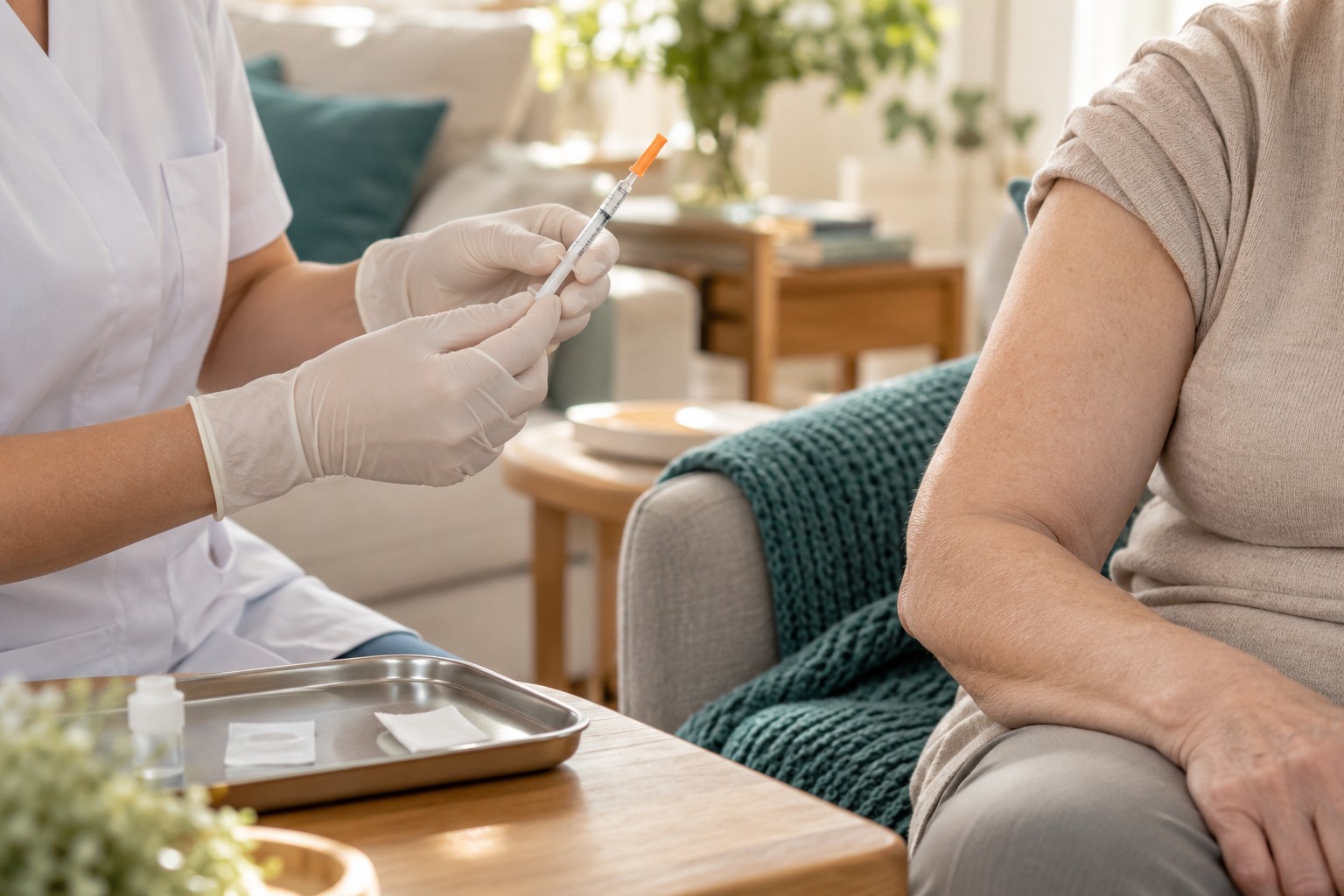
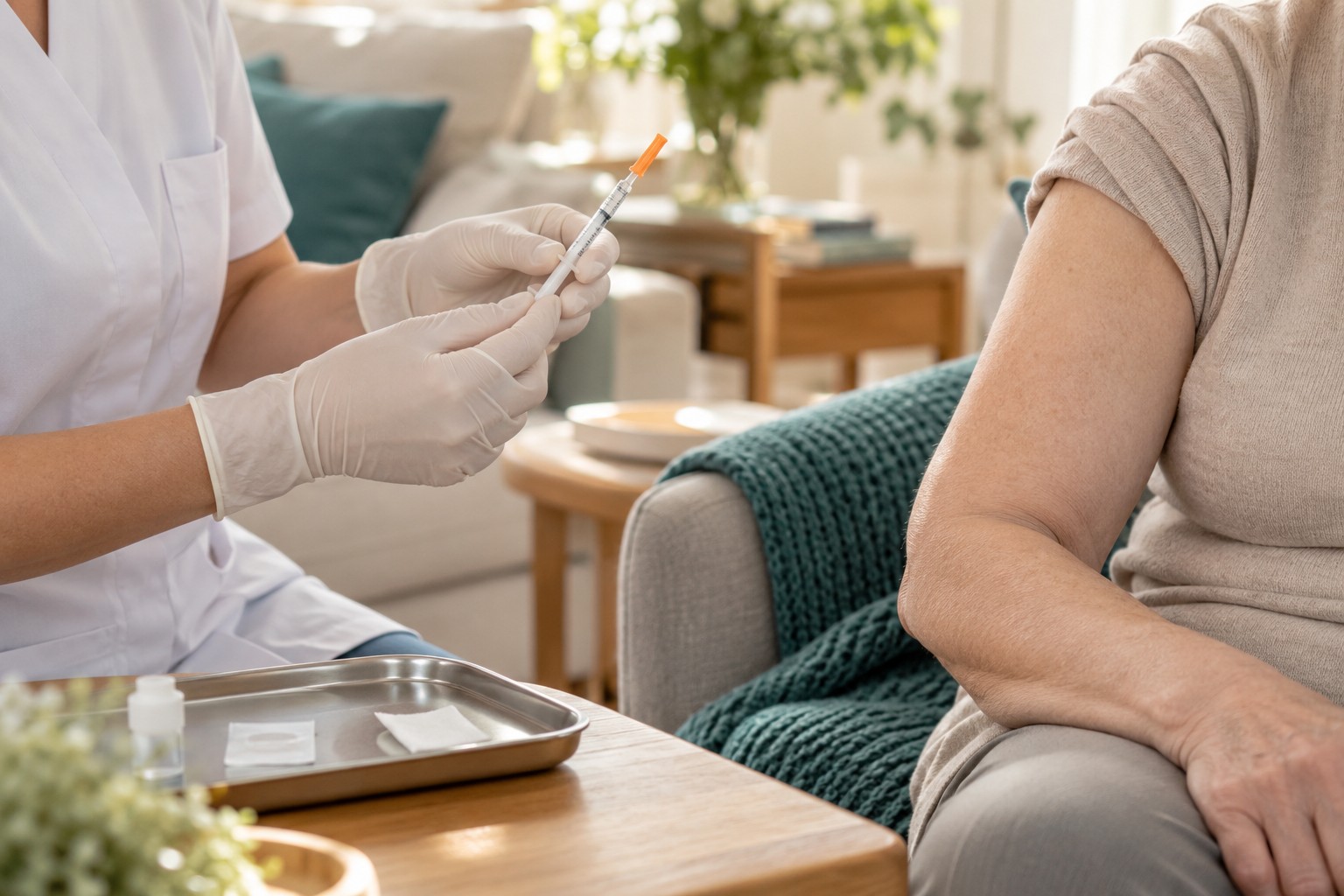
About Kadıköy Injections at Home
The same medication is absorbed at a different speed, and calls for different care, depending on the route by which it enters the body. That is why your prescription specifies intramuscular, subcutaneous or intravenous. With injections at home, the nurse uses the correct technique for the route your doctor has chosen; the visit can take place at your home, your office or the hotel where you are staying.
An injection that takes a few seconds is not necessarily a simple procedure. Choosing the right site, giving the medication at the right speed and monitoring afterwards are as important as the injection itself. And in Istanbul traffic, traveling just for one injection often takes far longer than the injection itself.
What is the difference between IM, SC and IV injections?
The main difference between the three methods is the tissue in which the medication is deposited and, as a result, how quickly it passes into the blood. Which route is chosen depends on the nature of the medication and the purpose of the treatment; the nurse never departs from the route written on the prescription.
An intramuscular (IM) injection delivers the medication into the muscle of the buttock, thigh or upper arm. Because muscle tissue is rich in blood vessels, the medication is absorbed faster than under the skin, and relatively large volumes can be given this way. Some painkillers, antibiotics and vitamin shots are well-known examples of this method.
A subcutaneous (SC) injection deposits the medication into the fatty tissue just beneath the skin; absorption is slower and steadier. Insulin and blood-thinner injections are given this way, and the most commonly used sites are the abdomen, the front of the thigh and the back of the upper arm.
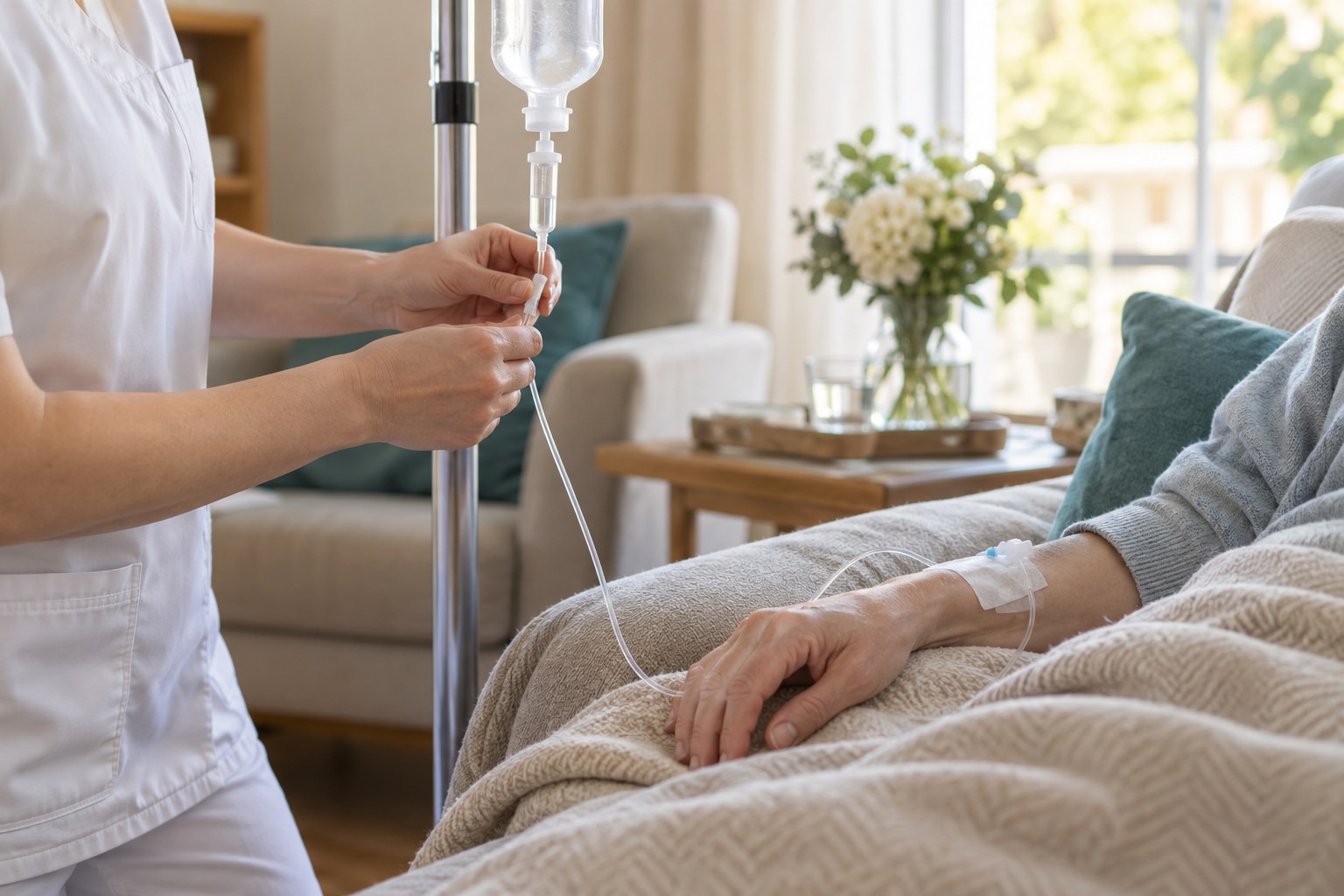
An intravenous (IV) injection delivers the medication directly into the circulation, which is why this is the route by which the effect begins fastest. That speed also calls for care: the medication is usually given slowly and the person is monitored for a while. If the treatment turns into a longer infusion, it is planned as an IV drip at home.
The right technique: site, angle and speed
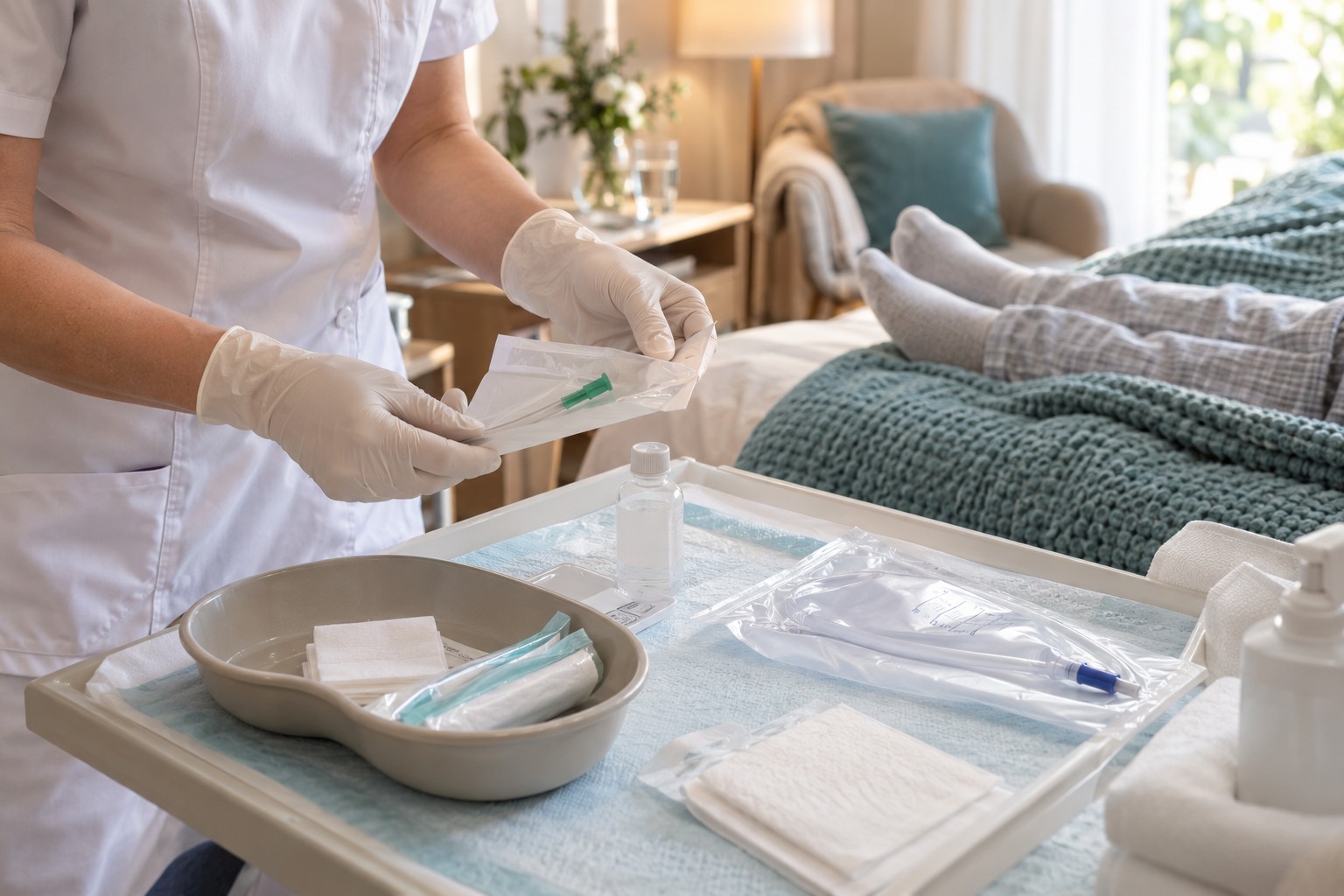
Much of a good injection consists of the checks made before the needle touches the skin. The prescription is compared with the medication box, and identity, dose and expiration date are also verified separately. If the ampoule is cloudy or discolored, or if a medication that should be refrigerated has been left in the heat, the injection is not given and your doctor is consulted.
For an intramuscular injection into the buttock, the correct point is located using anatomical landmarks to protect the sciatic nerve and major blood vessels. The skin is wiped with antiseptic and allowed to dry; an injection given while the skin is still wet stings more, and the antiseptic will not have finished working. Intramuscular injections are given at a right angle, while subcutaneous injections are given at an angle suited to the thickness of the tissue.
For some medications that irritate tissue, the Z-track technique is used. In this technique, the skin is pulled to one side, the medication is injected slowly, and the skin is released after the needle is withdrawn; this reduces leakage of the medication into the tissue under the skin. Syringes, needles and alcohol pads are sterile and single-use, and used items are removed from your address in a sharps container.
Small preparations before an injection at home
There are a few things you can do, too, to help the injection go smoothly. The steps below both shorten the visit and help make the injection less uncomfortable:
- Keep your prescription and the medication box together, along with the package insert if there is one.
- Keep medications that must be refrigerated in the fridge unless the nurse says otherwise.
- Choose loose clothing that allows easy access to the buttock or arm.
- If you have had a reaction after an injection before, or if you take blood thinners, say so at the start.
- During the injection, lie on your side or on your stomach to relax the muscle; an injection into a tense muscle can hurt more.
Observation and follow-up after the injection
The first few minutes after an injection are important, especially if you are using a medication for the first time. A slight ache or a small bruise at the site is common and usually goes away on its own. If symptoms such as swelling of the face or lips, widespread itching or shortness of breath appear after the nurse has left, call 112 immediately.
For courses lasting several days, injection sites are rotated. For intramuscular injections, the right and left sides are used in turn; for subcutaneous injections, each injection is given a little away from the previous spot, so that hardening does not build up in one area. Do not rub the site after blood-thinner injections; if you notice a hardened area that keeps growing, or a fever, let your doctor know.
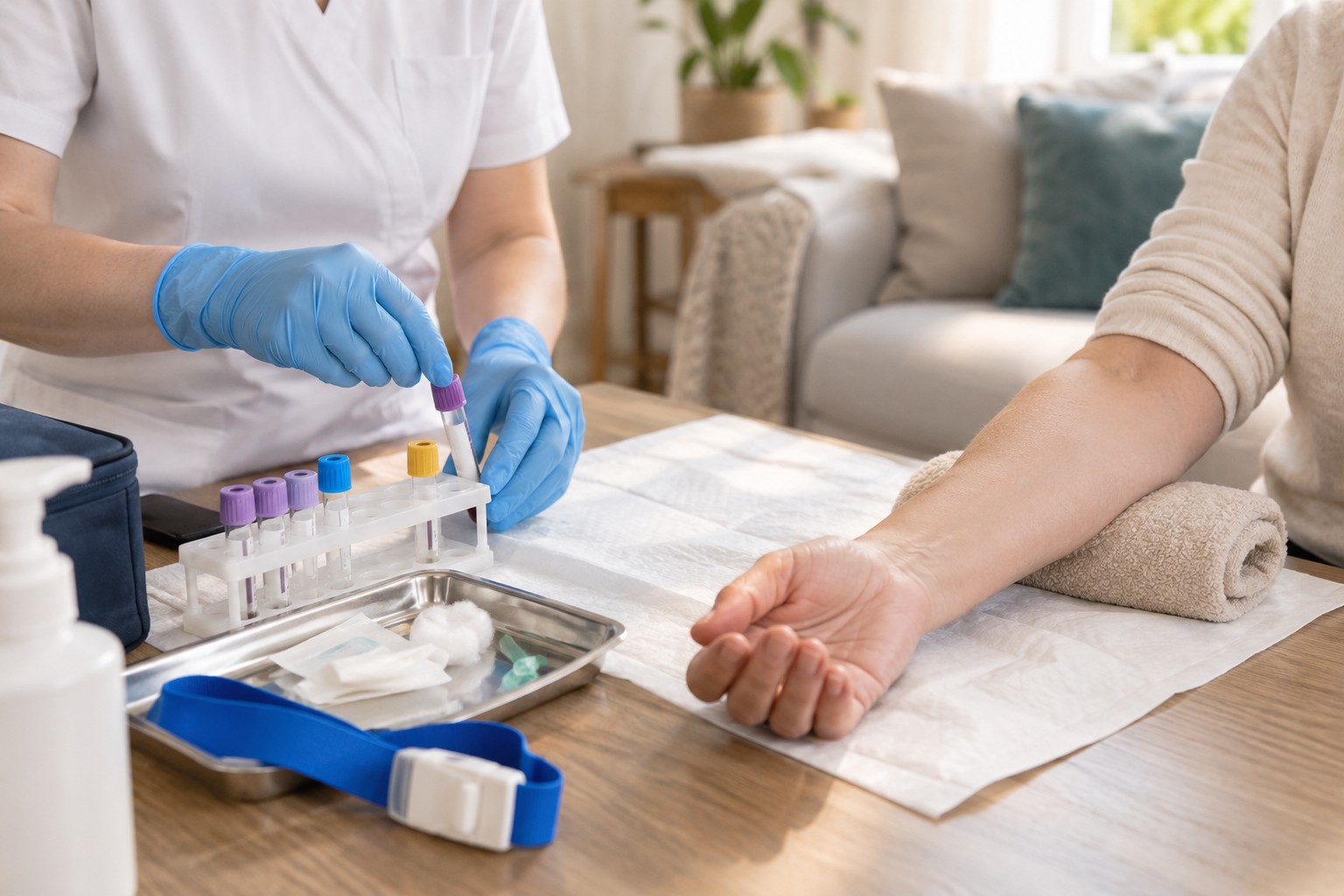
After a course of vitamin injections, your doctor may order a follow-up test; the blood sample needed for it can be taken wherever you are with our blood draw at home service. Noting the days and times of the injections on paper or on your phone helps keep the doses on track.
Scheduling appointments for a course of injections at home
Because the interval between doses matters for how the medication works, keeping appointment times as consistent as possible makes things easier for you. Nor do the visits all have to be at the same address during the course. Your morning dose can be given at your home in Ataşehir and your evening dose at your office in Bakırköy; the same arrangement applies in all 39 districts on both sides of Istanbul.
The Curavita Evde Sağlık team's call center is open 24/7; when you fill in the form or call, we contact you within 3 minutes on average, and if a suitable time is available, the first dose can be given the same day. You can see every step from request to injection on the page where we explain how the service works.