

About Zeytinburnu Wound Care and Dressing at Home
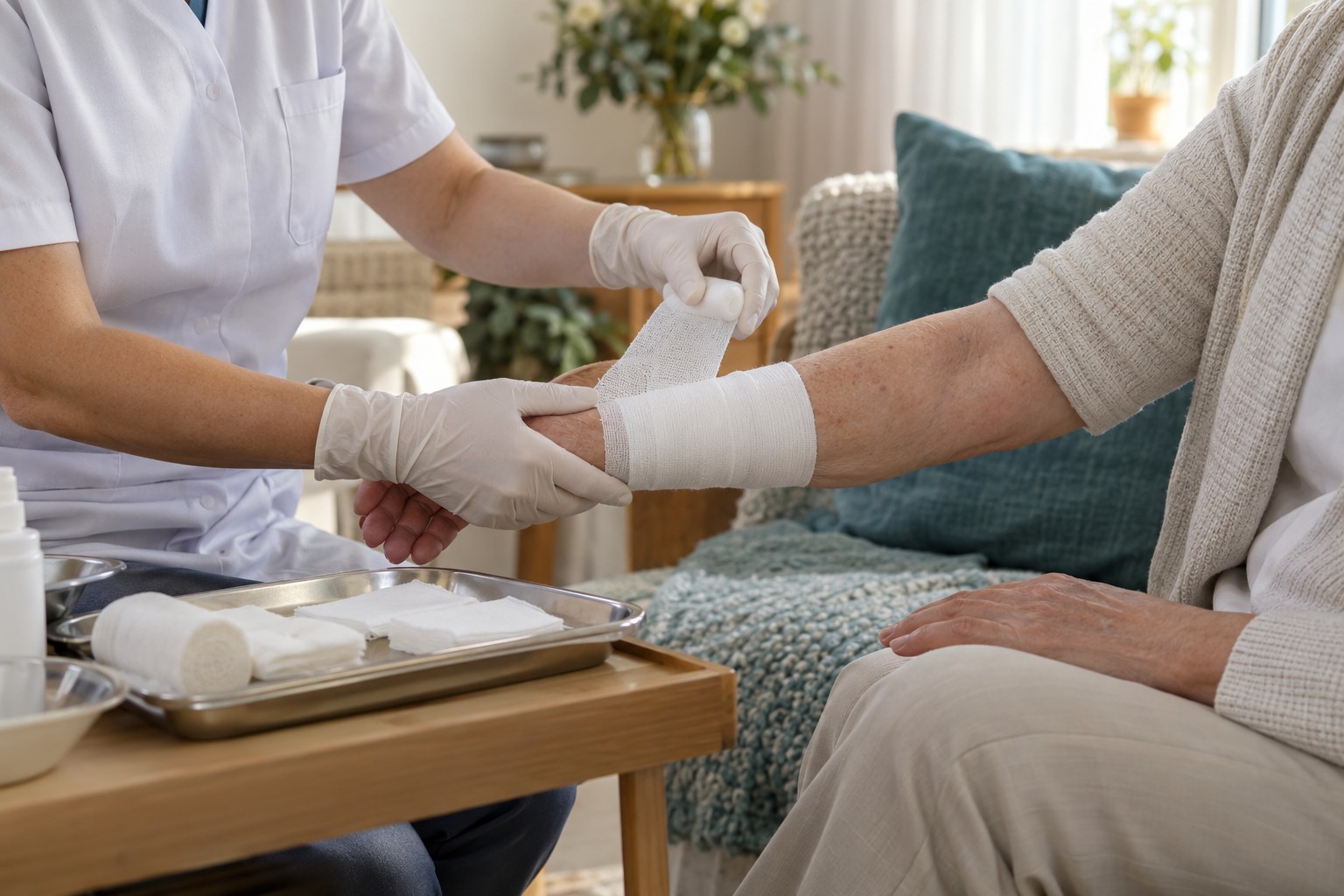
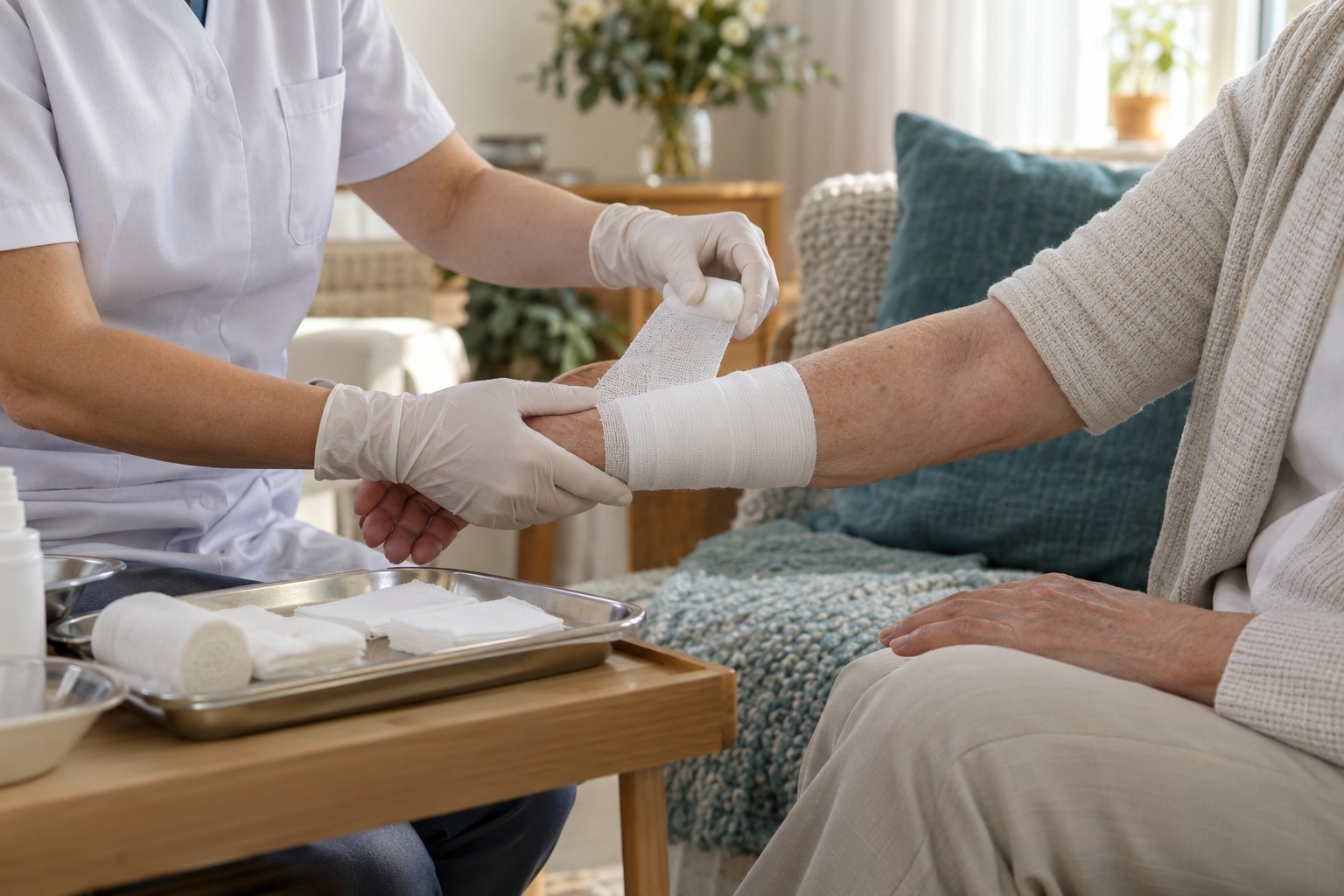
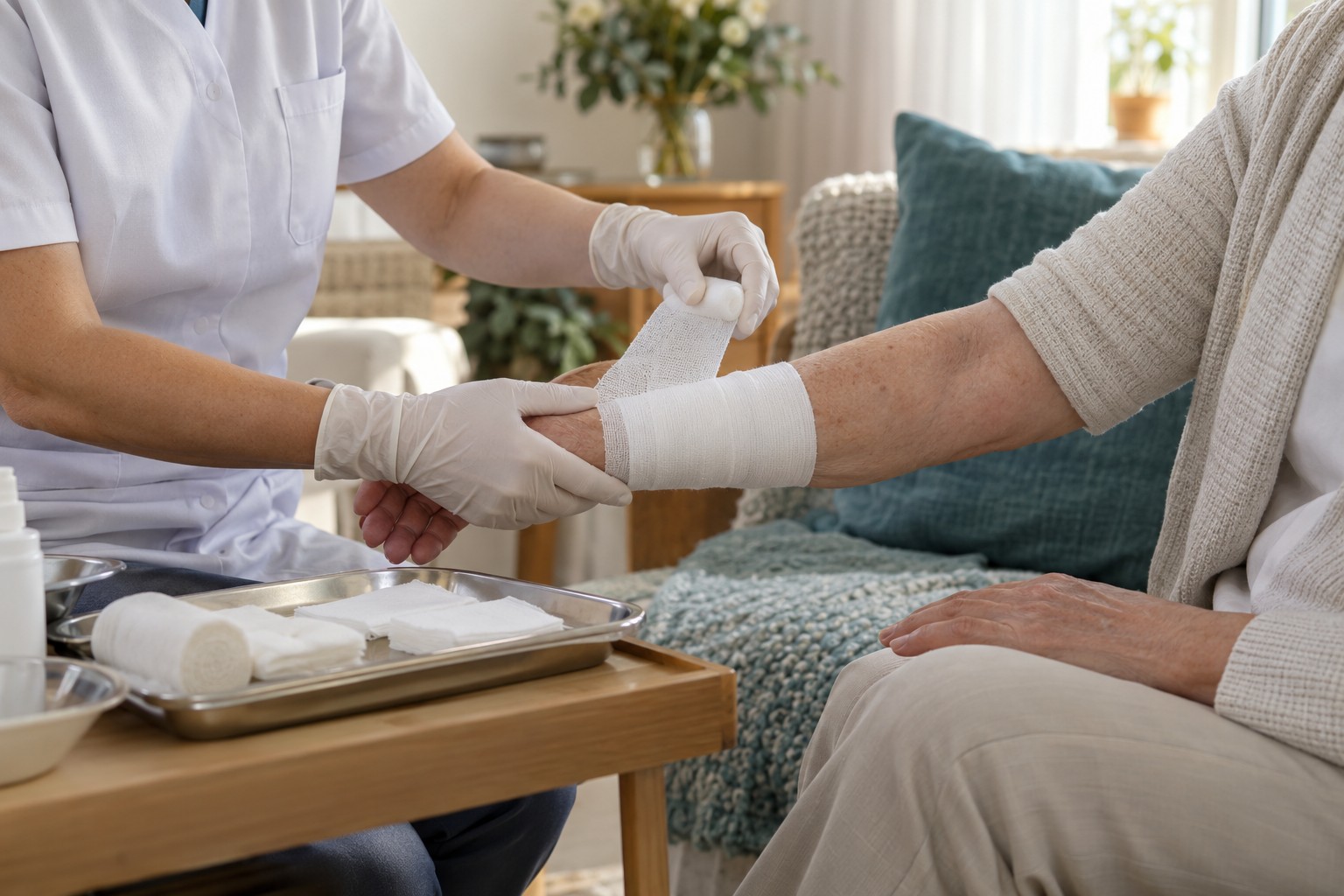
How a wound is progressing is usually revealed by details you see when its dressing comes off: its color, its discharge, the condition of its edges and its smell. Wound care at home is a follow-up process that monitors these details regularly and compares each dressing change with the one before. A Curavita Evde Sağlık nurse comes to your home, your workplace or the hotel where you are staying with supplies suited to the type of wound, so you do not have to travel for every dressing change.
Some of the factors that determine healing lie in the wound itself, and some in conditions such as nutrition, blood sugar, immobility or skin moisture. That is why good wound follow-up looks at the patient's daily life as much as at what lies under the dressing.
What is the difference between an acute and a chronic wound?
An acute wound, such as a surgical incision or a cut, closes within the expected time and in an orderly way. A chronic wound, on the other hand, gets stuck at one stage of the healing process because of an underlying cause and may stay open for weeks. Pressure ulcers (bedsores), diabetic foot wounds and leg wounds caused by poor circulation mostly fall into this group. An acute wound can also become chronic if it gets infected or if its care is interrupted.
In normal healing, the stages of bleeding control, inflammation, new tissue formation and maturation follow one another. In a chronic wound, this sequence often stalls at the inflammation stage; as long as pressure, high blood sugar or insufficient blood flow persists, a dressing alone may not be enough. For this reason, the treatment plan also addresses the cause of the wound, and the plan is set by your doctor.
How is the healing environment protected in wound care at home?
The first layer of this environment is the wound surface. Its warmth and moisture must be preserved; opening the dressing more often than necessary cools the wound and can damage the delicate new tissue. That is why the dressing is opened only at the scheduled dressing change, not out of curiosity. Pain is also part of this environment; if the doctor considers it necessary, they may recommend a painkiller to take before the dressing change.
In bedridden patients, friction matters as much as pressure. Lifting the patient with the sheet when moving them up in bed does far less harm than dragging them, and keeping skin that has become damp from urine or sweat clean and dry also protects the area around the wound. If position changes and personal care require support throughout the day, our home care service can share this burden with the family.
Support from within is as decisive as external conditions. Tissue repair requires adequate protein and fluid intake; for patients whose appetite has dropped or who are losing weight, support from a dietitian at home can strengthen the nutrition plan. For people with diabetes, keeping blood sugar within the range targeted by the doctor, and for smokers, quitting smoking, support healing.
Dressing hygiene: a clean area, sterile supplies
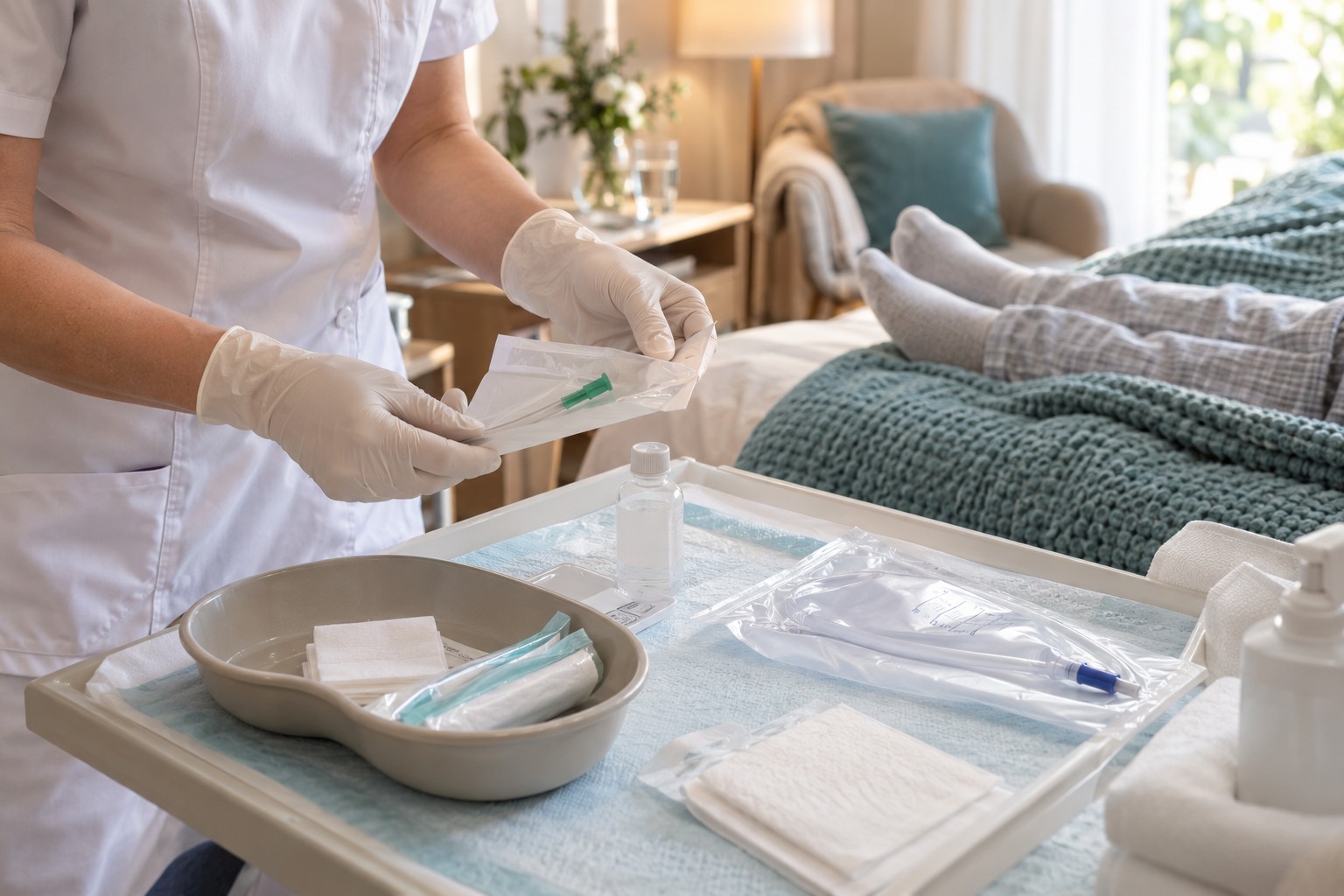
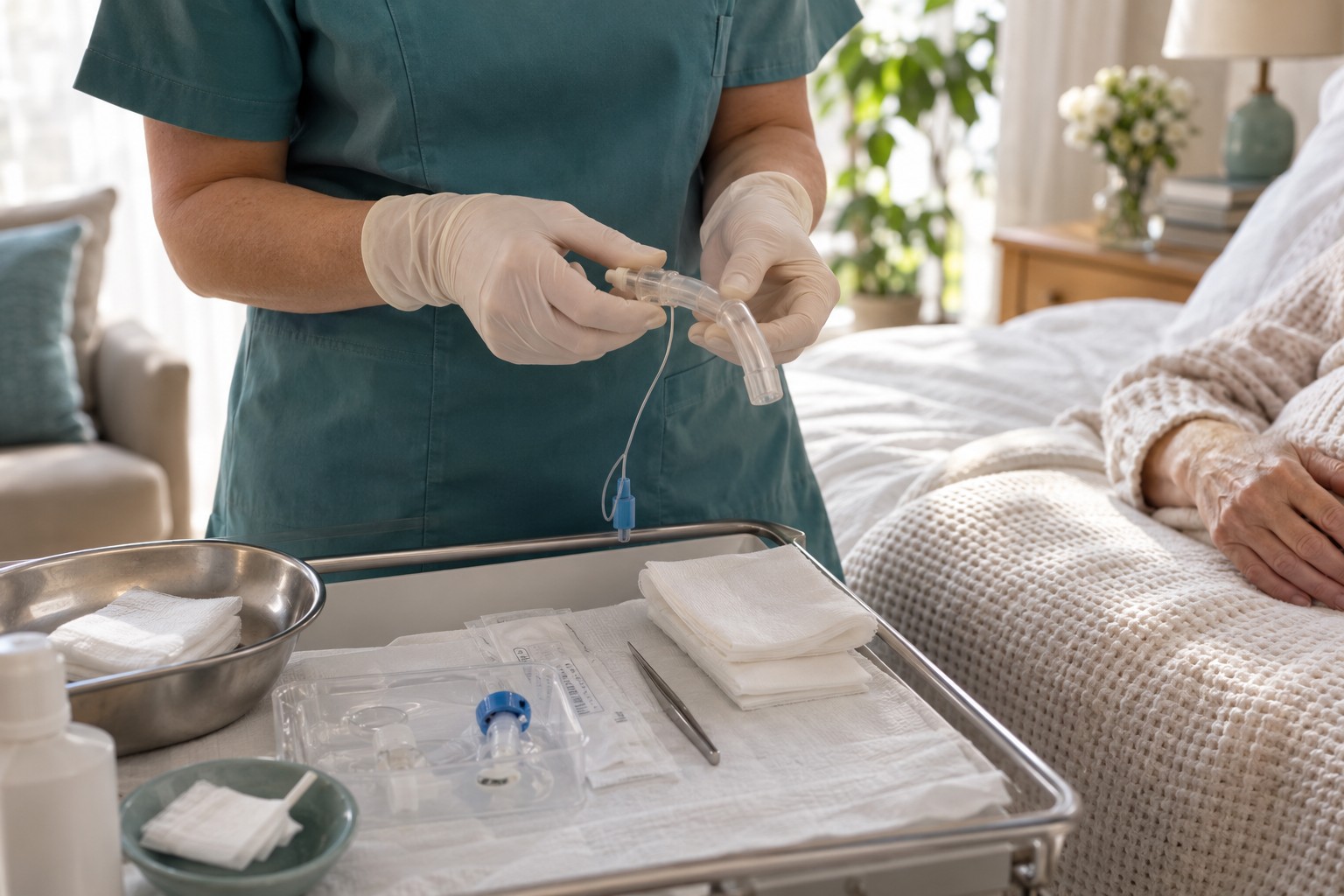
Every dressing change begins with hand hygiene and a clean work area. The nurse opens a sterile, single-use set, cleans the wound with these supplies and does not touch the inner surface of the new dressing while placing it. This method, known as the aseptic non-touch technique, aims to prevent germs from being carried into the wound from outside. In clean wounds such as an incision line, cleaning moves from the center outward, so that germs on the surrounding skin are not carried into the wound.
Removed old dressings, gloves and used supplies count as medical waste and are taken away by the team when they leave; they are not thrown into the trash at your address. Notes on the wound's appearance and size are your health data and are protected under KVKK (Turkish Personal Data Protection Law No. 6698).
What to watch for between dressing changes
On the days between visits, the aim is to keep the established routine intact and to notice changes early. The following points will guide you:
- Do not remove the dressing yourself; if it gets wet, dirty or slips out of place, let the nurse know.
- Do not apply home remedies to the wound, such as creams, powders, toothpaste or herbal mixtures.
- Wash your hands with soap before and after touching the area around the dressing.
- Ask the nurse how to protect the dressing before bathing.
- If your loved one has diabetes, check their feet every day, including between the toes, and make sure they do not walk around barefoot.
Redness spreading around the wound, fever, a bad smell, increasing discharge or the dressing becoming soaked within a short time are signs that you should not wait for the next dressing change. If you notice such a change, inform the nurse and your doctor without delay.
Dressing changes when you return to work or travel
Although it is called wound care at home, the service is not limited to the home. Someone who has gone back to work can be visited at their office during the lunch break, and guests who come to Istanbul for surgery and stay in a hotel can have their dressing changed in their room. If you have other health needs while staying at a hotel, they can be handled together through our healthcare at your hotel service.
From Sarıyer to Tuzla, our team comes to your address in each of Istanbul's 39 districts; your request is answered within 3 minutes on average, and a same-day visit can be arranged for the first dressing change. For procedures covered by your private health insurance, we obtain the insurer's pre-approval and charge no co-payment; you will find the details on our insurance and payment page. For chargeable procedures outside insurance coverage, the fee is shared clearly before the process begins.