
About Pendik Urine Test at Home
Urine holds clues about how many organs are working, from the kidneys to the urinary tract; that is why doctors frequently order it both for a short-lived complaint and for long-term follow-up. A urine test at home lets you have this simple but important test done without standing in line at a laboratory: the sample container comes to your address, your sample is collected on the spot and it is delivered to the laboratory under the right conditions. Below you will find, step by step, when the test is ordered, how to prepare and the journey your sample takes.
When is a urine test at home ordered?
Your doctor decides whether to order the test and which analysis to request. That said, requests usually cluster around a few situations:
- Complaints such as burning when urinating, frequent trips to the bathroom, or changes in the color and smell of urine
- Regular monitoring of diabetes and kidney disease
- Routine check-ups throughout pregnancy
- Pre-operative assessment or a general check-up
- Monitoring of patients who use a catheter long-term or are bedridden
- A follow-up test after treatment for a urinary tract infection
The test ordered may differ in each of these situations. Sometimes a complete urinalysis alone is enough; sometimes the doctor also orders a culture from the same sample. Sharing the details of the request when you book ensures that the right container and the right instructions are prepared.
How should you prepare before your appointment?
A urine test usually does not require a special diet; still, a few small details make the result more reliable. Unless your doctor has said otherwise, the first urine of the morning is preferred, because urine that collects in the bladder overnight is more concentrated. The evening before your appointment, simply drink your usual amount of fluids; drinking too much water dilutes the urine and can make some values look lower than they really are.
It also helps to write down the medications, vitamins and herbal supplements you take. Some medications can affect the color of urine or certain measurements; this list allows the doctor who evaluates the result to take those effects into account. You can read the details and preparation notes for each test in our test catalog.
The sample's journey from container to laboratory
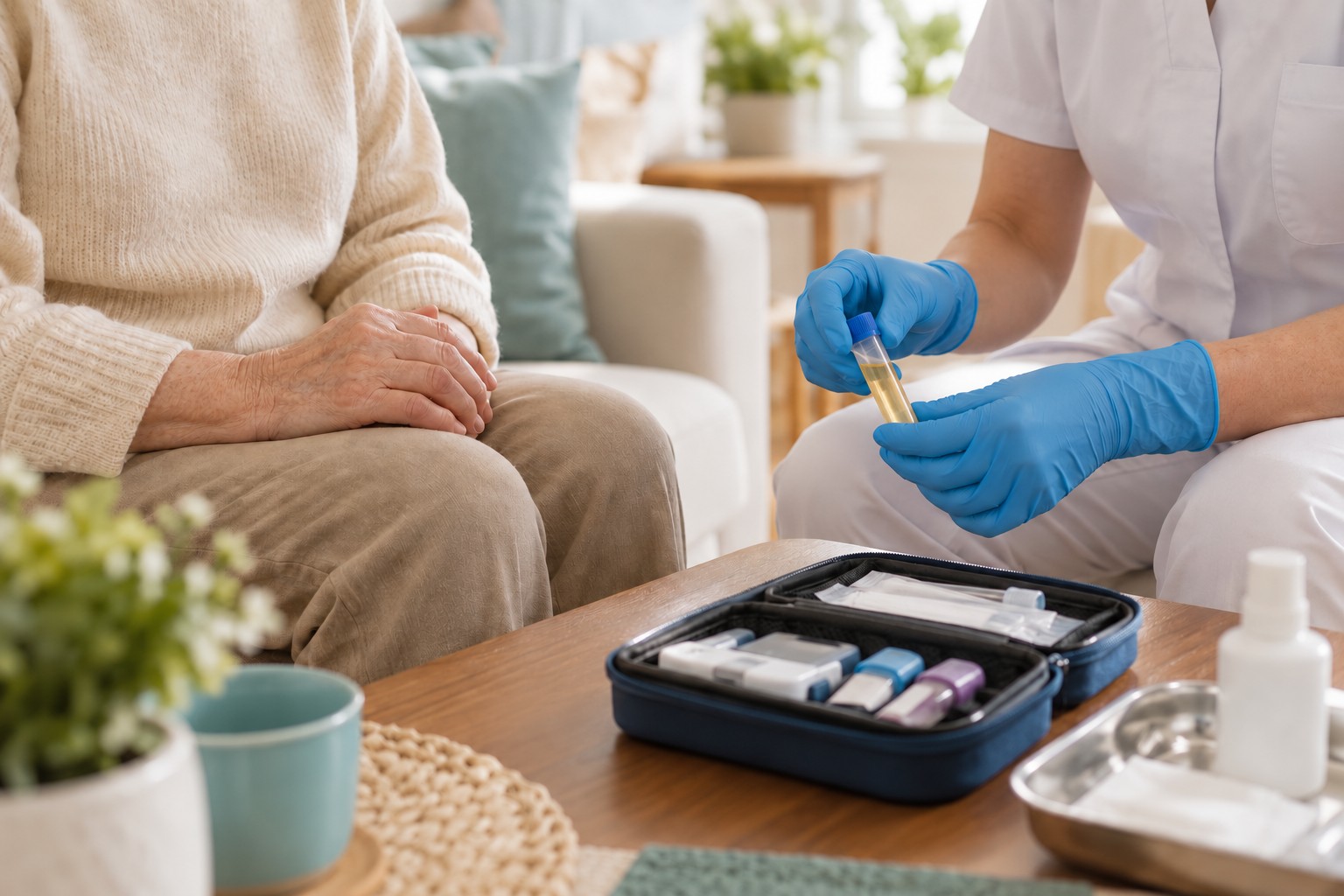
Our nurse comes to your address with a sterile, lidded sample container. Not touching the inside of the container or the inside of the lid is important so that the sample is collected without outside contamination; that is why you are given a short, clear explanation before you give the sample. Once closed, your container is labeled with your identification details and recorded.
The longer a sample sits, the more its cells can break down and bacteria can multiply. That is why the visit time is planned so that the sample is collected fresh, and it is delivered to an accredited laboratory with the cold chain maintained. The single-use materials used are not left at your address; your results are sent to you digitally, and your health data is protected under KVKK (Turkish Personal Data Protection Law No. 6698).
What should you look out for when reading the report?
In a urine report, alongside numerical values you will see terms such as "negative", "positive" or "trace". A trace amount means that only a very small amount of the substance is present and is not, on its own, a sign of disease; dehydration, intense exercise or even the way the sample was given can cause such small differences. In the microscopic examination, the number of cells and crystals seen is given together with the reference range used by the laboratory.
If a culture has been ordered, the result takes a little longer, because the laboratory has to wait for bacteria to grow. If there is growth, a list showing which antibiotics are effective is added to the report. Do not choose a medication yourself based on this list; treatment is always decided by the doctor who evaluates the result. Keeping your previous reports makes it easier to see how values change over time.
If the sample is for a family member
Giving a urine sample can seem worrying for an elderly relative who cannot use the bathroom unaided, or for a bedridden patient. In this case, our nurse helps collect the sample while protecting the patient's privacy and dignity. For patients with an indwelling catheter, the sample is taken with sterile technique from the catheter's sampling port, not from urine that has collected in the bag. If the catheter itself needs care or changing, this can be scheduled on the same day with our urinary catheter insertion at home service.
For babies and young children, how the sample is collected depends on their age. Passing on your doctor's advice on this to us before the appointment helps keep the visit short and calm for your child.
How do you schedule your appointment in Istanbul?
Curavita Evde Sağlık comes to your home, your office or your hotel in all 39 districts of Istanbul. You can send your request via the form, WhatsApp or our call center, which is available 24/7; our team gets back to you within 3 minutes on average to confirm the tests and a convenient time. Depending on availability, a same-day appointment can also be scheduled.
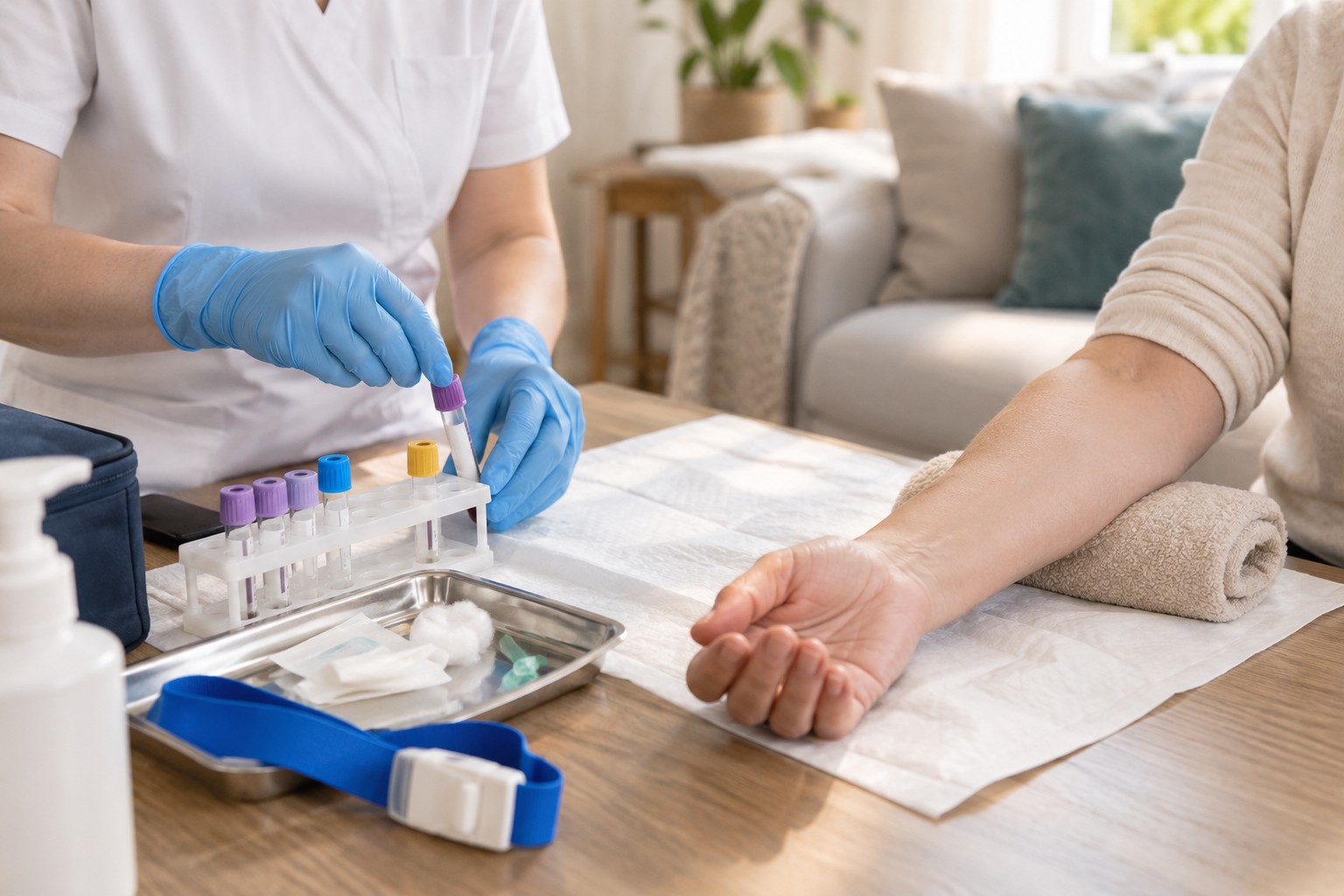
If your doctor has also ordered blood tests in addition to the urine test, there is no need to split the two samples over separate days; with our blood draw at home service, both can be taken in a single visit. The fee is based on the tests you have done and is clearly shared with you before the process begins. If you have private health insurance, we obtain the pre-approval; once it is approved, we collect your sample, and no co-payment is charged.