

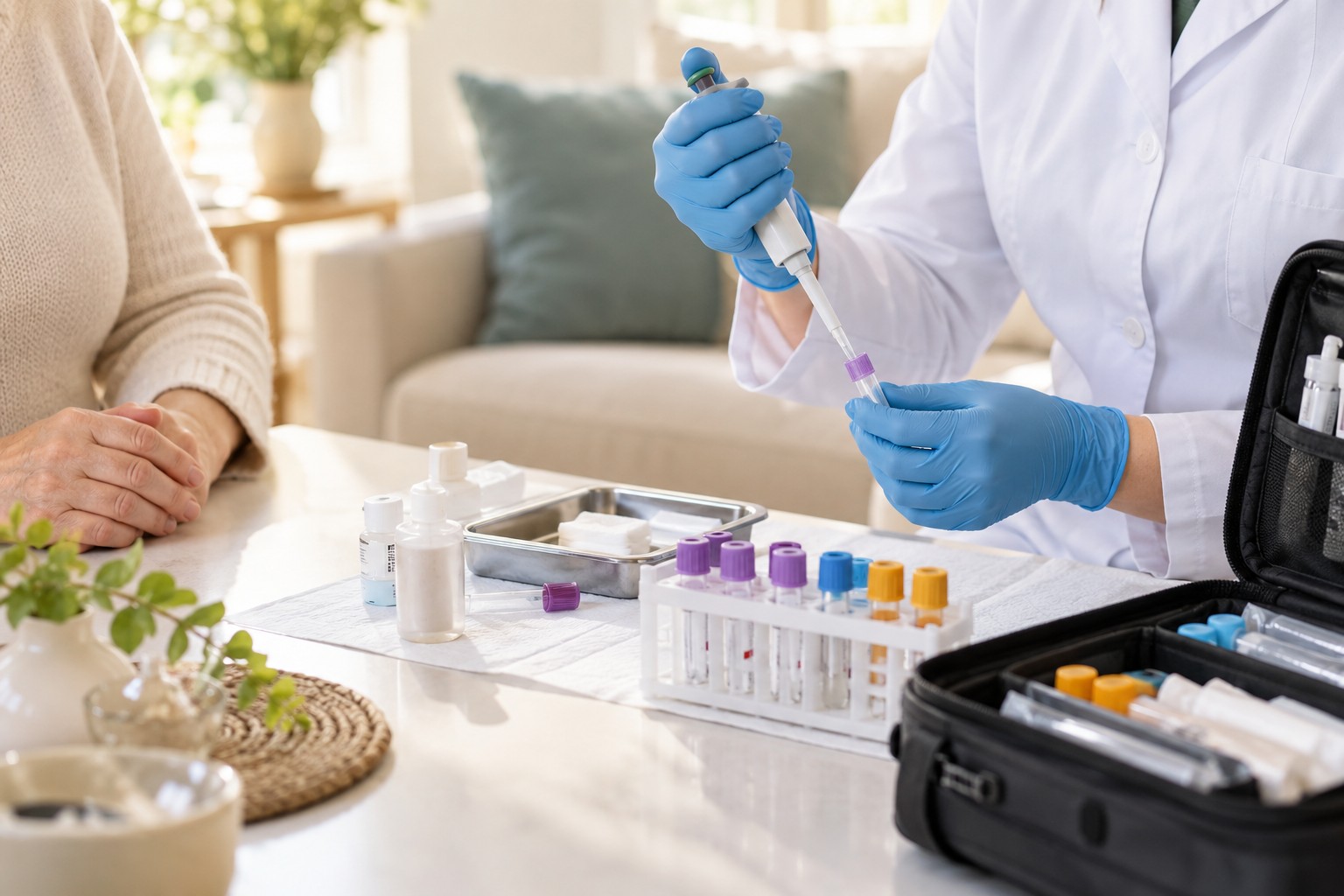
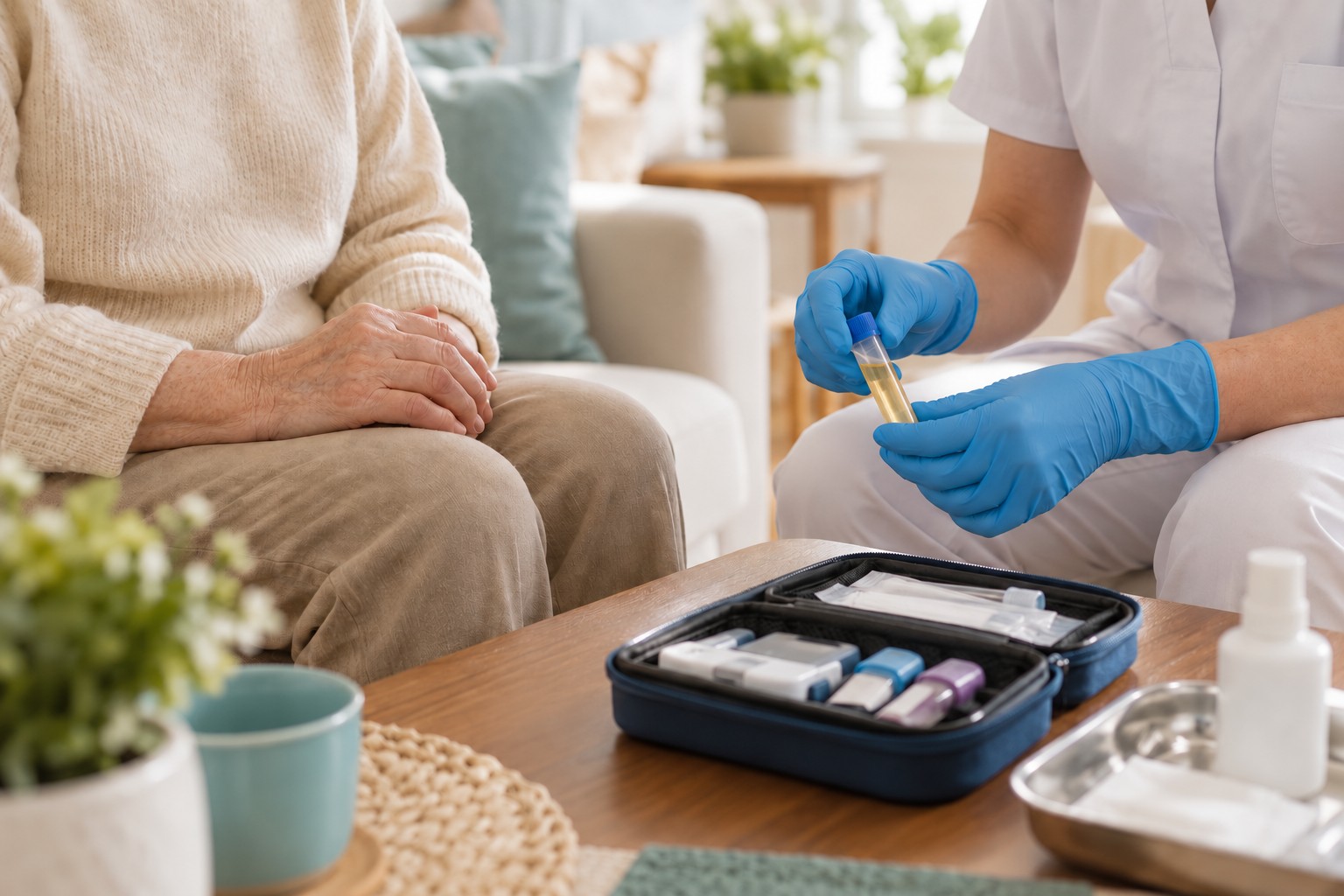
A urine culture identifies the bacterium causing a urinary tract infection and shows which antibiotic will be effective. The sample can be given at home.
- Sample
- Urine
- Fasting
- Not required
- Turnaround time
- Usually 1–3 days (culture time)
- Test group
- Culture and Microbiology
Preparation: No fasting is needed. After cleansing, a midstream sample of the first morning urine is collected in a sterile container; if possible, give it before starting antibiotics.
Insurance: We work with private health insurers. For this test, we obtain the pre-approval and collect your sample once approval is received; we do not charge a co-payment. Insurance and payment
Contents
What is a urine culture?
A urine culture is a microbiology test in which microorganisms such as bacteria or yeasts are grown from a urine sample and investigated. In healthy people, urine in the bladder does not contain bacteria at levels that can be grown in culture. Bacteria that reach the urinary tract, however, can cause conditions such as bladder inflammation (cystitis) or kidney infection (pyelonephritis). The culture reveals the type of microorganism causing the infection and its concentration in the urine.
The sample is placed on a culture medium suitable for bacterial growth and is usually kept in an incubator overnight. The next day, the colonies that have formed are counted; if there is significant growth, the bacterium is identified and an antibiogram (antibiotic sensitivity test) is performed. The antibiogram shows which antibiotics the bacterium is sensitive to, helping your doctor choose the most suitable treatment. Although the most commonly detected cause is Escherichia coli, other bacteria and yeasts can also grow.
When is a urine culture ordered?
A urine culture is ordered for people with symptoms of a urinary tract infection to confirm the diagnosis and guide treatment. In infections that recur or do not respond to treatment, it is especially important to see which bacterium is responsible and what its resistance profile is. Because of rising antibiotic resistance, choosing the right medicine directly affects the success of treatment.
- Burning or stinging when urinating, or frequent urination
- Lower abdominal pain, cloudy or foul-smelling urine
- Urinary complaints together with fever, chills and flank pain
- Frequently recurring urinary tract infections
- Screening during pregnancy, even without symptoms
- Findings suggestive of infection on a complete urinalysis
How should you prepare for a urine culture?
You do not need to fast for a urine culture. The first morning urine is preferred, because bacteria are easier to detect in urine that has stayed in the bladder for several hours. If antibiotics have already been started, the culture may show no growth, so the sample should be given before treatment whenever possible. If you are menstruating or have taken any medicines in recent days, mentioning this in advance helps ensure that the result is interpreted correctly.
The sample is collected using the midstream method: after washing your hands, clean the genital area with soap and water and rinse it thoroughly, pass the first part of the urine into the toilet, collect the middle part in the sterile container, and let the rest go into the toilet. For women, cleaning from front to back and never touching the inside of the container or its lid prevents contamination from outside. If you prefer to give the sample at home, a sterile container is delivered to you, and the nurse takes the sample you have collected to the laboratory without delay. If you have to wait before handing it over, you can store the tightly closed container in the refrigerator for a short time.
What does a urine culture result mean?
A "no growth" result shows that the urine sample did not contain bacteria or yeasts at a level detectable by culture, and it often makes a urinary tract infection unlikely. When significant growth is detected, the report includes the name of the microorganism, its concentration in the urine and the antibiogram result. Based on this information, your doctor starts treatment or assesses whether a medicine that has already been started is appropriate.
Mixed growth, in which more than one type of bacteria grows in small amounts, most often suggests that the sample was contaminated from the skin or genital area, and the test may be repeated. Bacteria in the urine without symptoms usually do not need treatment, except in special situations such as pregnancy or before certain urological procedures. Evaluation criteria may vary by laboratory; this laboratory's reference wording is shown on this page. The result should be interpreted by a doctor together with your complaints, age and sex, and other findings such as a complete urinalysis.
Expected result
- No growth
This is the value used by our laboratory; it may vary depending on age, sex, the method used and the laboratory. Review your result together with your doctor.
How is Urine Culture (Culture and Sensitivity) done at home?
-
01
Book your appointment
Fill in the online form or call us, and let's plan a day and time that suit you together.
-
02
Your sample container is delivered
A sterile sample container and instructions are brought to your address; once you have provided your sample, our nurse collects it.
-
03
You receive your result
Your sample is transported to the laboratory under appropriate conditions; your result is sent to you when it is ready.
Frequently asked questions
The information on this page is for general information only; it does not replace diagnosis or treatment. Consult your doctor for decisions about your health.