

About Şile Urinary Catheter Insertion at Home
Whether a urinary catheter works safely depends less on the few minutes it takes to insert it than on the care it receives in the days that follow. That is why urinary catheter insertion at home is not a one-off procedure; it is a process to be thought through together with the right choice of catheter, sterile insertion, planned replacement and, when needed, bladder irrigation. For family members, the most valuable knowledge is being able to tell what is normal from what is a warning sign.
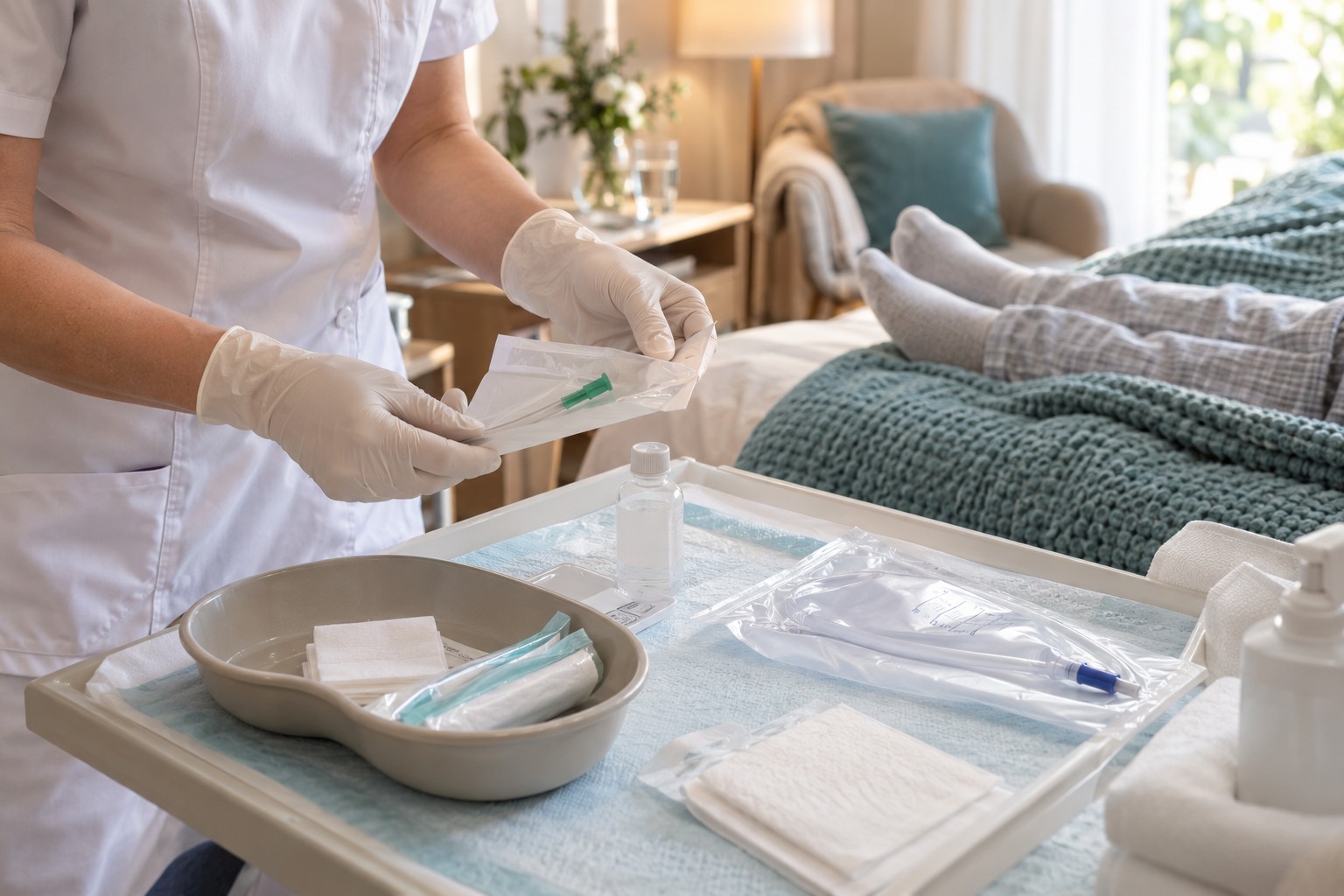
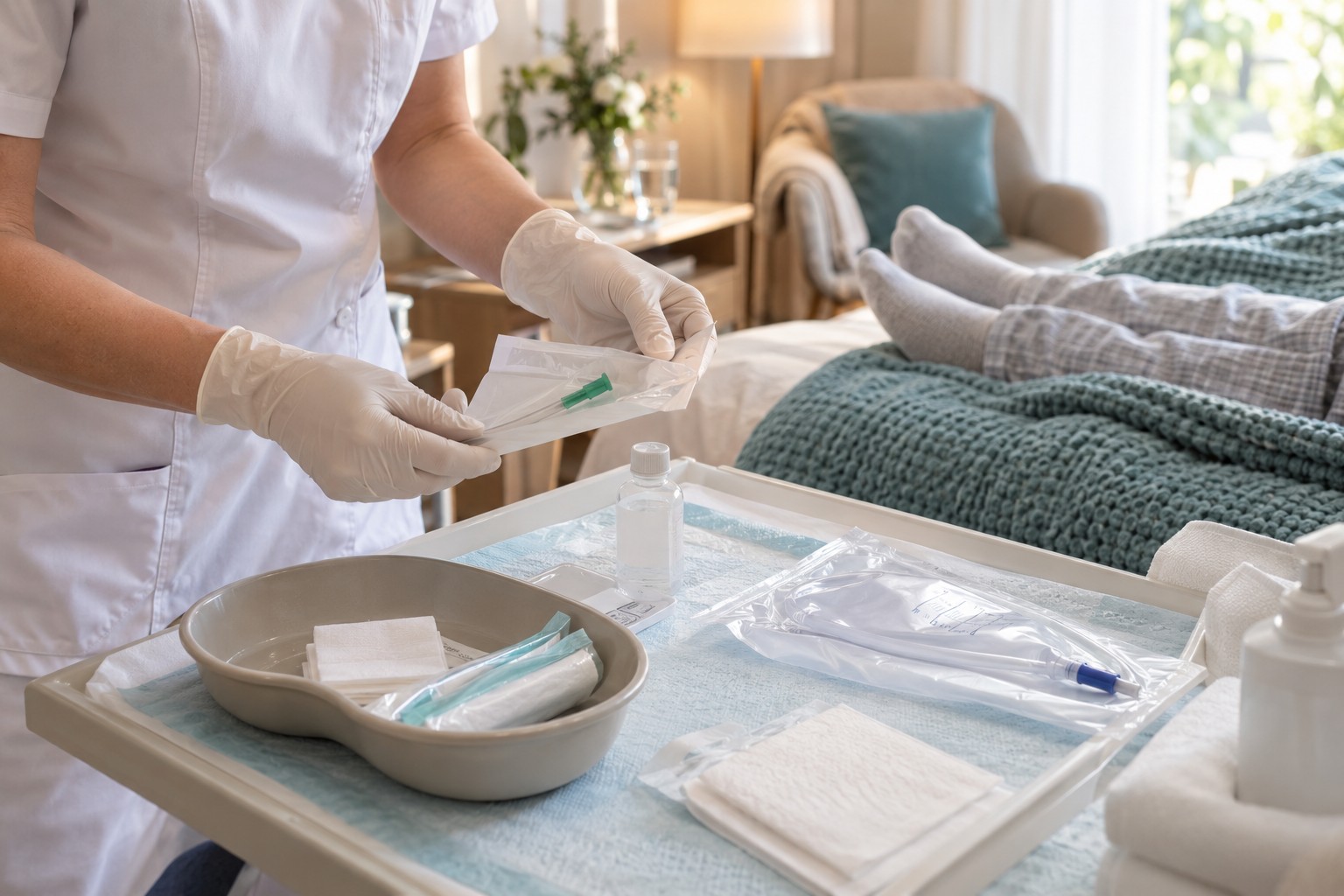
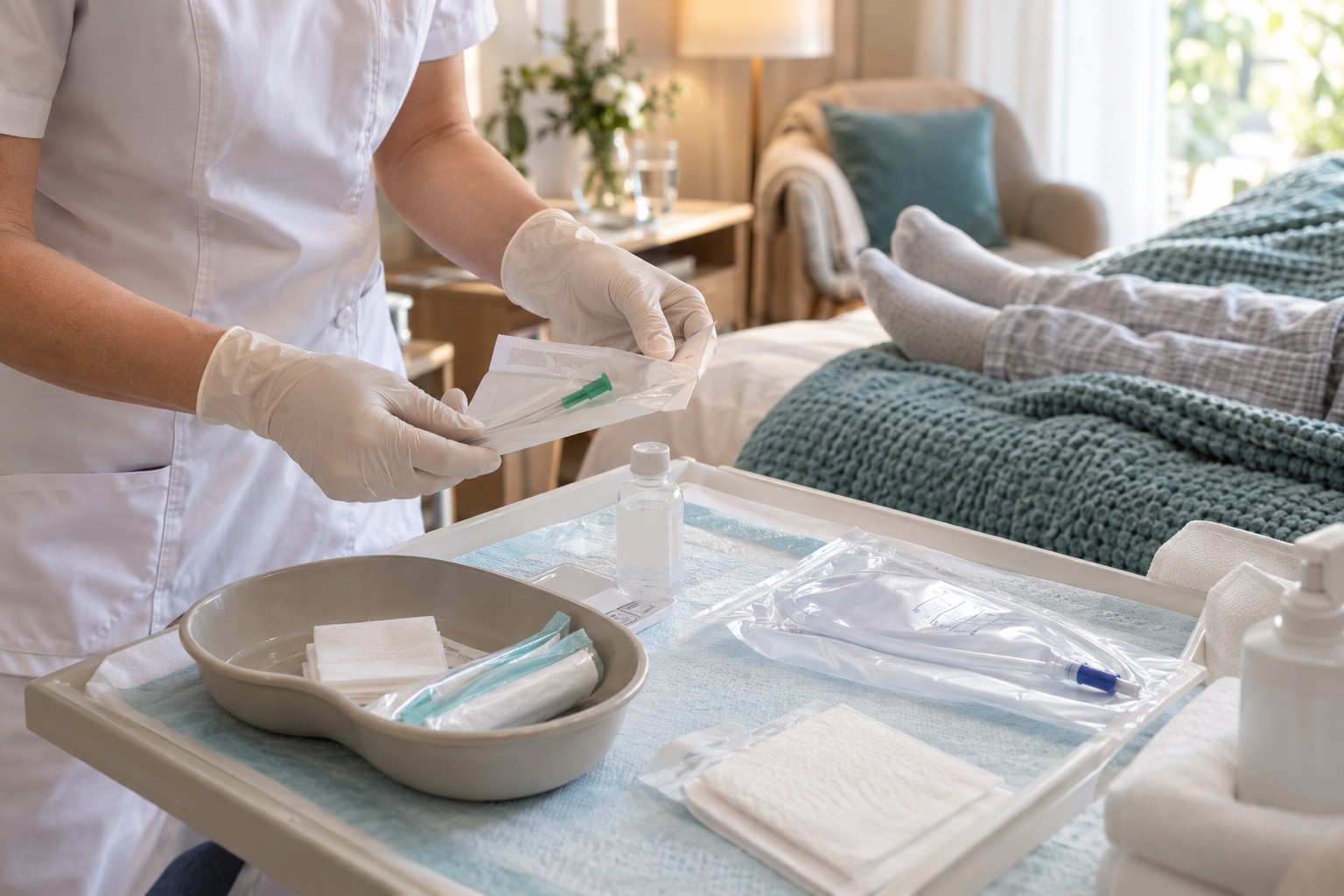
Curavita Evde Sağlık nurses insert the catheter in your home, in the patient's own bed, using sterile, single-use materials. Which catheter is used, when it is replaced and whether bladder irrigation is needed are always decided by your doctor.
Types of urinary catheters and how they differ
In everyday language they are all simply called "catheters", but urinary catheters differ in the way they are used. The most common is the indwelling catheter, which is inserted through the urethra, stays in the bladder and drains urine continuously into a bag. Intermittent catheterization, in which the bladder is emptied at set intervals during the day and the catheter is removed straight away, may be preferred for some neurological bladder problems.
Suprapubic catheters, placed through the lower abdomen in a minor surgical procedure, and external condom catheters for men also belong to this family. In choosing the material, latex allergy, how long the catheter will stay in and the patient's comfort are the deciding factors; the catheter's diameter should also suit the urethra. The collection bag is part of this choice as well. People who move around during the day use small bags strapped to the leg, while bedridden patients, and anyone at night, use larger bags hung on the side of the bed.
How is sterility maintained when inserting a catheter at home?
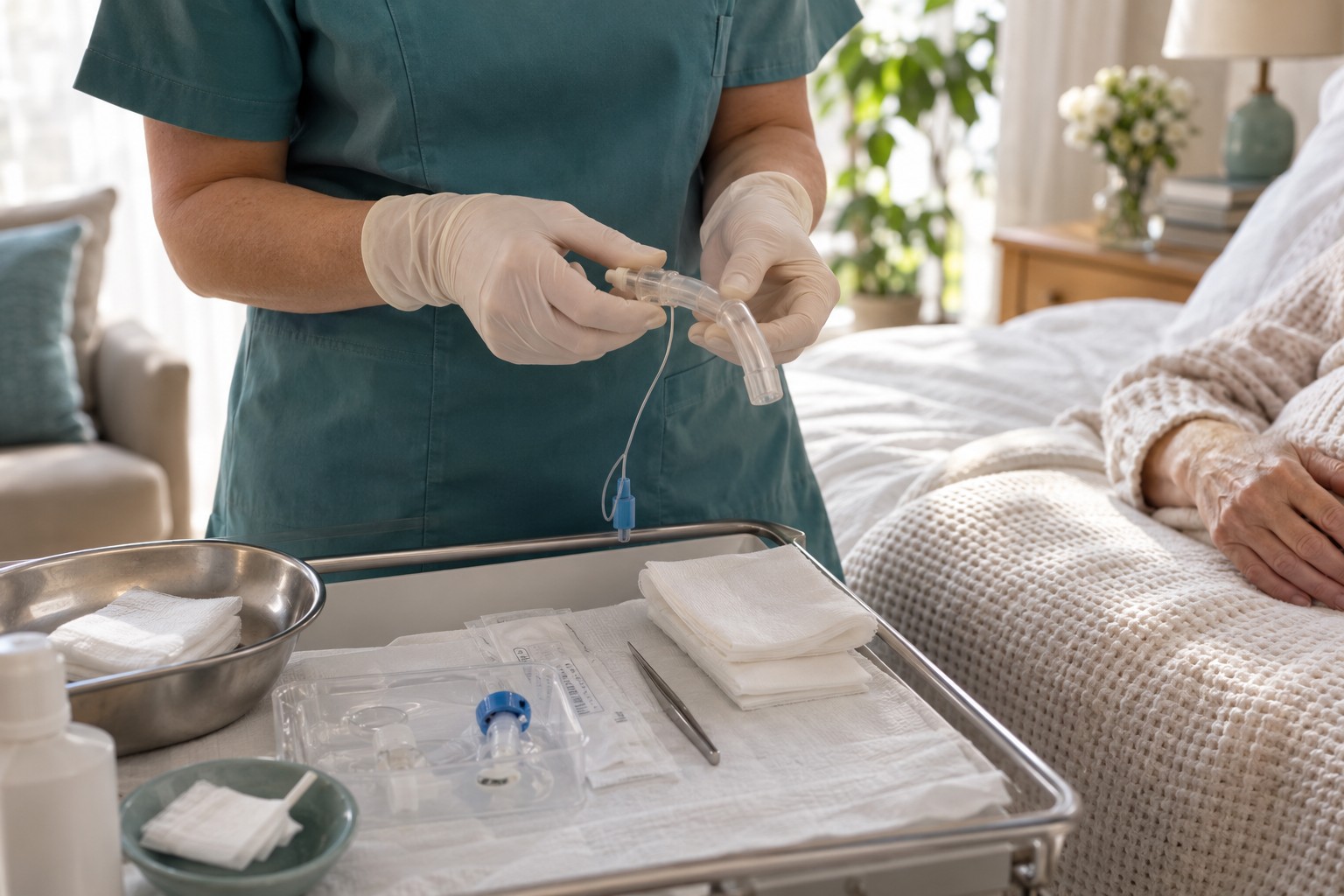
A home is not an operating room; sterility is achieved not across the whole room but through a sterile field maintained at every step of the procedure. Before the procedure, the patient's identity, the doctor's recommendation and the expiry date of the catheter kit are checked, and the packaging is confirmed to be intact. Once sterile gloves are on, touching nothing but the contents of the kit is the key to preventing germs from being carried into the urinary tract.
The preparation expected from you is simple: a well-lit room, a clean, clear surface next to the bed and a closed door for privacy. Once the catheter is in place, a closed drainage system is set up. Not opening the connection between the catheter and the bag unnecessarily is one of the basic rules for reducing the risk of infection. Medical waste from the procedure is not left in your home; the team takes it away with them.
When is bladder irrigation needed?
Bladder irrigation means flushing the catheter and bladder with a sterile solution to clear sediment, clots or blockages. It is not a routine care step; it is done when less urine drains through the catheter, when noticeable sediment builds up in the bag, or when your doctor sees a specific reason. Because irrigation usually requires the closed system to be opened, unnecessary repetition is avoided and the procedure is carried out only on a doctor's recommendation.
Your doctor decides the type and amount of solution to be used; the nurse carries out the procedure with a sterile syringe or irrigation set, without moving the catheter out of place. After irrigation, the color and flow of the urine and the patient's comfort are monitored; if blockages keep coming back, catheter replacement may be considered. Do not try to irrigate the catheter yourself at home or to pull out a blocked catheter.
Daily care and warning signs
Always keep the bag below the level of the bladder; don't let it touch the floor or let the tubing kink. The bag should be emptied before it is full, the urethral opening should be gently cleaned with soap and water every day, and the catheter should be secured to the leg so it isn't pulled taut. Unless your doctor has recommended limiting fluids, drinking enough during the day also supports urine flow.
When you are caring for a loved one with a catheter, your most important task is to notice changes early. If you see any of the following signs, let your doctor or the healthcare team know:
- Fever, chills or a marked decline in general condition
- Cloudy, concentrated or foul-smelling urine
- Blood or clots in the urine
- Pain in the groin, lower back or flank
- Urine leaking around the catheter, or no urine draining into the bag for a long time
- Redness, swelling or discharge where the catheter exits the body
- In older people, sudden restlessness, excessive sleepiness or confusion
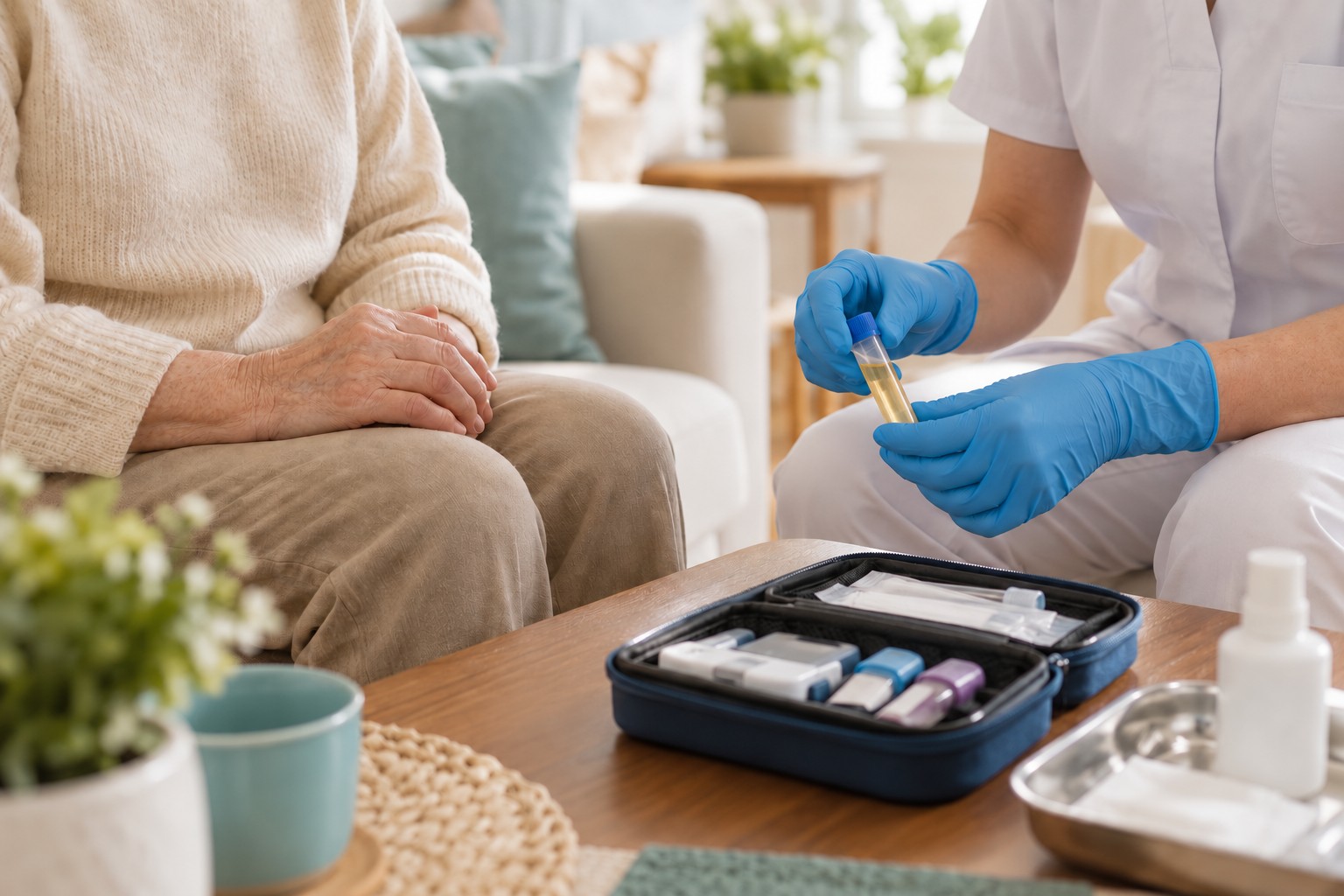
These signs do not always mean an infection; the assessment is made by the doctor. If your doctor requests a test, the urine sample should be taken using a sterile technique from the sampling port on the system, not from the urine collected in the bag. This sample can be collected from your home as part of our on-site laboratory service; it is transported to an accredited laboratory under cold chain conditions and the result is sent to you digitally.
Planning catheter changes in Istanbul
Because catheter changes can follow a schedule that is known in advance, it is best not to leave booking until the last day. In Istanbul traffic, having a nurse come to your home instead of taking a bedridden patient to the hospital spares the patient the strain and also protects their privacy. In an unexpected situation such as a blockage, you can call our call center, which is available 24/7, and take advantage of same-day appointments.
Nurse visits can be arranged in every one of the 39 districts, from Beykoz to Esenyurt. Curavita Evde Sağlık holds a certificate of conformity (Uygunluk Belgesi) issued by the Provincial Health Directorate; like all our services, catheter procedures are carried out under the supervision of our responsible manager and within the framework of the relevant health regulations. Our quality and patient safety page explains the principles involved in detail. Home care support can also be added to your plan for the personal care of a loved one who has a catheter and is bedridden.