

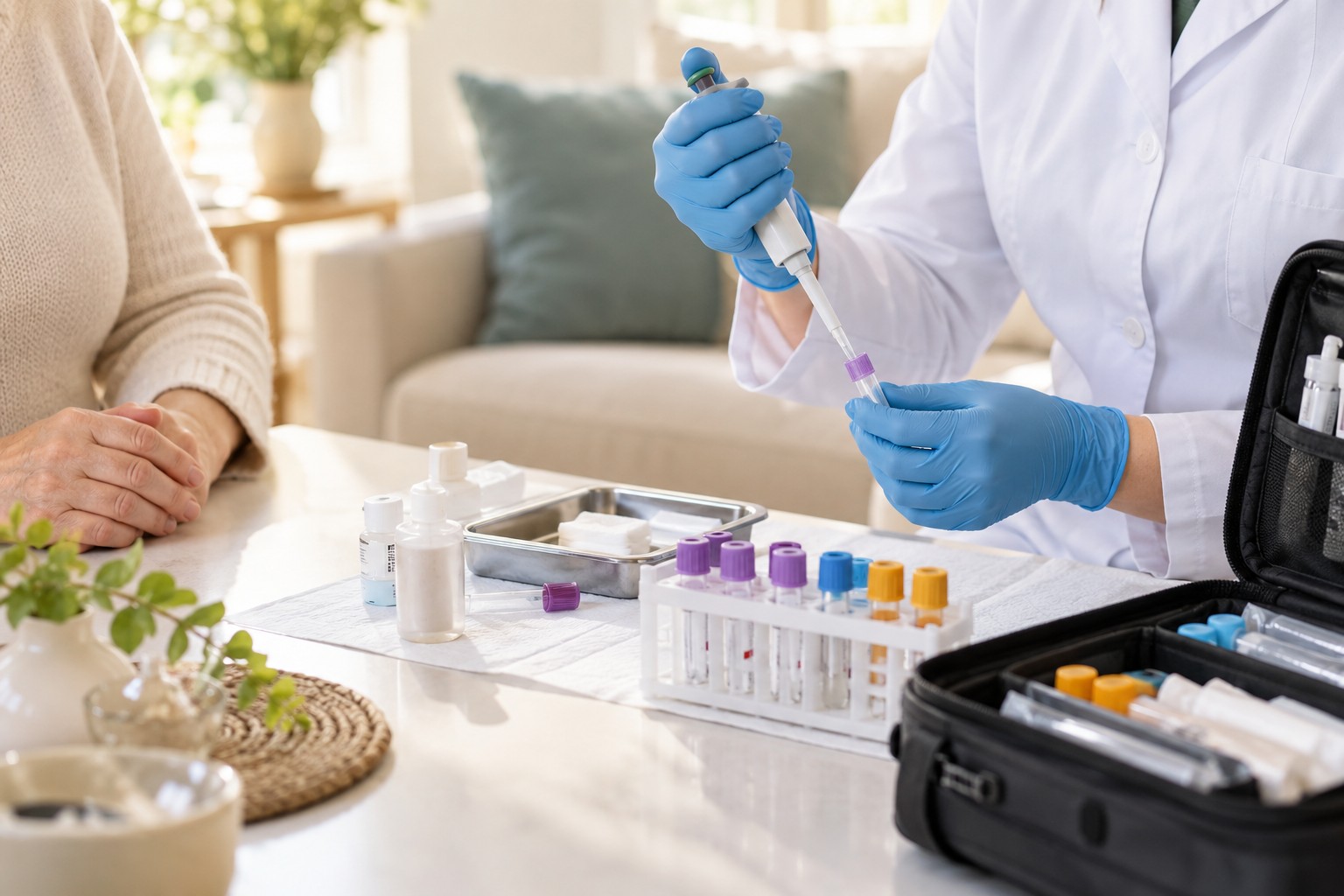

The albumin test measures the main blood protein produced by the liver; it helps assess liver and kidney health and nutritional status. The sample can be taken at home.
- Sample
- Blood
- Fasting
- Not required
- Turnaround time
- As soon as possible
- Test group
- Biochemistry
Preparation: No fasting is needed; the sample can be given at any time of day. Tell your doctor about the medicines you take.
Insurance: We work with private health insurers. For this test, we obtain the pre-approval and collect your sample once approval is received; we do not charge a co-payment. Insurance and payment
Contents
What is albumin?
Albumin is a protein produced in the liver and the most abundant protein in blood plasma; it makes up more than half of the total protein in the blood. It holds fluid inside the blood vessels and prevents it from leaking into the tissues, which helps maintain the body's fluid balance. It also carries hormones, certain medicines, calcium and bilirubin in the bloodstream, allowing these substances to reach the places where they are needed.
The liver produces albumin steadily every day, and this protein remains in the blood for several weeks. For this reason, the albumin level reflects conditions that have been present for some time rather than sudden changes. The test measures the amount of albumin in blood serum on automated biochemistry analyzers, using methods based on a color change, and the result is reported in g/dL.
When is the albumin test ordered?
Albumin measurement is used to assess the liver's ability to produce protein, whether protein is being lost through the kidneys, and a person's nutritional status. It is often ordered together with liver function tests, total protein or kidney tests. It also helps monitor the general condition of people who have a chronic illness, who have been bedridden for a long time or whose appetite has decreased markedly.
In liver diseases, albumin production may decrease, while in kidney diseases albumin may be lost in the urine. To tell these two situations apart, your doctor evaluates the albumin result together with a urine protein measurement and liver enzymes. Albumin may also be checked in pre-operative assessments as an indicator of general health.
- Swelling (edema) in the legs, ankles or around the eyes
- Signs of liver disease such as fluid buildup in the abdomen or jaundice
- Foamy urine or suspected kidney disease
- Weight loss, malnutrition or an absorption disorder
- Monitoring of general condition after severe illness, surgery or burns
How should you prepare for the albumin test?
Fasting is usually not required for the albumin test, and the sample can be given at any time of day. However, if other tests that require fasting are to be run on the same tube, your doctor may ask you to fast for 8–12 hours. Because drinking excessive amounts of fluid or significant fluid loss can temporarily affect the result, it is best to keep to your usual eating and drinking habits before the test.
The blood sample is taken from a vein in the arm; the procedure is kept short because leaving the tourniquet on for a long time can artificially raise the value. In samples taken after a long period of lying down and resting, the value may measure slightly lower than in people who are standing. Our nurse can take this sample at your home or workplace. Telling your doctor about the medicines you take, especially those containing hormones, makes the result easier to interpret.
What does the albumin result mean?
Low albumin may suggest liver disease, protein loss through the kidneys, malnutrition, absorption disorders or ongoing inflammation in the body. A drop may also be seen after severe burns, major surgery and serious infections. In the last months of pregnancy, albumin may fall slightly because blood volume increases, and this is usually an expected change. A single low value does not establish a diagnosis; additional tests such as urine tests and liver tests may be needed to understand the cause.
High albumin, on the other hand, is mostly related to dehydration and usually returns to normal once fluid intake is corrected. Low albumin can also affect the measured results of substances that are carried bound to albumin, such as calcium; for this reason, doctors interpret some values after correcting them for albumin. Reference ranges may differ by laboratory, age and sex; this page shows the range of the laboratory that analyzes your sample. It is your doctor who will interpret your albumin level, taking your symptoms and your other test results into account.
Reference range
Unit: g/dL- 3.5 - 5.2
This is the value used by our laboratory; it may vary depending on age, sex, the method used and the laboratory. Review your result together with your doctor.
How is Albumin (Serum) done at home?
-
01
Book your appointment
Fill in the online form or call us, and let's plan a day and time that suit you together.
-
02
Your blood is drawn at home
Our nurse comes to your address and collects your blood sample using sterile, single-use supplies.
-
03
You receive your result
Your sample is transported to the laboratory under appropriate conditions; your result is sent to you when it is ready.
Frequently asked questions
The information on this page is for general information only; it does not replace diagnosis or treatment. Consult your doctor for decisions about your health.