

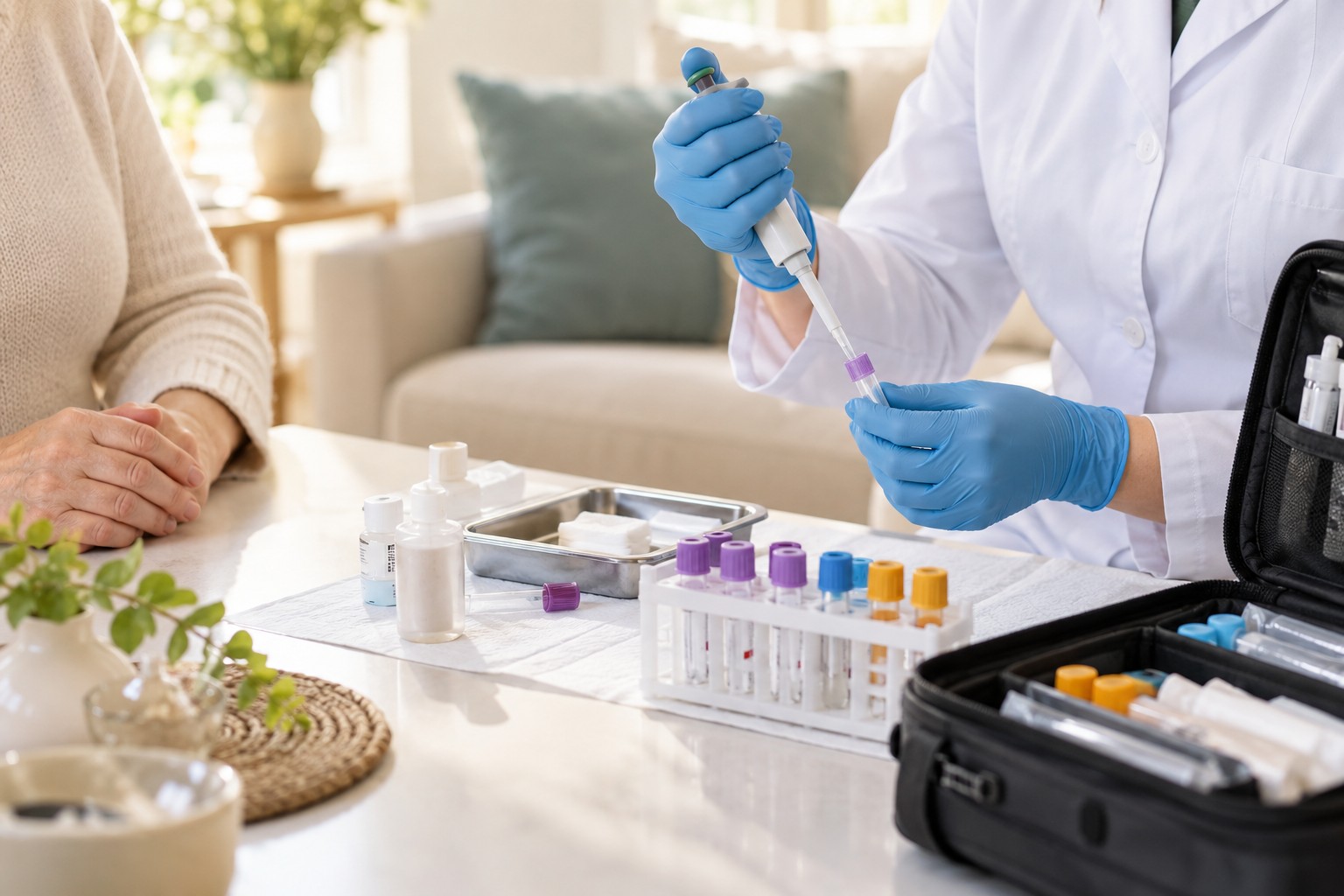

The zinc test measures the blood level of this mineral, which is needed for immunity, wound healing and healthy hair and nails. It is ordered when deficiency is suspected.
- Sample
- Blood
- Fasting
- Required
- Turnaround time
- Usually 2–4 business days
- Test group
- Biochemistry
Preparation: A morning sample after about 8 hours of fasting is recommended. Ask your doctor whether you should pause your zinc supplement.
Insurance: We work with private health insurers. For this test, we obtain the pre-approval and collect your sample once approval is received; we do not charge a co-payment. Insurance and payment
Contents
What is zinc?
Zinc is a trace element that the body cannot produce on its own and that must be obtained regularly from food. It takes part in the work of hundreds of enzymes and plays an important role in immune function, wound healing, growth, the senses of taste and smell, and cell renewal. It is also needed for storing insulin and for certain hormones to exert their effects. Red meat, seafood, legumes, nuts and whole grains are the main food sources.
Only a very small fraction of the body's zinc circulates in the blood; most of it is found in the muscles and bones. Because the body has no special zinc store, regular intake is important. Zinc in the blood is mostly carried bound to albumin. The zinc test measures the amount of zinc in blood serum using photometric methods or specialized instruments such as atomic absorption, and the result is reported in µg/dL.
When is the zinc test ordered?
Your doctor may order this test if you have symptoms that suggest zinc deficiency or a condition that increases the risk of deficiency. Deficiency is more common in people with an unbalanced or zinc-poor diet, older adults, pregnant women and people with chronic bowel disease. Because certain substances in plant foods can reduce zinc absorption, the risk of deficiency may also be higher in people who follow a vegetarian or vegan diet.
The test may also be used to look for excess zinc in people who have been taking high-dose zinc supplements for a long time. Because excessive zinc intake can reduce copper absorption, your doctor may also check the copper level when necessary.
- Hair loss, brittle nails and skin problems
- Slow wound healing or frequent infections
- Reduced sense of taste and smell, loss of appetite
- Growth delay in children
- Chronic diarrhea, absorption disorders or a history of bowel surgery
- Long-term use of high-dose zinc supplements
How should you prepare for the zinc test?
The zinc level in the blood changes during the day and can drop after meals. For this reason, it is recommended that the blood sample be given in the morning, after about 8 hours of fasting. It is fine to drink water while fasting. Because hemolysis of the blood sample, that is, the breakdown of red blood cells, can artificially raise zinc, the sample is taken with care.
Vitamin and mineral supplements containing zinc can affect the result; ask your doctor whether you should pause them before the test, and for how long. Cortisone-type medicines, birth control pills and some blood pressure medicines can also change zinc levels, so it is important to mention the medicines you take. The blood sample is taken from the arm and placed in the appropriate tube specified by the laboratory; our nurse can do this at your home or workplace.
What does the zinc result mean?
Low zinc may be associated with malnutrition, a zinc-poor diet, absorption disorders, chronic diarrhea, alcohol use, or liver or kidney disease. During an infection or inflammation, zinc temporarily moves from the blood into the tissues, so the level may measure low; this does not always mean a true deficiency. For this reason, your doctor may also look at markers of inflammation such as CRP when evaluating the result. Low albumin and pregnancy can also lower serum zinc.
High zinc mostly results from taking too much supplementation over a long period and can lead to copper deficiency over time. Rarely, contamination while the sample is being collected or transported can also cause a high result. The accepted range for zinc may differ by measurement method, laboratory, age and sex; the range shown on this page is that of the laboratory that analyzes your sample. What the result means for you is determined by your doctor, who evaluates your symptoms and your other lab tests together.
Reference range
Unit: µg/dL- 60 - 120
This is the value used by our laboratory; it may vary depending on age, sex, the method used and the laboratory. Review your result together with your doctor.
How is Zinc (Zn) done at home?
-
01
Book your appointment
Fill in the online form or call us, and let's plan a day and time that suit you together.
-
02
Your blood is drawn at home
Our nurse comes to your address and collects your blood sample using sterile, single-use supplies.
-
03
You receive your result
Your sample is transported to the laboratory under appropriate conditions; your result is sent to you when it is ready.
Frequently asked questions
The information on this page is for general information only; it does not replace diagnosis or treatment. Consult your doctor for decisions about your health.