


The amylase test measures the digestive enzyme produced by the pancreas and salivary glands; in abdominal pain, it helps evaluate suspected pancreatitis.
- Sample
- Blood
- Fasting
- Not required
- Turnaround time
- As soon as possible
- Test group
- Biochemistry
Preparation: Fasting is usually not required. Do not drink alcohol the day before the test, and tell your doctor about the medicines you take.
Insurance: We work with private health insurers. For this test, we obtain the pre-approval and collect your sample once approval is received; we do not charge a co-payment. Insurance and payment
Contents
What is amylase?
Amylase is a digestive enzyme that breaks down complex carbohydrates such as starch into smaller sugar units. Thanks to this enzyme, starchy foods such as bread, rice and potatoes can be digested. Most of the amylase in the body is produced in the pancreas and the salivary glands. Salivary amylase starts digestion already in the mouth, while pancreatic amylase is secreted into the small intestine and continues the digestion of food.
In healthy people, a small amount of amylase is present in the blood, and this enzyme is excreted in the urine via the kidneys. When the pancreas or salivary glands are damaged, or when the pancreatic duct is blocked, more of the enzyme passes into the blood and its level rises. Because the amylase molecule is small, it is easily filtered by the kidneys; for the same reason, it can build up in the blood when kidney function declines. The test measures total amylase activity in blood serum using an enzymatic method, and the result is reported in U/L.
When is the amylase test ordered?
The amylase test is most often ordered in sudden, severe abdominal pain to investigate inflammation of the pancreas, known as pancreatitis. In pancreatitis, amylase usually starts to rise within a few hours after the pain begins. It is mostly evaluated together with the lipase test; because lipase is more specific to the pancreas, interpreting the two tests together contributes more to the diagnosis.
Your doctor may also use this test in people with known chronic pancreatic disease, after interventional procedures that may affect the pancreas, and in salivary gland diseases. Amylase alone does not establish a diagnosis; however, together with the clinical findings, it is an important guide when the possible causes of abdominal pain are being investigated.
- Severe upper abdominal pain that may radiate to the back
- Abdominal pain with nausea, vomiting and loss of appetite
- Abdominal pain in people with a history of gallstones or heavy alcohol use
- Monitoring of known pancreatic disease
- Swelling of the salivary glands or suspected mumps
How should you prepare for the amylase test?
In most cases, you do not need to fast for the amylase test. However, if your doctor has also ordered other biochemistry tests at the same time, they may recommend fasting for a few hours; in that case, it is best to schedule your appointment for the morning. Because alcohol can affect the pancreas, avoiding alcohol the day before the test helps your result to be interpreted more accurately.
Some diuretics (water pills), cortisone-type medicines, birth control pills and strong painkillers can affect amylase levels; share a list of the medicines you take with your doctor and do not stop any of them on your own. The blood sample is taken from a vein in the arm, and the procedure is quick. If you do not have an urgent problem such as severe abdominal pain, you can choose to have our nurse come to your home or workplace to take this sample.
What does the amylase result mean?
Markedly high amylase, especially when accompanied by abdominal pain, may suggest acute pancreatitis. In addition, bile duct diseases, bowel obstruction, a perforated stomach ulcer, inflammation of the salivary glands, reduced kidney function and certain medicines can also cause amylase to rise. The degree of elevation does not always reflect the severity of the disease, and in pancreatitis amylase may return to normal within a few days.
In a usually harmless condition called macroamylasemia, amylase binds to proteins in the blood and measures high because it cannot be excreted by the kidneys. Low values are rarely significant and may be associated with long-term damage to the pancreas. Reference ranges vary by laboratory and by the method used, and age and sex may also play a role; this page shows the range of the relevant laboratory. Your doctor should decide what your result means, taking your symptoms and your other tests into account.
Reference range
Unit: U/L- 28 - 100
This is the value used by our laboratory; it may vary depending on age, sex, the method used and the laboratory. Review your result together with your doctor.
How is Amylase done at home?
-
01
Book your appointment
Fill in the online form or call us, and let's plan a day and time that suit you together.
-
02
Your blood is drawn at home
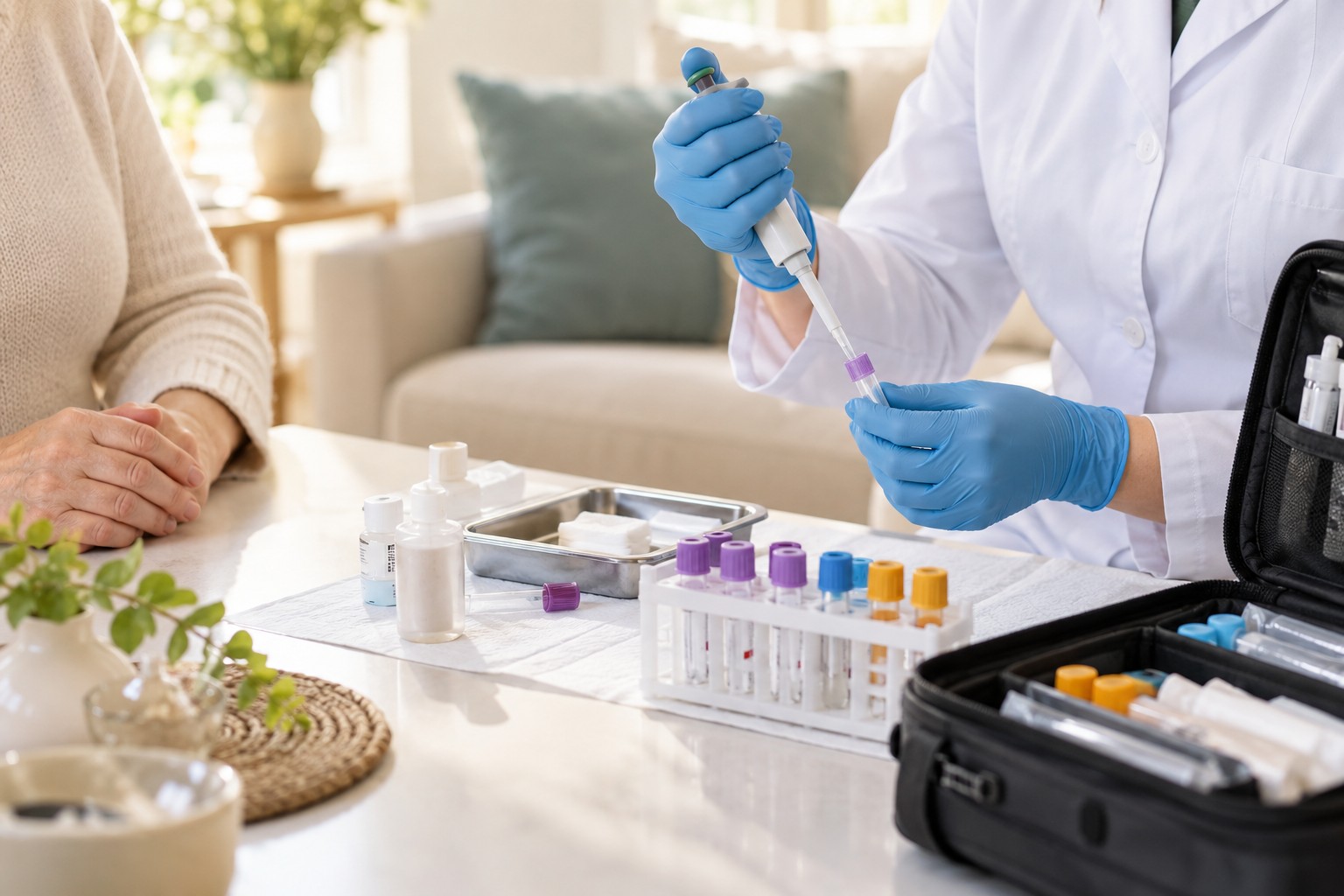
Our nurse comes to your address and collects your blood sample using sterile, single-use supplies.
-
03
You receive your result
Your sample is transported to the laboratory under appropriate conditions; your result is sent to you when it is ready.
Frequently asked questions
The information on this page is for general information only; it does not replace diagnosis or treatment. Consult your doctor for decisions about your health.