
Contents
- 01Why are a prescription and a doctor's approval required?
- 02Preparing a suitable space at home
- 03How long does the treatment take?
- 04Things to watch for during the treatment
- 05After the treatment and monitoring the IV site
- When should you let the team know?
- 06When should you contact a doctor or call 112?
- 07Support at home with Curavita
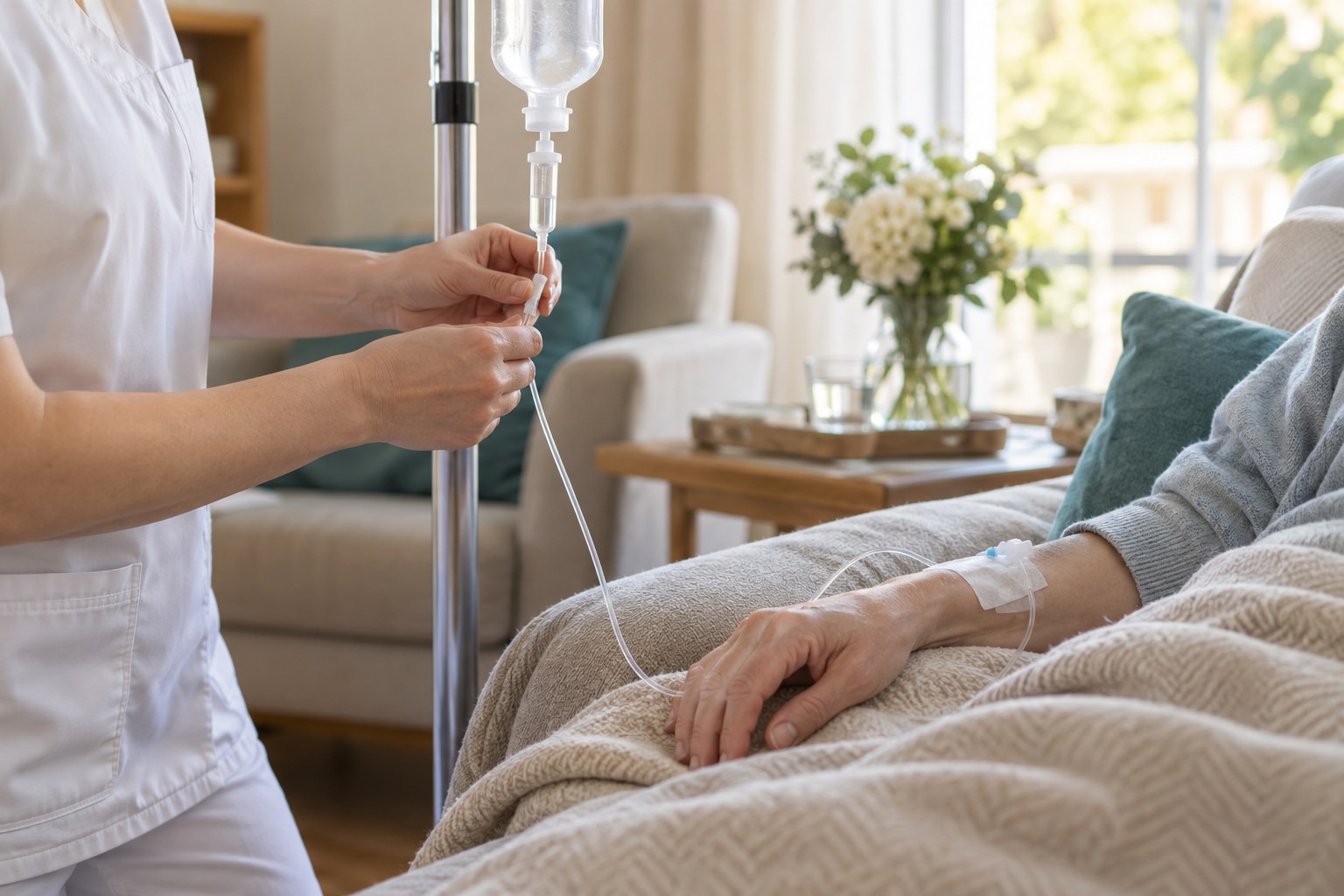
Receiving the IV therapy your doctor has recommended at home is a comfortable option, especially for people who have difficulty getting around or who want to continue their treatment in familiar surroundings. For the treatment to go safely and smoothly, a few simple preparations are needed. In this guide, we explain step by step what you need to know before your appointment, during the treatment and afterwards.
Why are a prescription and a doctor's approval required?
An IV drip is a treatment given directly into the bloodstream through a vein. For this reason, the contents of the drip, its volume, the flow rate and any medications to be added to it are determined only by a doctor. The rule is the same for vitamin or supportive drips; an IV drip at home is not given without a doctor's prescription or a written doctor's order.
If you do not have a current prescription, a doctor's assessment is needed first. After examining you, your doctor decides whether you need IV therapy and which drip is appropriate.
Preparing the following information before your appointment helps the nurse plan the treatment safely. You can write it down and keep it somewhere easy to reach:
- Your prescription or your doctor's written order
- A list of the medications you take regularly
- Any known allergies, especially to medications, latex or adhesive tape
- Chronic conditions such as heart, kidney or liver disease
- Whether you are pregnant or breastfeeding
- Details of any reaction you have had during a previous IV drip
- Whether you take a blood thinner
Preparing a suitable space at home
You do not need a special room for an IV drip at home; a clean, quiet and well-lit space is enough. Choosing a spot where you can stay comfortable throughout the treatment makes the time pass more easily.
- Prepare a bed or armchair where you can lie down or lean back comfortably.
- Clear a clean, empty surface where the nurse can put their supplies.
- The IV bag needs to be secured at a point higher than you; the nurse will set up what is needed for this on site.
- Make sure there is a sink for handwashing and a clean towel.
- Keep pets and young children out of the room during the treatment.
- Wear comfortable clothing with sleeves you can easily roll up, and use the bathroom before the treatment.
Unless your doctor says otherwise, you do not need to fast before the treatment. You can keep your phone, a book or a drink you are allowed to have close at hand.
How long does the treatment take?
The duration depends on the type and volume of the drip and on the flow rate set by the doctor. It may be short or may take several hours; the nurse will tell you the approximate duration before starting.
Do not change the flow rate yourself. Speeding up the drip so that it finishes sooner can cause problems, especially in people with heart or kidney disease; some medications also need to be given slowly. If your treatment will last several days, the doctor and nurse will decide together whether the IV line should be placed anew each time or left in place.
Things to watch for during the treatment
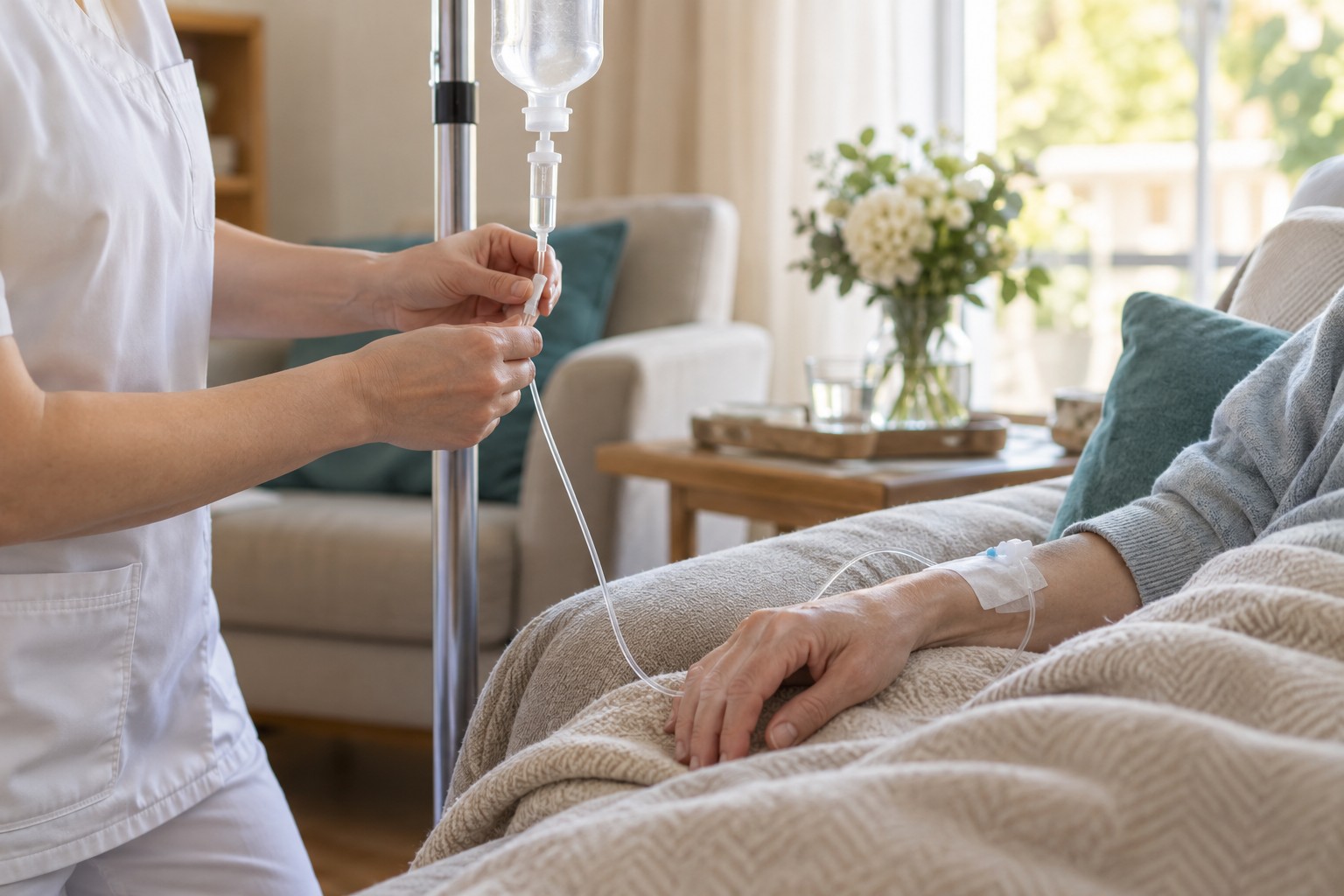
The nurse stays with you throughout the treatment, monitoring your vital signs such as blood pressure and pulse and checking that the drip is flowing properly. There are also a few things you can pay attention to:
- Keep the arm with the IV line as straight as possible; bending it too much can slow the flow.
- Do not pull on the tubing or lie on it, and do not take down the IV bag yourself.
- Do not touch the flow control device.
- If you need to use the bathroom, tell the nurse.
If you notice burning, pain or swelling at the IV site, or if you experience itching, a rash, shortness of breath, palpitations, dizziness or shivering, tell the nurse immediately. If the person receiving the drip is a family member, it also helps if you stay with them throughout the treatment and share any changes in their general condition.
After the treatment and monitoring the IV site
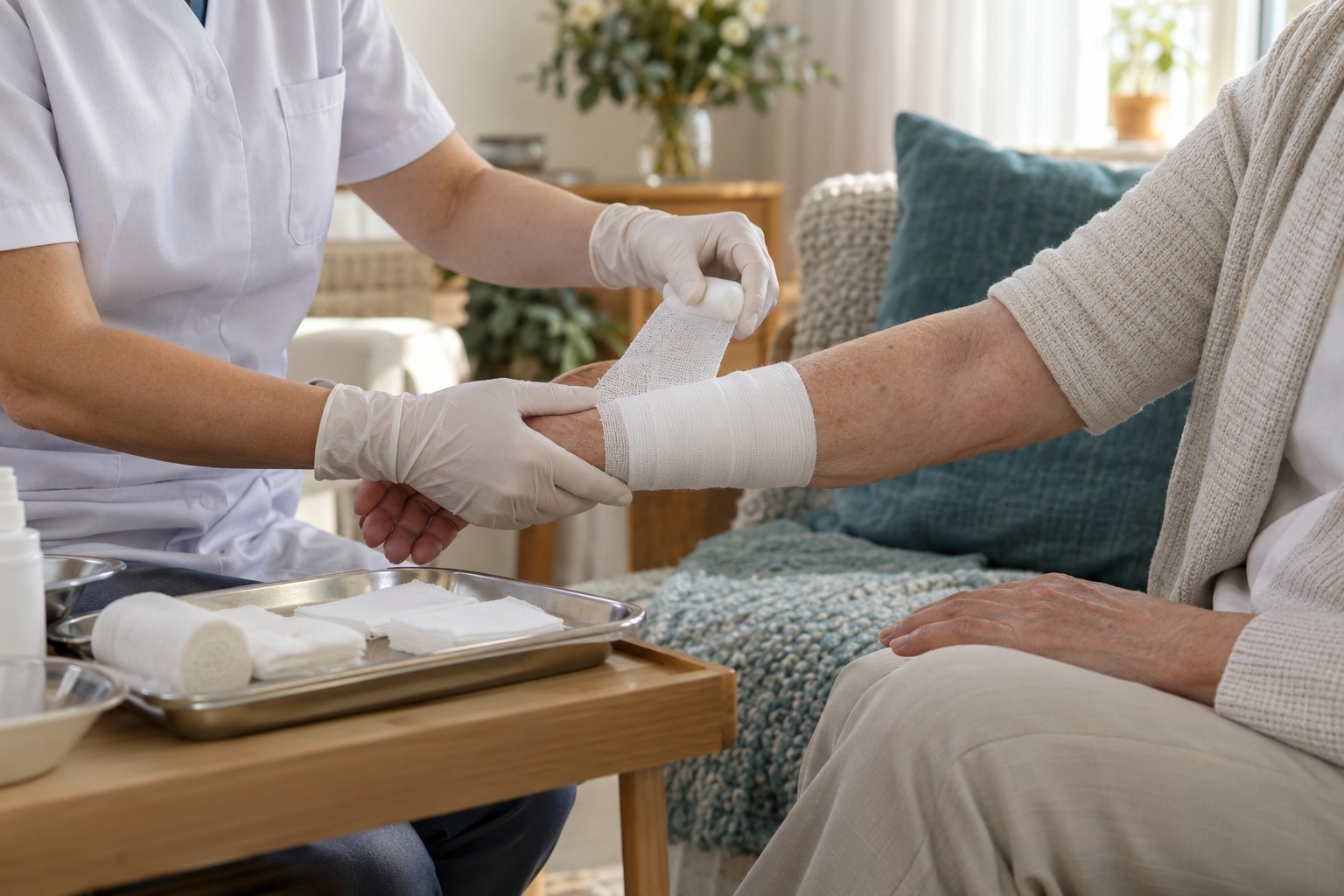
After the IV line is removed, press on the site with a cotton pad for a few minutes. If you take a blood thinner, it may take longer for the bleeding to stop. Leave the bandage on for as long as the nurse recommends, and do not lift heavy loads with that arm that day.
Keep an eye on the site for the next few days; slight bruising may occur and usually goes away on its own. If your doctor has decided to leave the IV line in place for a few days, pay attention to the following:
- Keep the area dry; ask your nurse how to protect it when you shower.
- Do not open the dressing, and do not push or pull on the catheter.
- Try not to lie on that arm while you sleep.
- If the catheter comes out on its own, press on the site with clean cotton or gauze, and do not try to put it back in.
When should you let the team know?
Let the team know if the dressing gets wet or comes loose, if the catheter comes out, if you notice slight redness or leakage at the site, or if the drip does not seem to be flowing. These issues can often be resolved with simple measures; the important thing is not to try to fix them yourself.
When should you contact a doctor or call 112?
Some changes at the IV site may need treatment. Contact your doctor without delay if you notice any of the following signs:
- Spreading redness, marked swelling, hardness, warmth or increasing pain at the IV site
- A red line running along the vein
- Fever or chills
- Numbness, coldness or a change of color in the arm
- Itching, a rash or hives that appear after the treatment
- Dizziness, palpitations or marked weakness that does not go away
Shortness of breath, wheezing, swelling of the lips, tongue or throat, chest pain, fainting or confusion may be signs of a serious allergic reaction or another emergency. In that case, call 112 without delay. Home care does not replace emergency medical services.
Support at home with Curavita
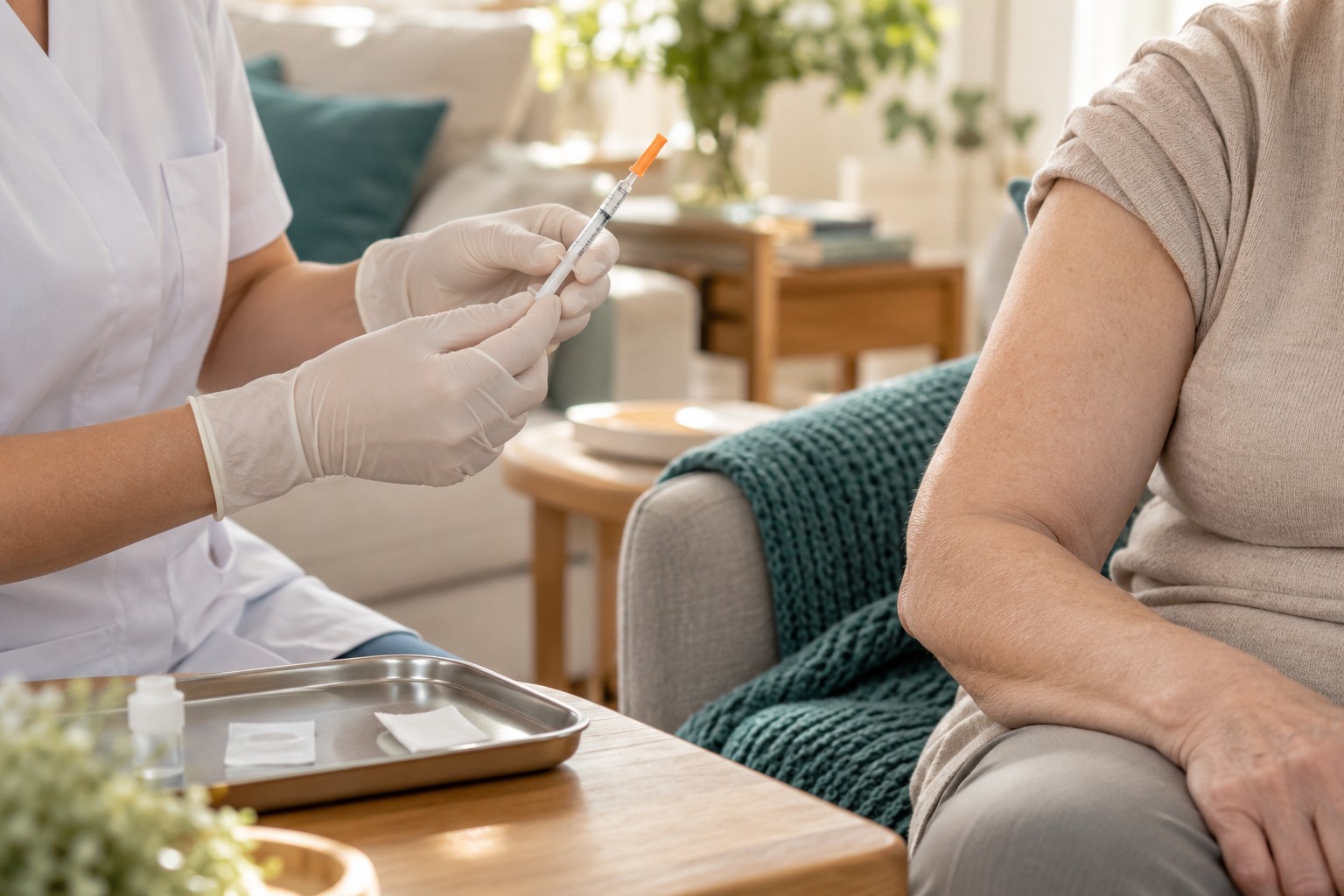
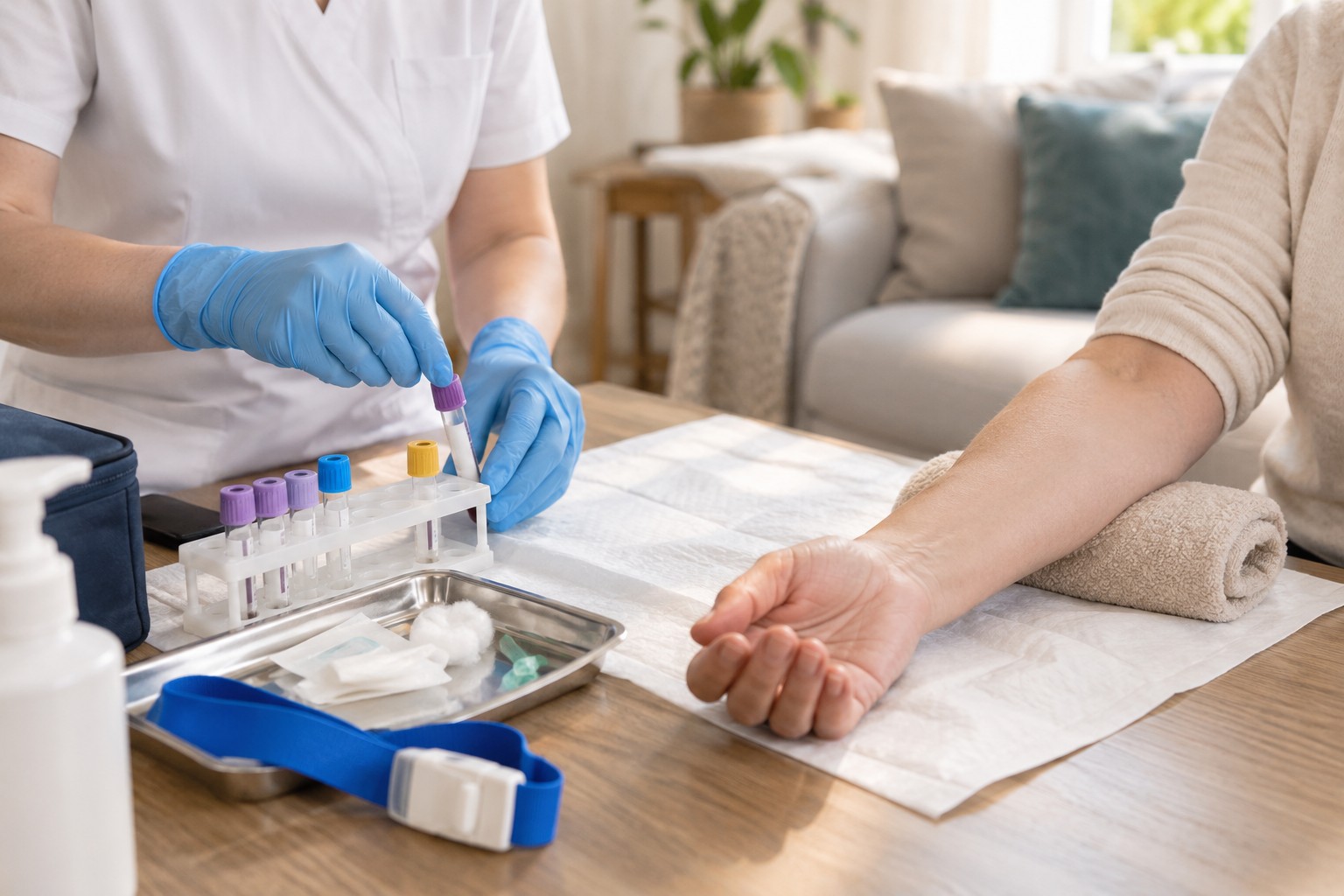
At Curavita Evde Sağlık, with our IV Drip at Home service, our experienced nurses administer the treatment your doctor has prescribed at your address and stay with you throughout. For injection treatments that must be given on a doctor's order, you can use our Injections at Home service, and when you need an up-to-date assessment by a doctor, our Doctor Home Visit service.
This guide is for general information only; consult your doctor for diagnosis and treatment. In an emergency, call 112.