
Contents
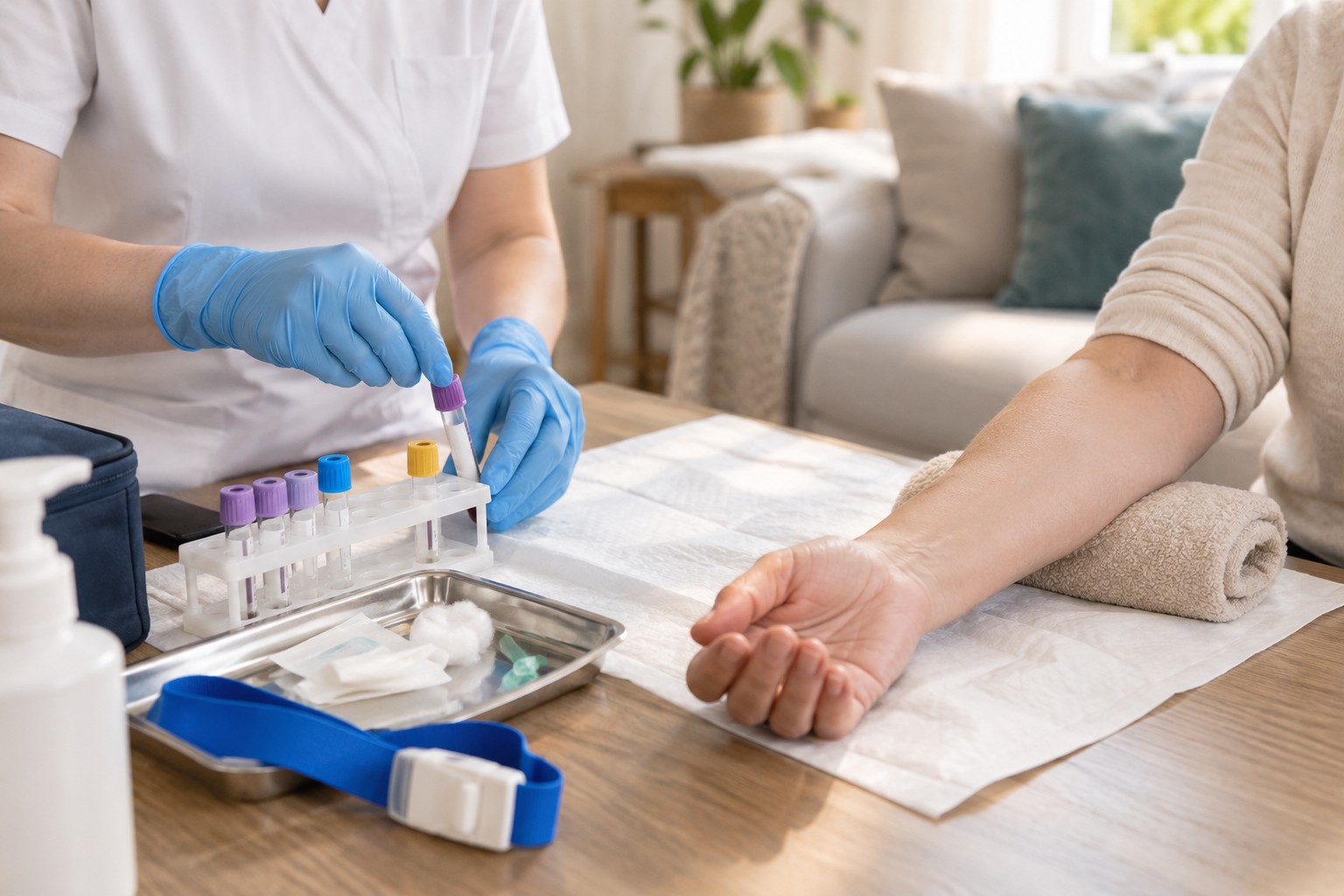
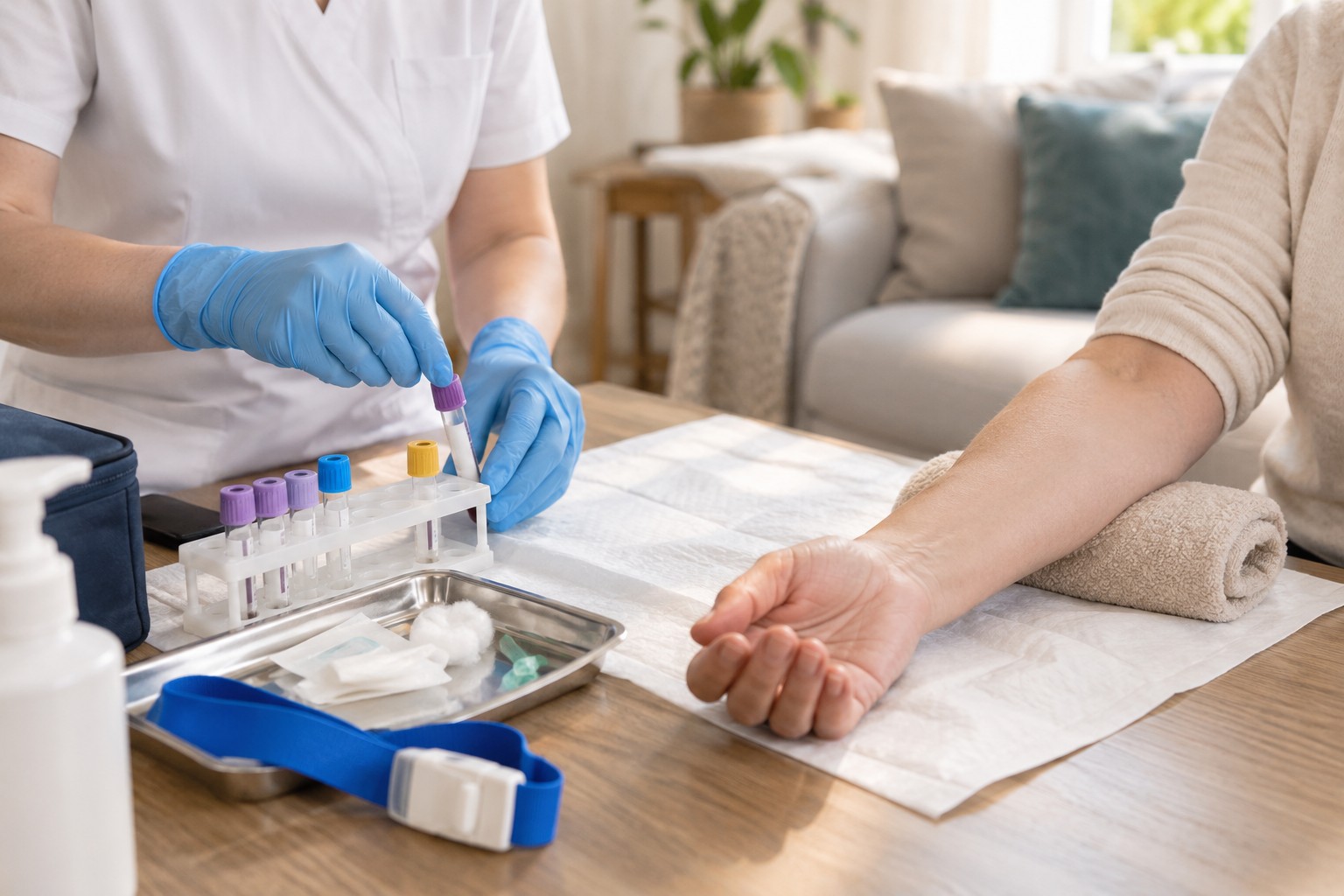
A blood test at home means your sample is taken at your address without you having to go to a laboratory; however, reliable results depend largely on proper preparation. Small details such as how long you fast, what you drink, the medications you take regularly and the time the sample is taken can affect some test results. In this guide, we have brought together, in plain language, the points to keep in mind before and after your appointment.
Fasting time and water intake
Not every test requires fasting. While some tests, such as blood sugar and blood fats (lipids), give more meaningful results on an empty stomach, many tests do not require you to fast. The best approach is to confirm which tests require fasting when you book your appointment, based on your prescription or your doctor's order.
For tests that require fasting, a fasting period of 8–12 hours is usually recommended. Scheduling the blood draw for the morning means you spend most of this time asleep. While fasting, keep the following in mind:
- Do not eat; chewing gum, candy and lozenges can also break your fast.
- Save tea, coffee, fruit juice and drinks with added milk or sugar for after the test.
- You can drink plain water. Drinking enough water helps your veins stand out more, which can make the blood draw easier.
- Do not fast longer than necessary; fasting for too long can also affect some values.
- On the day before the test, try not to drink alcohol and to avoid heavy, very fatty meals and strenuous exercise.
- If possible, do not smoke on the morning of the test.
Some special tests may require a different fasting period or a fluid restriction. In that case, the instructions you have been given take precedence over these general recommendations.
Medications you take regularly
Do not stop your regular medications on your own, and do not change their timing or dose. Some medications can affect certain test results, and your doctor may ask you to take a medication after the test; however, this decision is your doctor's alone.
- Prepare a list of all the medications, vitamins and herbal products you use. Some supplements, such as products containing biotin, can affect certain hormone tests.
- For tests that measure drug levels, the time of your last dose matters; note down what time you took your medication.
- If you take a blood thinner, tell the healthcare professional who will draw your blood. You may need to press on the site for longer after the procedure.
- If you have diabetes, plan your fasting period and the timing of your medication or insulin with your doctor in advance. Fasting can cause blood sugar to drop in some people.
Timing and the day of your appointment
For some tests, the time of the blood draw directly affects the result. For example, because some hormone levels vary throughout the day, your doctor may request a specific time. In women, some hormone tests may need to be done on specific days of the menstrual cycle; share this information when scheduling your appointment.
A few small preparations on the day of your appointment help the procedure go more smoothly. You may want to keep the following points in mind:
- Have your prescription or test order ready, along with any previous test results.
- Wear comfortable clothing with sleeves you can easily roll up, and make sure your arms do not get cold.
- If you have ever fainted or felt unwell during a blood draw, mention it; the procedure can be done while you lie down.
- After the blood draw, press on the cotton pad for a few minutes without bending your arm, and do not lift heavy loads with that arm that day.
- After tests that require fasting, have something to eat and drink, and take any medications you postponed as your doctor has advised.
How should a urine sample be collected?
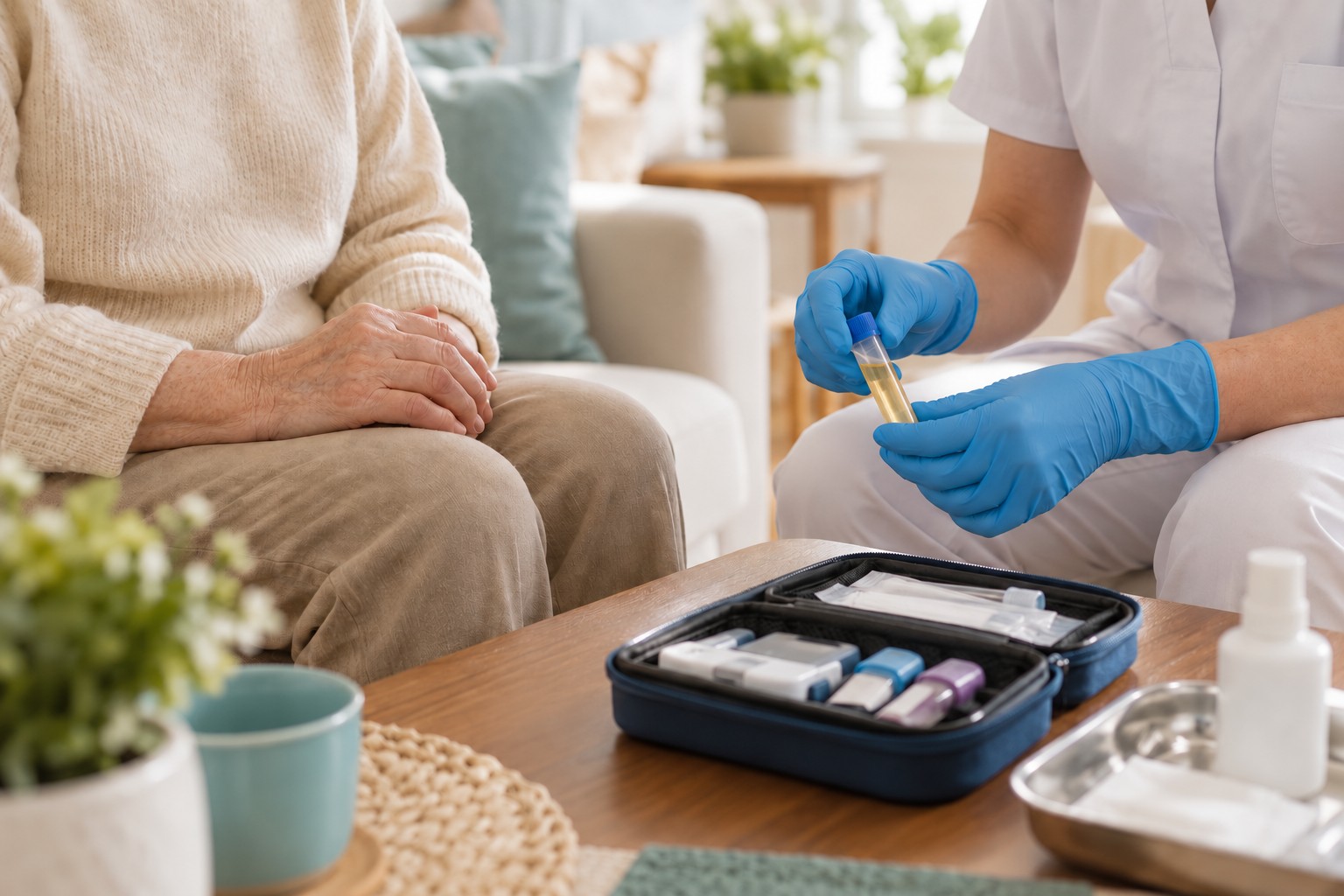
If your test order also includes a urine test, collecting the sample correctly is important for a reliable result. Unless your doctor or the laboratory says otherwise, the first urine of the morning is usually preferred.
- Use the sterile container you were given; do not touch the inside of the container or its lid.
- Wash your hands and clean the genital area with water.
- Pass the first part of your urine into the toilet, collect the middle part in the container, and pass the rest into the toilet.
- Close the lid tightly and check that the information on the container is correct.
- Do not leave the sample standing for a long time; it is best to collect it shortly before the team arrives or to store it according to the instructions you were given.
Be sure to tell us if you are on your period, or if a urine culture has been requested and you are taking antibiotics. Both can affect the results.
Receiving and interpreting your results
When your results are ready, they are sent to you digitally, for example by text message or email. So make sure you give your correct phone number and email address when you book your appointment. Your health data is personal data; if you would like the results to be sent to a relative or to your doctor as well, let us know in advance.
A value that appears outside the reference range on the report may not, on its own, mean you have a disease; nor does a value within the range always mean that everything is fine. The person who should interpret your results, together with your symptoms, the medications you take and your previous tests, is your doctor. It is also helpful to keep your old results so that comparisons can be made.
When should you contact a doctor or call 112?
A blood draw is usually a quick, uncomplicated procedure. Even so, contact your doctor if you notice any of the following:
- Bleeding that does not stop despite several minutes of pressure, or swelling that grows quickly where the blood was taken
- Increasing pain, numbness, tingling or weakness in the arm
- Over the following days, increasing redness, warmth or discharge where the blood was taken, or a fever
- Dizziness or a faint, unwell feeling that does not go away, during or after fasting
- In people with diabetes, signs of low blood sugar such as shaking, sweating and palpitations; in this case, do not wait for the test, and act as your doctor has advised
- A test result that you have been told needs urgent evaluation
In an emergency such as loss of consciousness or confusion, shortness of breath, chest pain or bleeding that cannot be stopped, call 112 without delay. Home care services are for planned care and follow-up; they do not replace emergency medical services.
Support at home with Curavita
At Curavita Evde Sağlık, our Blood Draw at Home and Urine Test at Home services let us collect your sample at your address at your appointment time, and our On-Site Laboratory Service ensures that samples reach the laboratory in an orderly way. When you book, we let you know in advance about fasting and preparation based on the tests requested. We work with private health insurance: we obtain the insurer's pre-approval, collect your sample once approval comes through, and do not charge a co-payment.
This guide is for general information only; consult your doctor for diagnosis and treatment. In an emergency, call 112.