


The Helicobacter pylori IgG test looks for antibodies in the blood against this common stomach bacterium and helps in the investigation of stomach complaints.
- Sample
- Blood
- Fasting
- Not required
- Turnaround time
- Usually 1–2 business days
- Test group
- Serology and Infection (ELISA)
Preparation: No fasting is required. Stomach medications usually do not affect this antibody test; still, please mention any medications you take.
Insurance: We work with private health insurers. For this test, we obtain the pre-approval and collect your sample once approval is received; we do not charge a co-payment. Insurance and payment
Contents
What is the Helicobacter pylori IgG antibody?
Helicobacter pylori is a bacterium that can settle on the inner lining of the stomach and is often referred to simply as the "stomach bacterium". It is mostly acquired in childhood, by mouth and through close contact within the family. It is very common in the population and often causes no symptoms for years; in some people, however, it can lead to problems such as gastritis and stomach or duodenal ulcers. Because long-standing infection is one of the known risk factors for stomach cancer, detecting it and treating it when necessary is considered important.
When the immune system encounters this bacterium, it produces IgG-class antibodies. The test looks for these antibodies in blood serum using the ELISA method and reports the result as negative or positive. Because antibodies can remain in the blood for a long time after the infection has cleared, the test shows whether you have been exposed to the bacterium; on its own, however, it cannot tell whether the infection is still active.
When is the Helicobacter pylori IgG test ordered?
The test may be ordered in people with stomach complaints to assess the likelihood of exposure to the bacterium. Especially when breath or stool tests become less reliable because of stomach medications or antibiotics, the blood test gives the doctor useful guidance. In situations such as a bleeding ulcer, where other tests can be misleading, the antibody test may also be used. The result is assessed together with information such as how long the complaints have lasted, your age and whether there are any alarm symptoms, to decide whether an endoscopy is needed.
- Stomach burning, indigestion, bloating and upper abdominal pain
- A previous diagnosis of ulcer or gastritis
- Unexplained iron-deficiency anemia
- A family history of stomach cancer
- Assessment before long-term use of painkillers or blood thinners
How should I prepare for the Helicobacter pylori IgG test?
No fasting is required for the blood test; unlike the urea breath test, stomach medications and antibiotics usually do not affect the antibody result. Still, telling your doctor about any medications you have taken recently and whether you have previously been treated for this bacterium helps ensure the result is interpreted correctly. If a breath test or endoscopy is planned for the same day, you will also need to follow the preparation instructions given for those procedures.
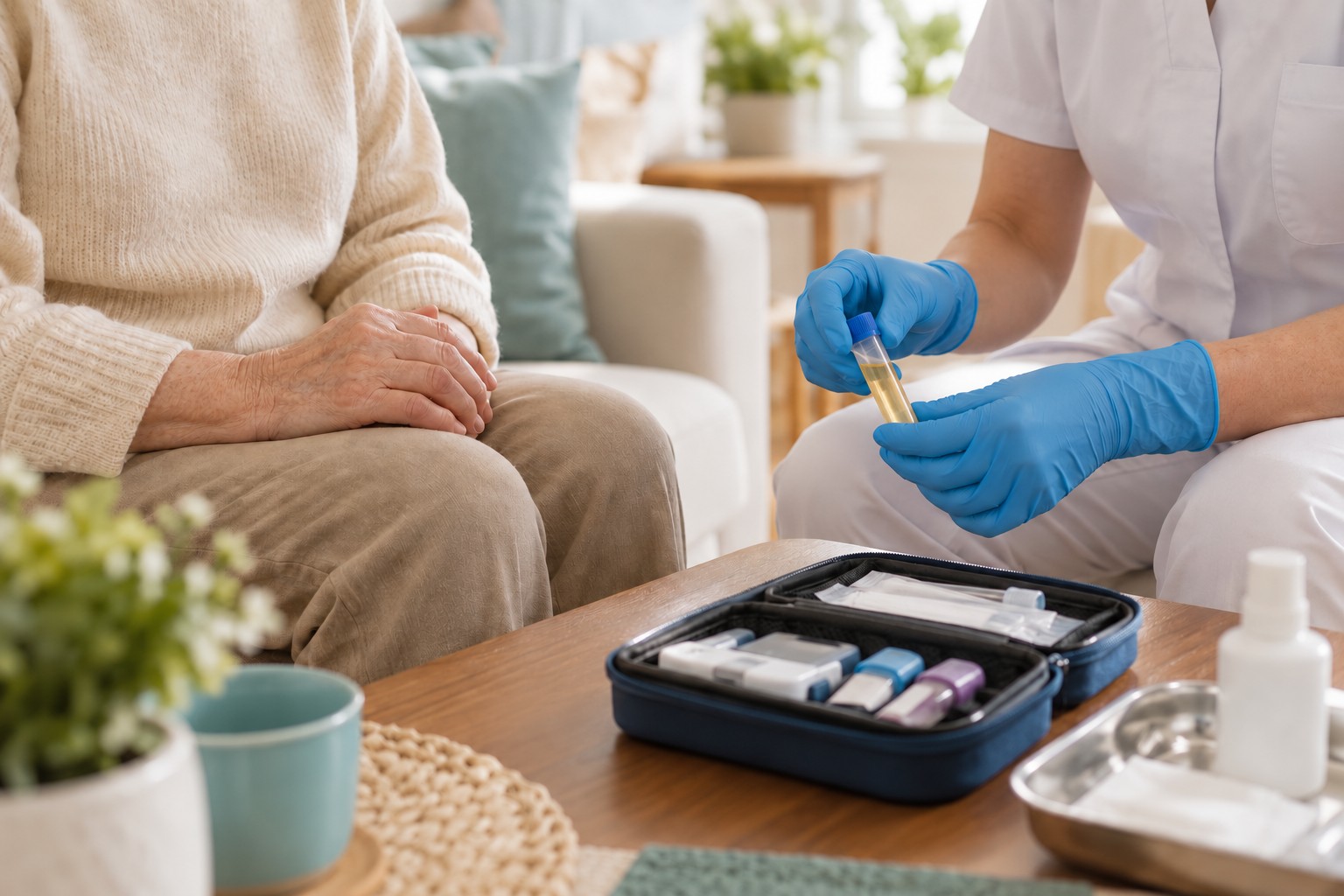
For the test, a small amount of blood is taken from a vein in your arm, placed in a serum tube and sent to the laboratory. A Curavita nurse who comes to your home or workplace at your appointment time can complete the blood draw wherever you are. After the procedure, simply keep your arm straight for a few minutes and press gently on the puncture site.
What does the Helicobacter pylori IgG result mean?
A negative result suggests that you have not been exposed to the bacterium and that an active infection is unlikely. However, in very recent infections antibodies may not yet have formed, and in people with weakened immunity the antibody response may remain low. If your complaints persist, your doctor may request further assessment with a stool or breath test. If the result is reported as borderline, the test may be repeated a few weeks later.
A positive result shows that you were exposed to the bacterium at some point but does not prove that the infection is still present. To confirm an active infection, your doctor may request a stool antigen test, a urea breath test or, if necessary, an endoscopy. Because antibodies can remain positive for months or even years after treatment, this test is not used to check whether treatment has been successful. Reference values vary by laboratory and method and, for some tests, by age and sex; the reference used by the laboratory for this test is shown on this page. Your test result should be interpreted by a doctor together with your complaints and any other tests considered necessary.
Expected result
- Negative
This is the value used by our laboratory; it may vary depending on age, sex, the method used and the laboratory. Review your result together with your doctor.
How is Helicobacter pylori IgG Antibody done at home?
-
01
Book your appointment
Fill in the online form or call us, and let's plan a day and time that suit you together.
-
02
Your blood is drawn at home
Our nurse comes to your address and collects your blood sample using sterile, single-use supplies.
-
03
You receive your result
Your sample is transported to the laboratory under appropriate conditions; your result is sent to you when it is ready.
Frequently asked questions
The information on this page is for general information only; it does not replace diagnosis or treatment. Consult your doctor for decisions about your health.