


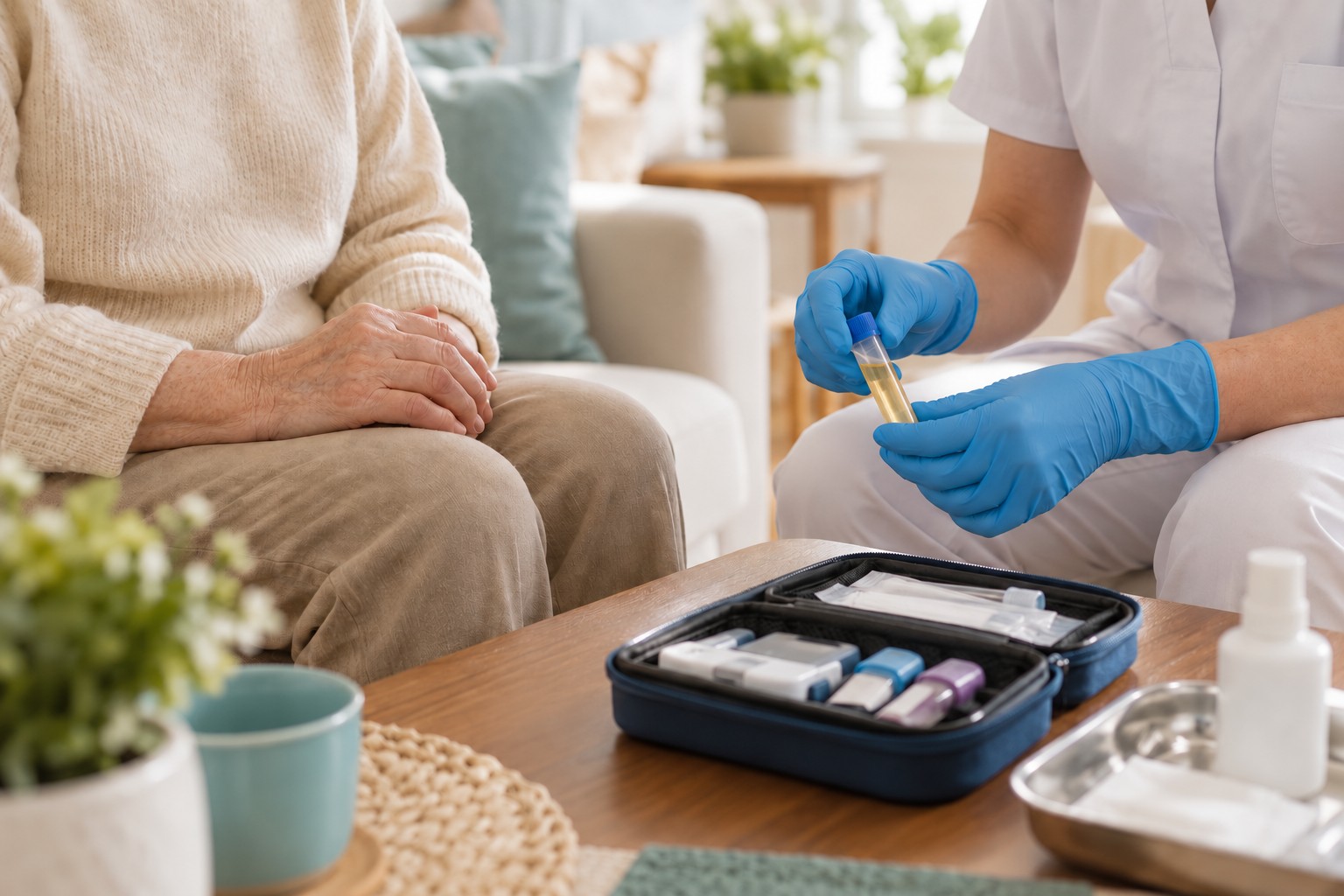
The rheumatoid factor test measures the RF autoantibody in the blood and helps investigate diseases such as rheumatoid arthritis in people with joint pain and swelling.
- Sample
- Blood
- Fasting
- Not required
- Turnaround time
- Usually 1 business day
- Test group
- Serology and Infection (ELISA)
Preparation: No fasting is required; the test can be done at any time of day. Tell your doctor about any recent infections.
Insurance: We work with private health insurers. For this test, we obtain the pre-approval and collect your sample once approval is received; we do not charge a co-payment. Insurance and payment
Contents
What is rheumatoid factor (RF)?
Rheumatoid factor is an autoantibody that the immune system produces when it mistakenly targets the body's own antibodies. It consists mostly of IgM-class antibodies and binds to a specific part of the person's own IgG antibodies. In some diseases, the immune system, which normally protects against germs, turns against the body's own tissues, and this process can lead to inflammation in the joints. RF is one of the oldest and most widely used markers in the investigation of such autoimmune diseases, above all rheumatoid arthritis.
RF is positive in a significant proportion of people with rheumatoid arthritis, but the test is not specific to this disease. It can also be raised in other rheumatic diseases such as Sjögren's syndrome, in some chronic infections and in healthy older people. In rheumatoid arthritis, RF levels can start to rise years before symptoms begin. To measure RF, the serum that separates after blood drawn from an arm vein has clotted is used, and the result is reported numerically in IU/mL.
When is the rheumatoid factor test ordered?
When the cause of joint complaints is being investigated, the RF test is usually ordered together with tests such as anti-CCP, ESR (sedimentation rate) and CRP. The result alone does not establish a diagnosis; the doctor assesses the examination findings, the duration of the complaints and other tests together. Because early diagnosis and treatment of rheumatoid arthritis help limit joint damage, it is important to see a doctor without delay if joint complaints persist. The doctor may also use this test when other autoimmune diseases such as Sjögren's syndrome are suspected.
- Pain, swelling and tenderness, especially in the small joints of the hands and feet
- Prolonged joint stiffness in the morning
- Similar joints affected on both sides of the body
- Complaints suggestive of Sjögren's syndrome, such as dry eyes and dry mouth
- Unexplained fatigue and low-grade fever occurring together with joint pain
How should I prepare for the rheumatoid factor test?
No fasting or special diet is required for the RF test; the sample can be given at any time of day. Recent infections with fever, known liver or lung diseases and the medications you take are important in interpreting the result, so it is helpful to tell your doctor about them. If you have had RF measured before, having your previous results with you makes comparison easier.
Blood is taken from a superficial vein in your arm in a short procedure. Sitting or lying in a comfortable position during the blood draw makes the procedure easier. If joint pain makes it difficult for you to go out, your sample can be taken by a Curavita nurse at your home or workplace.
What does the rheumatoid factor result mean?
A high RF level supports the likelihood of rheumatoid arthritis in a person with joint complaints; very high values can sometimes indicate that the disease may take a more pronounced course. However, raised RF can also be seen in Sjögren's syndrome, lupus, chronic infections such as hepatitis C, liver and lung diseases, and in healthy older individuals. In a person without symptoms, a slight elevation does not by itself mean disease. During treatment, the RF level is generally not used on its own to monitor disease activity.
A result within the normal range does not completely rule out rheumatoid arthritis; in the early stage of the disease or in its so-called seronegative form, RF may remain negative. In this case your doctor may continue the assessment with additional methods such as the anti-CCP test and imaging. The accepted upper limit for RF varies by laboratory and method, and age and sex can also affect the reference; you can see the range of the laboratory that runs your test on this page. The RF result should be interpreted by a doctor together with the joint examination, symptoms and other laboratory tests.
Reference range
Unit: IU/mL- 0 - 14
This is the value used by our laboratory; it may vary depending on age, sex, the method used and the laboratory. Review your result together with your doctor.
How is Rheumatoid Factor (RF) done at home?
-
01
Book your appointment
Fill in the online form or call us, and let's plan a day and time that suit you together.
-
02
Your blood is drawn at home
Our nurse comes to your address and collects your blood sample using sterile, single-use supplies.
-
03
You receive your result
Your sample is transported to the laboratory under appropriate conditions; your result is sent to you when it is ready.
Frequently asked questions
The information on this page is for general information only; it does not replace diagnosis or treatment. Consult your doctor for decisions about your health.