

The Rubella IgM test looks for a recent or ongoing rubella infection; it is important in pregnancy when there is a rash or a possible exposure.
- Sample
- Blood
- Fasting
- Not required
- Turnaround time
- Usually 1–2 business days
- Test group
- Serology and Infection (ELISA)
Preparation: No fasting is required. State when the rash started, the time of possible exposure, how many weeks pregnant you are and your recent vaccinations.
Insurance: We work with private health insurers. For this test, we obtain the pre-approval and collect your sample once approval is received; we do not charge a co-payment. Insurance and payment
Contents
What is Rubella IgM?
Rubella IgM is the first type of antibody the immune system produces after encountering the rubella virus. It usually becomes detectable in the blood shortly after the rash begins and starts to decline within a few weeks. Because of this, unlike IgG, it is used not to assess past immunity but to look for a recent or ongoing infection. In babies infected in the womb, IgM is produced by the baby's own immune system, so it provides an important clue in diagnosing congenital infection.
Although rubella is mild in most people, it can affect the baby's development in early pregnancy, so an accurate diagnosis during this period is especially important. Because a rash can have many different causes, such as measles, parvovirus infection and drug reactions, it is not always possible to identify rubella from the symptoms alone. In the laboratory, the serum sample is examined using the ELISA method, and the result is reported as negative, borderline or positive.
When is the Rubella IgM test ordered?
Rubella IgM is ordered particularly when symptoms suggestive of rubella appear or when a pregnant woman has been in contact with someone who has rubella. It may also be assessed together with Rubella IgG in pregnancy screening. The result becomes meaningful when it is interpreted together with the date of the rash or exposure. To determine whether the rash has another cause, your doctor may also order measles or parvovirus tests at the same time.
- A rash with fever that starts on the face and spreads to the trunk
- Swollen lymph nodes behind the ears and at the back of the neck
- Joint pain, red eyes and fatigue
- Contact during pregnancy with someone who has rubella
- Pregnancy screening as part of TORCH testing
- Suspected congenital rubella infection in a newborn
How should I prepare for the Rubella IgM test?
You do not need to fast for this test. Because IgM may not yet be detectable in a sample taken in the first days after the rash begins, your doctor may schedule the sampling day according to when your symptoms started. Reporting the date of the rash or exposure, how many weeks pregnant you are and any recent vaccinations makes the result easier to interpret.
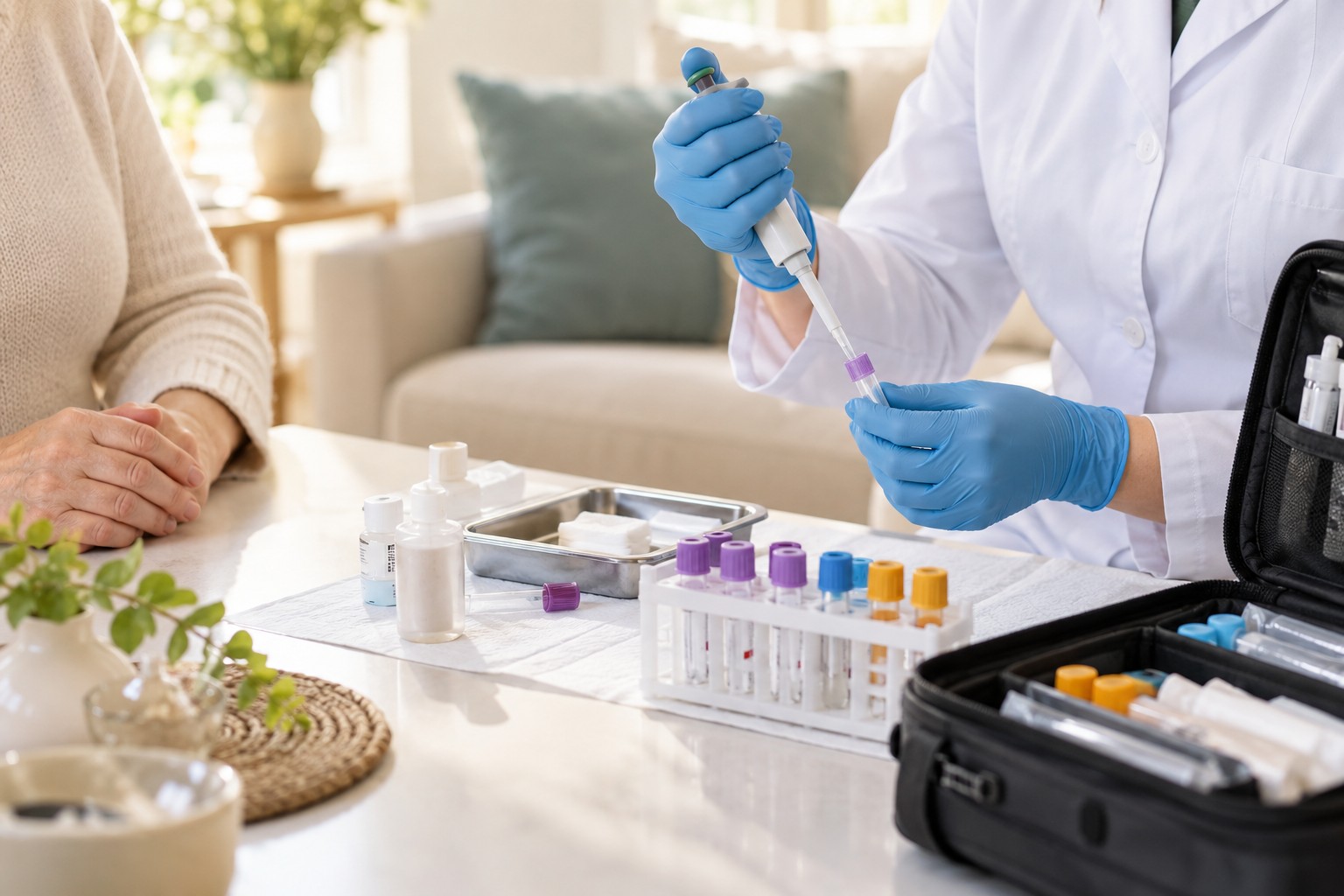
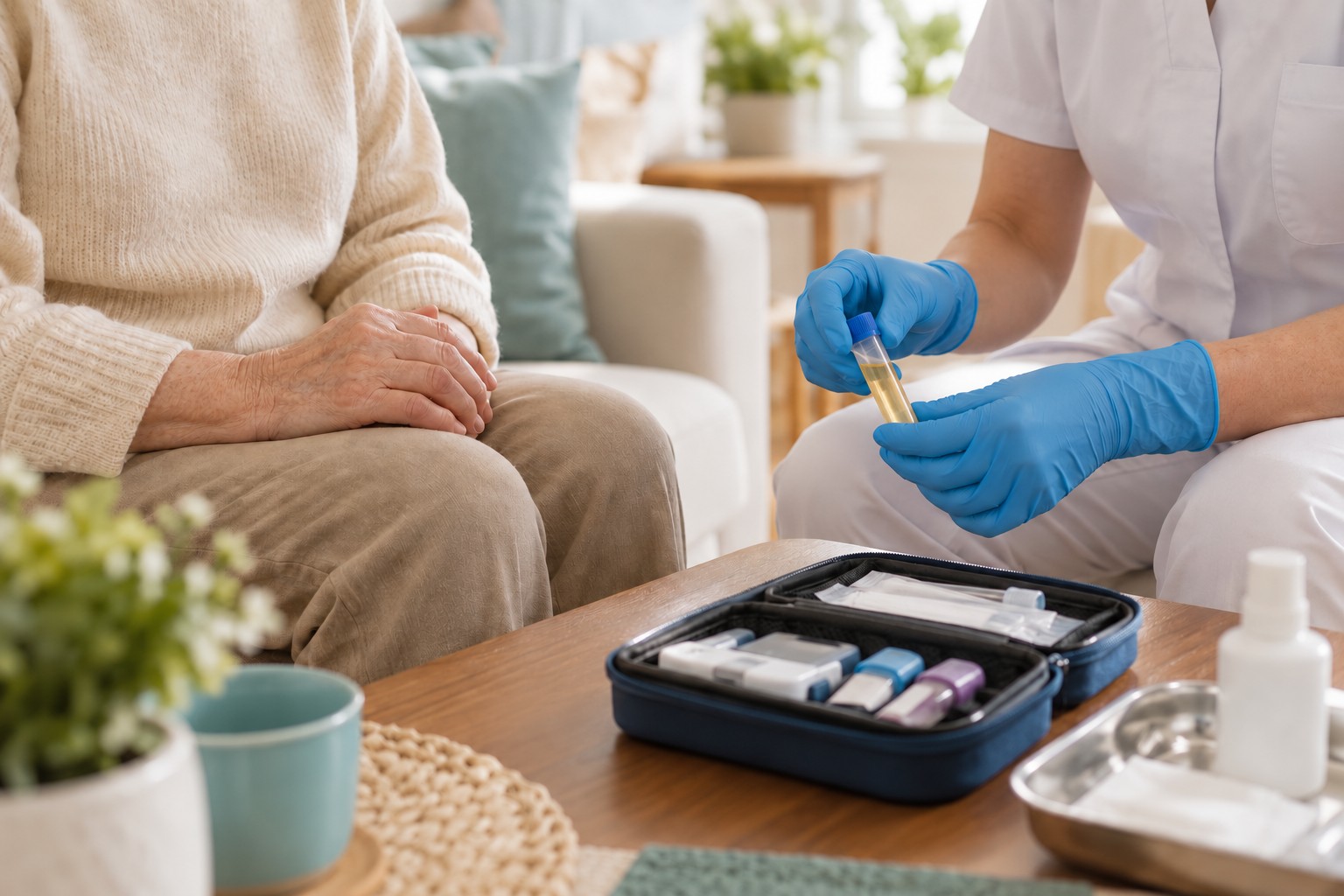
To obtain the sample, blood is taken from a vein in the arm in a procedure lasting a few minutes. To reduce your contact with others during an illness with a rash, you can have your blood drawn at home by a Curavita nurse. If you suspect you have rubella, mentioning this in advance makes it easier to take precautions to protect pregnant women and non-immune people around you.
What does the Rubella IgM result mean?
A negative result, when the sample was taken at the right time, does not suggest a recent rubella infection. When IgG is positive and IgM is negative, the picture usually reflects long-standing immunity. If the sample was taken too early and symptoms persist, your doctor may recommend repeating the test a few days later.
A positive result suggests a new infection, but false positives are relatively common with IgM tests. Other infections such as parvovirus or Epstein-Barr virus, rheumatoid factor, recent vaccination and re-exposure to the virus in people who were already immune can also cause a positive IgM. For this reason, especially in pregnancy, the result is confirmed with an IgG avidity test and measurements repeated at set intervals; decisions are made together with a specialist physician. The cut-off values used for Rubella IgM vary by laboratory and method; ranges that vary by age and sex apply mainly to quantitative tests, and the laboratory's reference value for this test can be seen on this page. The true meaning of an IgM result can only be determined by a doctor, taking into account symptoms, exposure history and complementary tests.
Expected result
- Negative
This is the value used by our laboratory; it may vary depending on age, sex, the method used and the laboratory. Review your result together with your doctor.
How is Rubella IgM (German Measles Antibody) done at home?
-
01
Book your appointment
Fill in the online form or call us, and let's plan a day and time that suit you together.
-
02
Your blood is drawn at home
Our nurse comes to your address and collects your blood sample using sterile, single-use supplies.
-
03
You receive your result
Your sample is transported to the laboratory under appropriate conditions; your result is sent to you when it is ready.
Frequently asked questions
The information on this page is for general information only; it does not replace diagnosis or treatment. Consult your doctor for decisions about your health.