

The D-dimer test measures the breakdown product of clots that form and dissolve in the body, and it helps the doctor assess a suspected clot.
- Sample
- Blood
- Fasting
- Not required
- Turnaround time
- As soon as possible
- Test group
- Hematology
Preparation: No fasting required. Report your use of blood thinners, pregnancy, and any recent surgery or injury.
Insurance: We work with private health insurers. For this test, we obtain the pre-approval and collect your sample once approval is received; we do not charge a co-payment. Insurance and payment
Contents
What is D-dimer?
When a blood vessel is damaged, the body forms a clot made of a mesh-like protein called fibrin to stop the bleeding. Once the clot has done its job, an enzyme called plasmin breaks it down, releasing small protein fragments in the process. D-dimer is one of these fragments; finding it in the blood shows that a clot has formed and broken down in the body. Because it is produced only when stabilized (cross-linked) fibrin is broken down, it reflects a genuine clotting process.
In healthy people, D-dimer is present in the blood only at very low levels, and it rises when clotting and clot breakdown increase. The measurement is usually done using immunological methods on plasma separated from blood collected in a citrate tube. The result may be reported in different units depending on the method used; for this reason, values should only be compared when they are in the same unit.
When is the D-dimer test ordered?
D-dimer is most often ordered to help rule out a clot in the leg veins (deep vein thrombosis) or a clot in the lungs (pulmonary embolism) in people whose likelihood of having these conditions is judged to be low or moderate. A normal result, together with the doctor's clinical assessment, greatly reduces the likelihood of a clot. The test is also used in assessing disseminated intravascular coagulation (DIC) and in monitoring certain diseases.
Sudden shortness of breath, chest pain, or sudden swelling and pain in one leg may require emergency assessment. If such symptoms are present, go to the nearest emergency department without delay rather than scheduling a test.
- Ruling out suspected deep vein thrombosis (a clot in a leg vein)
- Assessing the likelihood of pulmonary embolism (a clot in the lungs)
- Suspected disseminated intravascular coagulation (DIC) and its monitoring
- Follow-up checks planned by the doctor after treatment for a clot
- Monitoring clotting after a severe infection, COVID-19 or major surgery
How do you prepare for the D-dimer test?
Because the D-dimer measurement is not affected by food, you do not need to fast before giving the sample. Blood-thinning medicines can lower the value by reducing new clot formation, so be sure to mention the medicines you take. Reporting conditions such as pregnancy or a recent surgery, injury or infection also helps ensure the result is interpreted correctly.
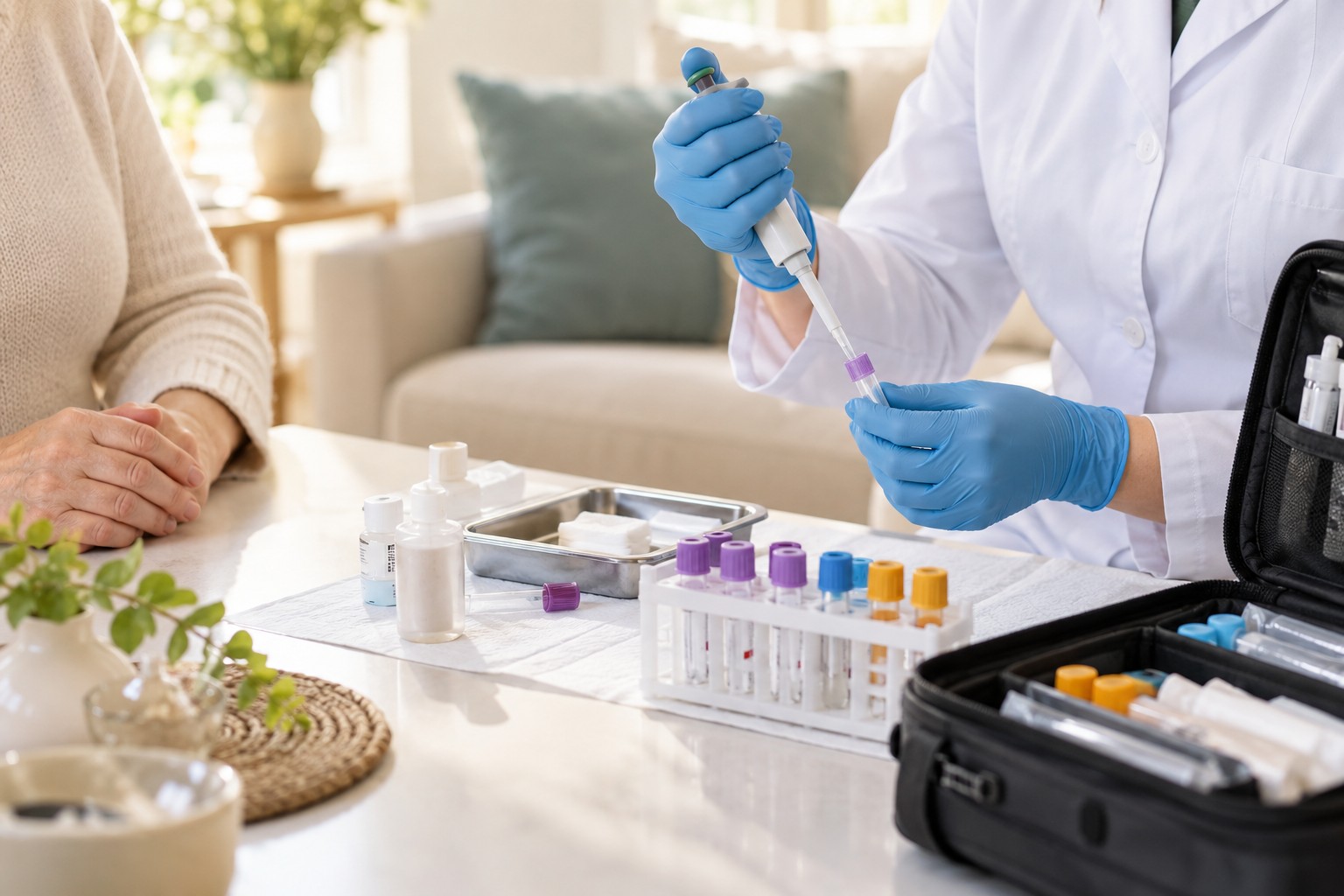
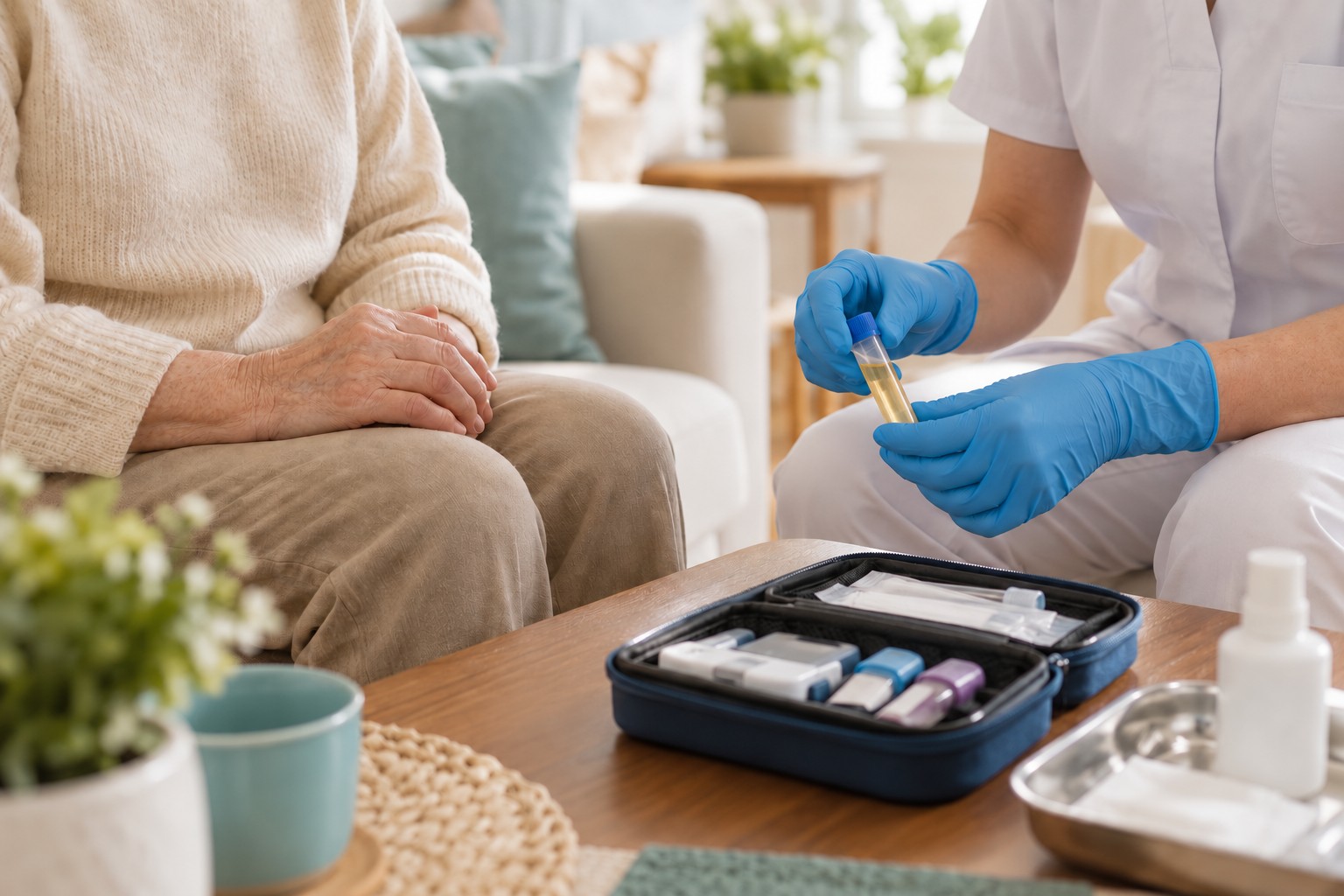
Blood is drawn from an arm vein into a light-blue-capped citrate tube, and it is important that the tube is filled up to the indicated line. For non-urgent, planned checks, a nurse can come to your home or workplace to draw blood.
What does the D-dimer result mean?
A D-dimer result below the reference value is quite reliable in supporting the absence of deep vein thrombosis or pulmonary embolism, especially in people judged to have a low likelihood of a clot. A high result, on the other hand, shows that a clot has formed and broken down in the body, but it does not tell where the clot is or what caused it. For this reason, a high value alone is not enough for a diagnosis; if necessary, the doctor uses imaging methods such as ultrasound or CT.
D-dimer can also rise in many conditions, such as pregnancy, older age, recent surgery or trauma, infections and inflammatory diseases, cancer, and liver and kidney diseases. In older people, some doctors may use an age-adjusted cut-off value. Because cut-off values can differ according to the method and unit used, as well as by age and sex, your result needs to be compared with the laboratory range shown on this page. The result must always be evaluated by a doctor together with your symptoms and other findings.
Reference range
- < 0.5 µg/mL FEU
- < 500 ng/mL
This is the value used by our laboratory; it may vary depending on age, sex, the method used and the laboratory. Review your result together with your doctor.
How is D-Dimer done at home?
-
01
Book your appointment
Fill in the online form or call us, and let's plan a day and time that suit you together.
-
02
Your blood is drawn at home
Our nurse comes to your address and collects your blood sample using sterile, single-use supplies.
-
03
You receive your result
Your sample is transported to the laboratory under appropriate conditions; your result is sent to you when it is ready.
Frequently asked questions
The information on this page is for general information only; it does not replace diagnosis or treatment. Consult your doctor for decisions about your health.