


A peripheral blood smear examines blood cells under a microscope to assess the white blood cell distribution and cell shapes; it clarifies complete blood count findings.
- Sample
- Blood
- Fasting
- Not required
- Turnaround time
- Usually 1–2 business days
- Test group
- Hematology
Preparation: No fasting is needed; the sample can be given at any time of day. Mention the medicines you take and any recent infections.
Insurance: We work with private health insurers. For this test, we obtain the pre-approval and collect your sample once approval is received; we do not charge a co-payment. Insurance and payment
Contents
What is a peripheral blood smear?
A peripheral blood smear is the examination under a microscope of a drop of blood that has been spread in a thin layer on a glass slide and stained with special dyes. This examination allows the cells counted by automated analyzers to also be assessed for shape, size and appearance. The white blood cell differential, in turn, refers to the percentage distribution of white blood cells by type.
The specialist examining the smear counts white blood cells such as neutrophils, lymphocytes, monocytes, eosinophils and basophils and checks for immature or abnormal-looking cells. The size, color and shape of the red blood cells, as well as the approximate number of platelets and whether they are clumping, are also assessed. This provides important clues to the cause of the numerical changes seen on the complete blood count.
When is a peripheral blood smear ordered?
A peripheral blood smear is usually ordered when there is an unexplained change in complete blood count results or when the automated analyzer raises a flag. It is a valuable test for determining the type of anemia, getting an idea of the nature of an infection and making an initial assessment when a blood disorder is suspected. In some patients undergoing treatment, it may also be repeated to monitor changes in the cells. A similar microscopic examination is also used to look for certain blood parasites, such as malaria.
- Unexpected white blood cell, red blood cell or platelet counts on the complete blood count
- Unexplained anemia, weakness or pallor
- Prolonged fever, frequent infections or enlarged lymph nodes
- Easy bruising, or confirmation of a low platelet count
- Jaundice and suspected breakdown of red blood cells (hemolysis)
- Treatment monitoring in people diagnosed with a blood disorder
How should you prepare for a peripheral blood smear?
No fasting or special preparation is needed for this test. Cortisone-type medicines, chemotherapy, some antibiotics and a recent infection can change the cell distribution, so sharing this information makes interpretation easier. Intense exercise and marked stress can also temporarily affect white blood cells.
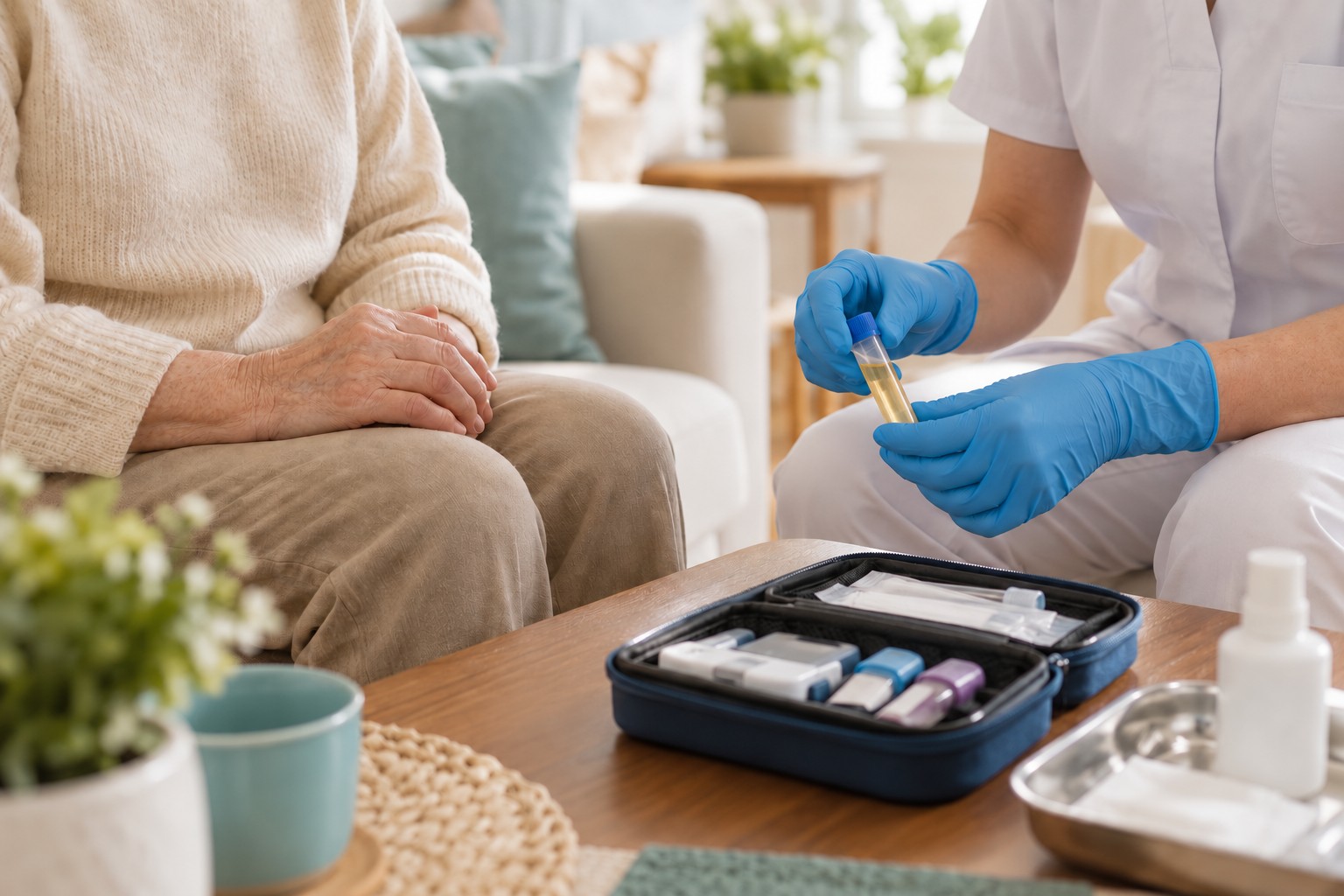
Blood is drawn from a vein in the arm into a purple-top (EDTA) tube and is usually analyzed from the same sample as the complete blood count. Because the appearance of the cells can deteriorate over time, the smear is preferably prepared within a few hours of the sample being taken. The blood needed for the smear can be taken at your home or workplace during a nurse visit.
What does the peripheral blood smear result mean?
This test does not give a single numerical value; the result is reported as the percentages of the white blood cell types, together with comments on the appearance of the cells. An increase in neutrophils often suggests a bacterial infection or inflammation, an increase in lymphocytes viral infections, and an increase in eosinophils allergy or parasitic infections. If the report mentions terms such as atypical lymphocytes, immature cells or blasts, your doctor may plan further tests. Platelet clumping in the tube can look like a falsely low platelet count on the analyzer; the smear helps to tell these apart.
Small, pale-looking red cells may be associated with iron deficiency or thalassemia carrier status, and large-looking ones with vitamin B12 or folate deficiency. The cell distribution changes with age; for example, the proportion of lymphocytes is higher in young children than in adults, and the assessment is made according to the laboratory's own criteria. Your doctor is the person who will evaluate what the smear findings mean for you, together with your symptoms and complete blood count results.
Reference range
Reported per parameter
This test consists of more than one parameter; the reference range for each parameter appears next to its result in your laboratory report. Review your result together with your doctor.
How is Peripheral Blood Smear (White Blood Cell Differential) done at home?
-
01
Book your appointment
Fill in the online form or call us, and let's plan a day and time that suit you together.
-
02
Your blood is drawn at home
Our nurse comes to your address and collects your blood sample using sterile, single-use supplies.
-
03
You receive your result
Your sample is transported to the laboratory under appropriate conditions; your result is sent to you when it is ready.
Frequently asked questions
The information on this page is for general information only; it does not replace diagnosis or treatment. Consult your doctor for decisions about your health.