

The PT (INR) test measures how long it takes blood to clot; it is used to monitor blood thinners such as warfarin and to assess liver function.
- Sample
- Blood
- Fasting
- Not required
- Turnaround time
- As soon as possible
- Test group
- Hematology
Preparation: No fasting is needed. If you take warfarin, continue your medicine as your doctor has advised and mention the time of your last dose.
Insurance: We work with private health insurers. For this test, we obtain the pre-approval and collect your sample once approval is received; we do not charge a co-payment. Insurance and payment
Contents
What are PT and INR?
Prothrombin time (PT) measures, in seconds, the time it takes for a clot to form after tissue factor and calcium are added to citrated plasma. This time reflects how factors VII, X and V, prothrombin (factor II) and fibrinogen work together in the parts of the clotting process known as the extrinsic pathway and the common pathway. Most of these factors are produced in the liver, and some of them need vitamin K to be made. For this reason, PT is affected early by vitamin K deficiency and by impaired liver function.
Because the reagents used in different laboratories can change the PT result, results are standardized using the INR (international normalized ratio). The INR is calculated by dividing the patient's PT by the normal mean and correcting it with a reagent-specific sensitivity index. This makes the results of a patient on warfarin, measured at different times and in different places, largely comparable.
When is the PT (INR) test ordered?
The most common use of the PT (INR) test is the regular monitoring of patients taking vitamin K antagonist blood thinners such as warfarin. In these patients, the INR value is the main measure the doctor uses to adjust the dose of the medicine. The test is also ordered to assess the liver's capacity to produce clotting proteins and to investigate the cause of a bleeding tendency.
- Dose adjustment at the start of warfarin treatment and at regular check-ups
- Unexplained bleeding, easy bruising or bleeding gums
- Assessment of liver diseases such as cirrhosis or hepatitis
- Suspected vitamin K deficiency with long-term antibiotic use or malabsorption
- Assessment before procedures such as surgery, a biopsy or a tooth extraction
- Suspected disseminated intravascular coagulation (DIC)
How should you prepare for the PT (INR) test?
You do not have to fast for a PT (INR) measurement. If you take warfarin, continue taking your medicine as your doctor has advised; mention the time of your last dose and whether you have missed any doses. Sudden changes in your intake of vitamin K–rich foods such as green leafy vegetables, as well as antibiotics and some herbal products, can affect the INR, so it is important to mention these too.
The light-blue-top tube used for the INR contains citrate, and for an accurate result the blood must fill the tube up to the line. If you have regular INR monitoring, a nurse can draw the blood at your home or workplace; this is convenient during periods when frequent checks are needed, especially for people with limited mobility.
What does the PT (INR) result mean?
In people who are not taking blood thinners, a prolonged PT and a high INR may suggest conditions such as liver disease, vitamin K deficiency, an inherited clotting factor deficiency or disseminated intravascular coagulation. A short PT is usually not considered clinically significant. In liver disease, the INR is one of the indicators used to monitor the organ's production capacity.
In warfarin treatment, each patient has an INR target range set by the doctor according to the reason for treatment. Values above the target indicate an increased risk of bleeding, while values below it indicate that protection against clots may be insufficient; only your doctor should decide on a dose change. The values considered normal may vary between laboratories and by age and sex; this page shows the PT and INR ranges of the laboratory that performs the test. Your doctor should decide what your INR result means, together with your symptoms and other tests.
Reference range
- PT 10 - 14 sec
- INR 0.8 - 1.2
This is the value used by our laboratory; it may vary depending on age, sex, the method used and the laboratory. Review your result together with your doctor.
How is Prothrombin Time (PT/INR) done at home?
-
01
Book your appointment
Fill in the online form or call us, and let's plan a day and time that suit you together.
-
02
Your blood is drawn at home
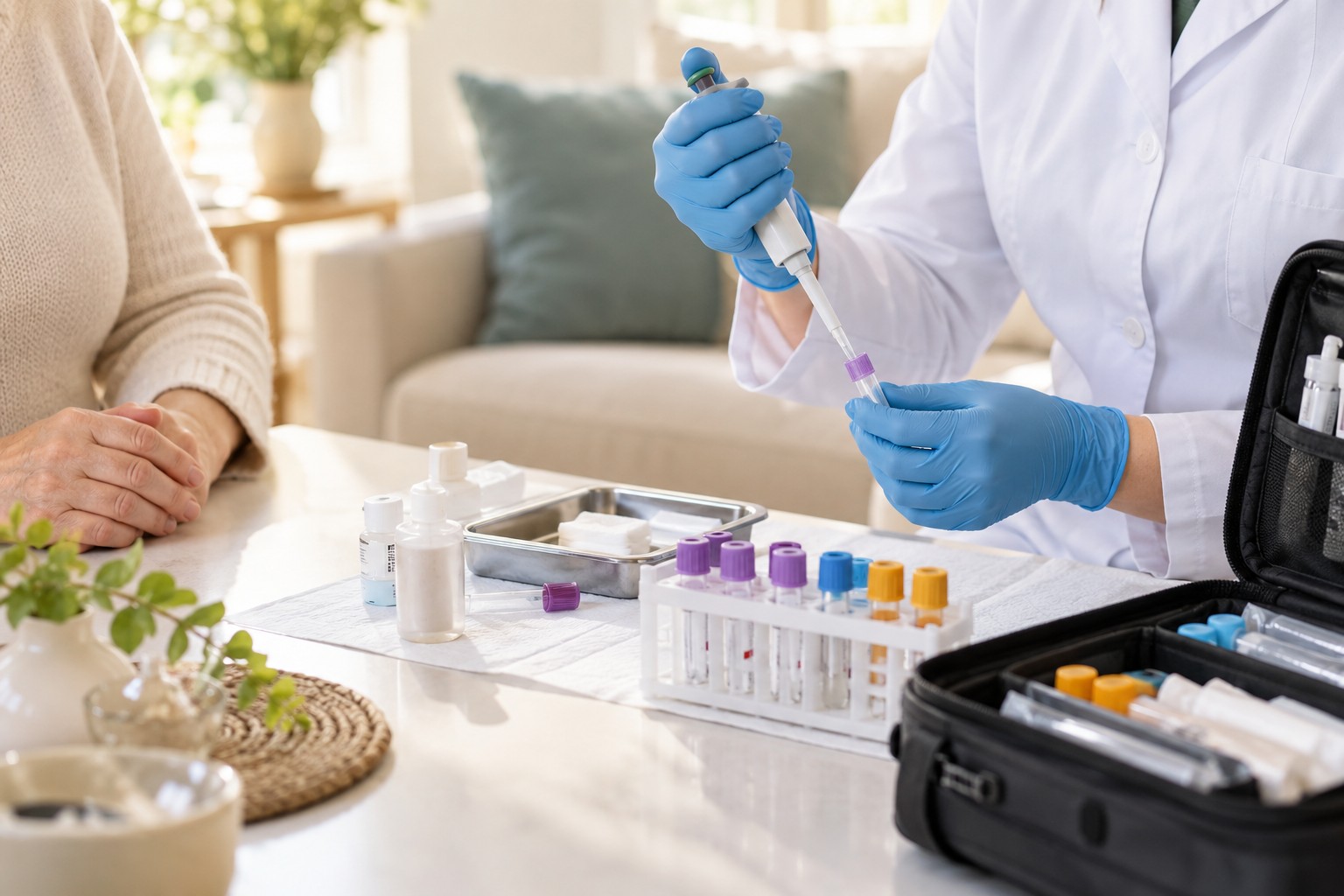
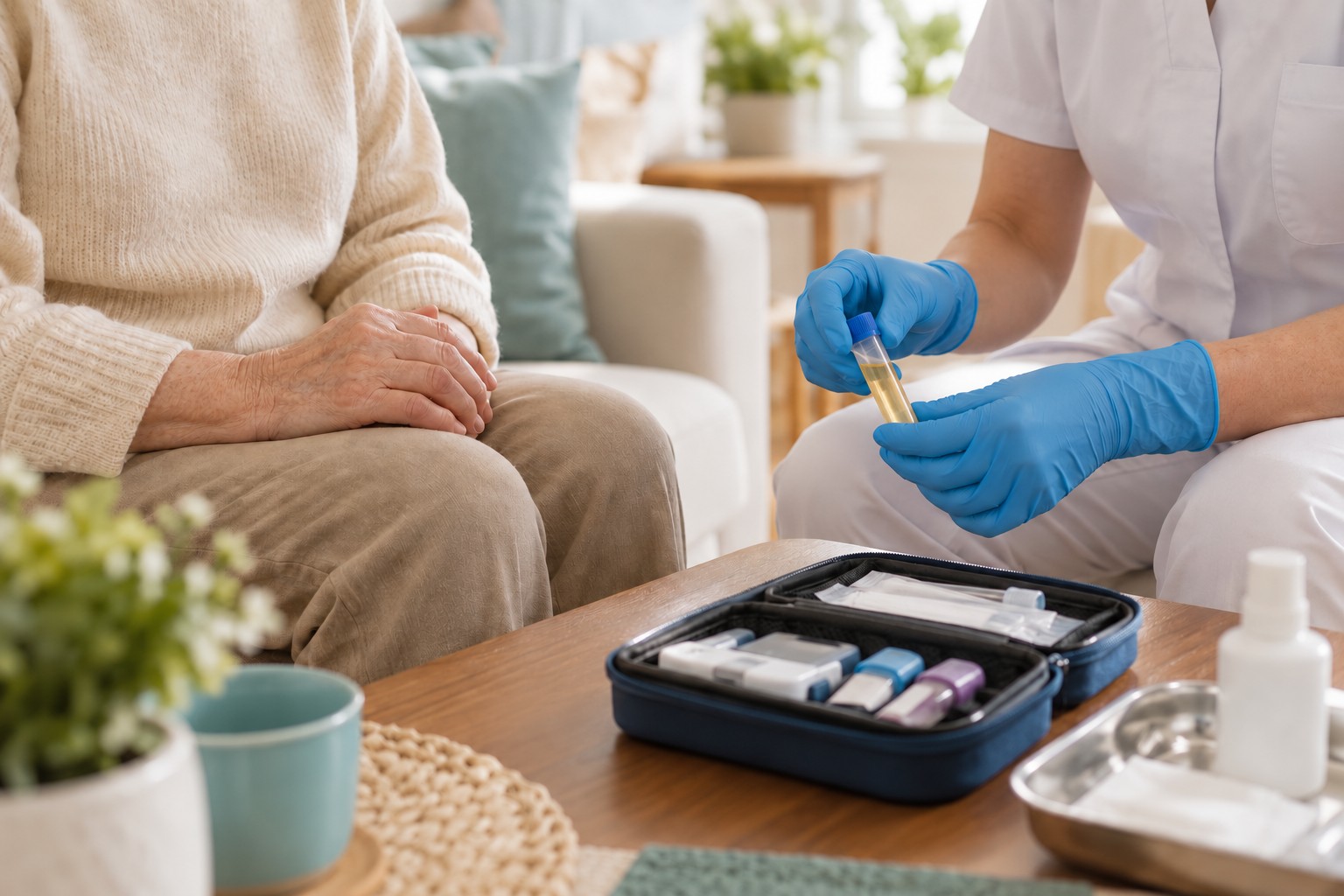
Our nurse comes to your address and collects your blood sample using sterile, single-use supplies.
-
03
You receive your result
Your sample is transported to the laboratory under appropriate conditions; your result is sent to you when it is ready.
Frequently asked questions
The information on this page is for general information only; it does not replace diagnosis or treatment. Consult your doctor for decisions about your health.