

The total bilirubin test measures the total amount in the blood of the yellow pigment formed when red blood cells break down; it offers guidance in jaundice and liver problems.
- Sample
- Blood
- Fasting
- Required
- Turnaround time
- As soon as possible
- Test group
- Biochemistry
Preparation: Fasting for 8 hours is usually recommended; do not fast longer than necessary. Tell your doctor about any medications you take.
Insurance: We work with private health insurers. For this test, we obtain the pre-approval and collect your sample once approval is received; we do not charge a co-payment. Insurance and payment
Contents
What is total bilirubin?
Bilirubin is a yellow pigment formed from the breakdown of hemoglobin when aging red blood cells are broken down. The form produced first, which does not dissolve in water, is called indirect bilirubin; it is carried in the blood bound to albumin and reaches the liver. The liver processes this substance, converts it into water-soluble direct bilirubin and sends it with the bile to the intestine; the breakdown products of bilirubin are also what give stool its brown color. Some of these products formed in the intestine are reabsorbed and excreted in the urine, giving urine its yellow color.
Total bilirubin shows the sum of direct and indirect bilirubin in the blood. When there is a problem with red blood cell breakdown, the liver's processing capacity or the flow of bile, bilirubin builds up in the blood; when its level rises markedly, yellowing of the skin and the whites of the eyes, known as jaundice, appears. The test is performed on the serum portion of blood drawn from the arm, using methods based on a chemical color reaction, and because bilirubin can break down in light, the blood sample must be protected from light.
When is a total bilirubin test ordered?
Total bilirubin is one of the core components of liver function tests and is the first test used to investigate the cause of jaundice. If the result is high, your doctor may also order a direct bilirubin measurement to understand whether the problem lies before the liver, in the liver or in the bile ducts. The test is also used regularly to monitor known liver diseases and their treatment.
- Yellowing of the skin or the whites of the eyes
- Dark urine, pale stools or widespread itching
- Suspected liver disease, gallstones or bile duct obstruction
- Suspected anemia due to rapid breakdown of red blood cells, known as hemolytic anemia
- Evaluation of harmless bilirubin elevations such as Gilbert's syndrome
- Monitoring of the liver during long-term drug treatment
How do you prepare for a total bilirubin test?
Because fats that rise in the blood after a meal can affect the measurement, fasting for about 8 hours is usually recommended before a total bilirubin test; you may drink water during this time. On the other hand, very prolonged fasting can raise bilirubin, especially in people with Gilbert's syndrome, so it is best not to extend the fasting period longer than necessary. The most practical approach is to eat nothing after dinner and give your blood sample the next morning.
Some antibiotics, birth control pills, some epilepsy medications and herbal products can affect bilirubin levels. Simply share your medication list with your doctor; do not stop your treatment on your own. With a nurse coming to your home or workplace, you can give your blood sample as soon as your fasting period ends, without having to wait.
What does a total bilirubin result mean?
High total bilirubin can be related to three main situations: red blood cells breaking down faster than normal, the liver being unable to process bilirubin adequately, or the flow of bile to the intestine being blocked. In hemolytic anemias and Gilbert's syndrome the increase is mainly in indirect bilirubin, whereas with gallstones or narrowing of the bile ducts direct bilirubin predominates. Hepatitis, alcohol-related liver disease, cirrhosis and some medications can raise both types.
Gilbert's syndrome, which is quite common, is an inherited condition that causes bilirubin to rise slightly during periods of fasting, illness or stress and usually requires no treatment. Low bilirubin values, on the other hand, are generally not considered significant. The reference values used outside the newborn period may vary by laboratory, age and sex; the range shown on this page is that of the laboratory analyzing your blood. To identify the cause of jaundice and interpret your result, your doctor considers your bilirubin value together with your symptoms, other liver tests, your blood count and, if necessary, imaging findings.
Reference range
Unit: mg/dL- 0 - 1.2
This is the value used by our laboratory; it may vary depending on age, sex, the method used and the laboratory. Review your result together with your doctor.
How is Total Bilirubin done at home?
-
01
Book your appointment
Fill in the online form or call us, and let's plan a day and time that suit you together.
-
02
Your blood is drawn at home
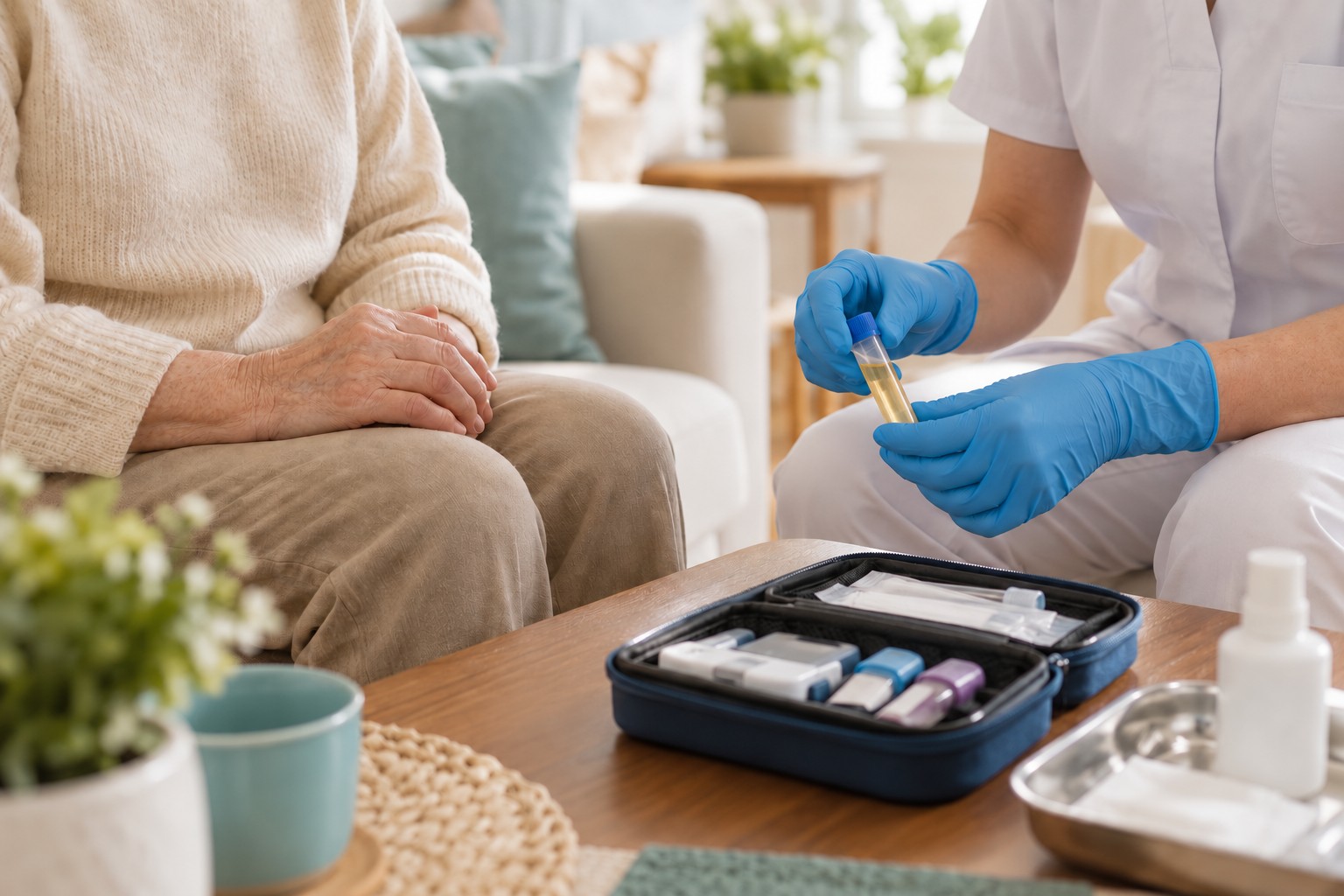
Our nurse comes to your address and collects your blood sample using sterile, single-use supplies.
-
03
You receive your result
Your sample is transported to the laboratory under appropriate conditions; your result is sent to you when it is ready.
Frequently asked questions
The information on this page is for general information only; it does not replace diagnosis or treatment. Consult your doctor for decisions about your health.