

The TIBC test measures the blood's capacity to carry iron; together with iron and ferritin, it helps distinguish iron deficiency from iron overload.
- Sample
- Blood
- Fasting
- Required
- Turnaround time
- Usually 1 business day
- Test group
- Biochemistry
Preparation: Giving the sample in the morning after 8–12 hours of fasting is recommended. Ask your doctor whether to pause iron medication or supplements.
Insurance: We work with private health insurers. For this test, we obtain the pre-approval and collect your sample once approval is received; we do not charge a co-payment. Insurance and payment
Contents
What is total iron-binding capacity (TIBC)?
Once iron has been absorbed from food, it does not circulate freely in the blood; it binds to a carrier protein called transferrin, produced in the liver, and is transported to the bone marrow and to the body's stores. Total iron-binding capacity shows the maximum amount of iron that the transferrin in the blood can bind and indirectly reflects the transferrin level. Under normal conditions, only about one third of transferrin's binding sites are filled with iron. This transport system also prevents free iron from damaging tissues.
When the body's iron stores decrease, the liver produces more transferrin and TIBC rises; when the stores are full or there is chronic inflammation in the body, TIBC tends to fall. The laboratory usually obtains the TIBC value by measuring serum iron and the unsaturated iron-binding capacity. The ratio of serum iron to TIBC may be reported as transferrin saturation and is an important indicator in assessing iron status.
When is a TIBC test ordered?
TIBC is rarely ordered on its own; it is usually run together with serum iron and ferritin as an iron panel. When these tests are evaluated together, it becomes clearer whether anemia is caused by iron deficiency or by a chronic disease. It is also needed to calculate transferrin saturation in people with suspected iron overload. In addition, it helps investigate the cause of anemia that does not improve despite appropriate treatment.
- Weakness, tiring easily, pallor, dizziness or shortness of breath
- Anemia with small, pale red blood cells on a complete blood count (CBC)
- Heavy menstrual bleeding, pregnancy, blood loss or poor nutrition
- Distinguishing iron deficiency from anemia of chronic disease
- Suspected iron overload, known as hemochromatosis, and monitoring of iron therapy
How do you prepare for a TIBC test?
Because TIBC is mostly run on the same sample as serum iron, it is recommended that you give blood in the morning after 8–12 hours of fasting. Serum iron fluctuates during the day and is affected by meals; a fasting sample taken in the morning therefore gives more comparable results. You may drink water while fasting.
Iron medications and vitamin supplements containing iron can affect the serum iron and saturation results in particular; ask your doctor whether you should pause them before the test. Birth control pills and pregnancy can also raise TIBC by increasing transferrin production, so it is important to mention them. With a nurse visiting your home or workplace, you can give your morning fasting sample without going out.
What does a TIBC result mean?
High TIBC is most often seen in iron deficiency; in this case serum iron and ferritin are usually low and transferrin saturation is also reduced. Pregnancy and the use of estrogen-containing medications can also raise TIBC without iron deficiency. The value is meaningful not on its own but together with the other results of the iron panel. As iron deficiency is corrected, TIBC also returns to normal over time.
Low TIBC, on the other hand, can be seen in conditions such as chronic inflammatory diseases and infections, liver disease, malnutrition, kidney diseases that cause protein loss in the urine, or hemochromatosis, in which iron builds up excessively in the body. In hemochromatosis this is usually accompanied by high transferrin saturation and high ferritin. Because age, sex and the measurement method affect the normal limits of TIBC, results are always read against the range of the laboratory that performs the test; this range is also shown separately on this page. The final assessment of your iron status is made by your doctor, who considers the result together with your complete blood count, ferritin and your symptoms.
Reference range
Unit: µg/dL- 250 - 450
This is the value used by our laboratory; it may vary depending on age, sex, the method used and the laboratory. Review your result together with your doctor.
How is Total Iron-Binding Capacity (TIBC) done at home?
-
01
Book your appointment
Fill in the online form or call us, and let's plan a day and time that suit you together.
-
02
Your blood is drawn at home
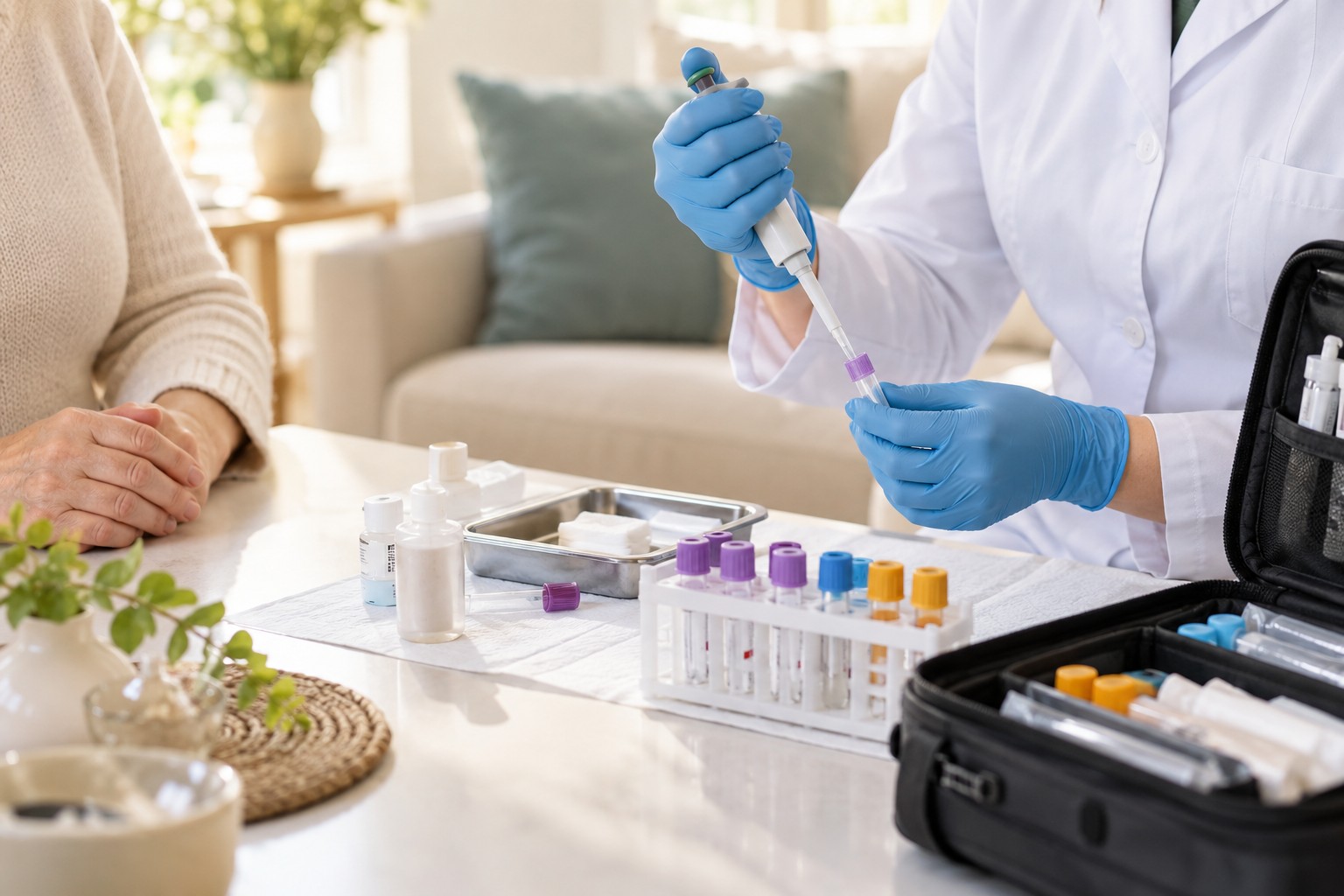
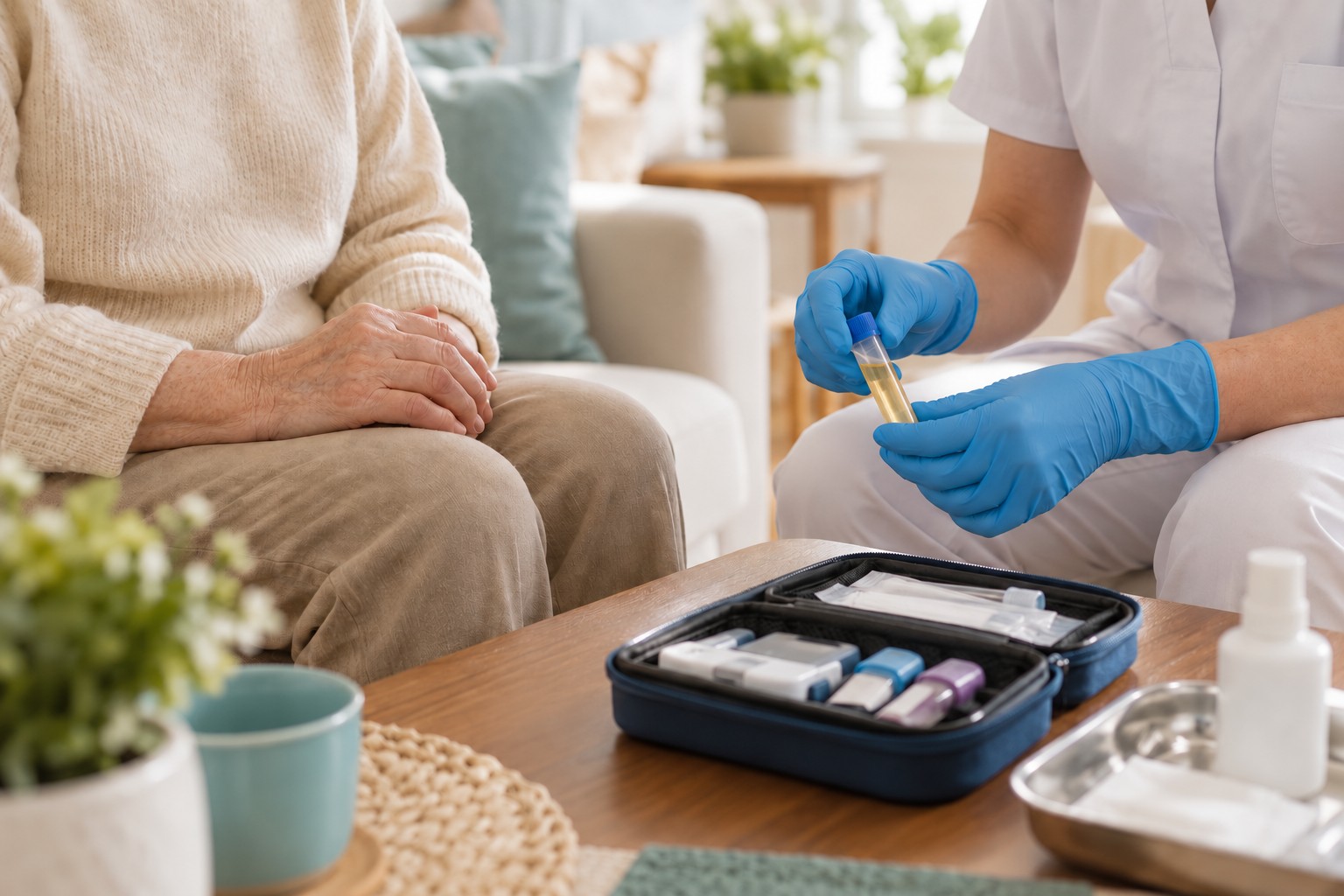
Our nurse comes to your address and collects your blood sample using sterile, single-use supplies.
-
03
You receive your result
Your sample is transported to the laboratory under appropriate conditions; your result is sent to you when it is ready.
Frequently asked questions
The information on this page is for general information only; it does not replace diagnosis or treatment. Consult your doctor for decisions about your health.