

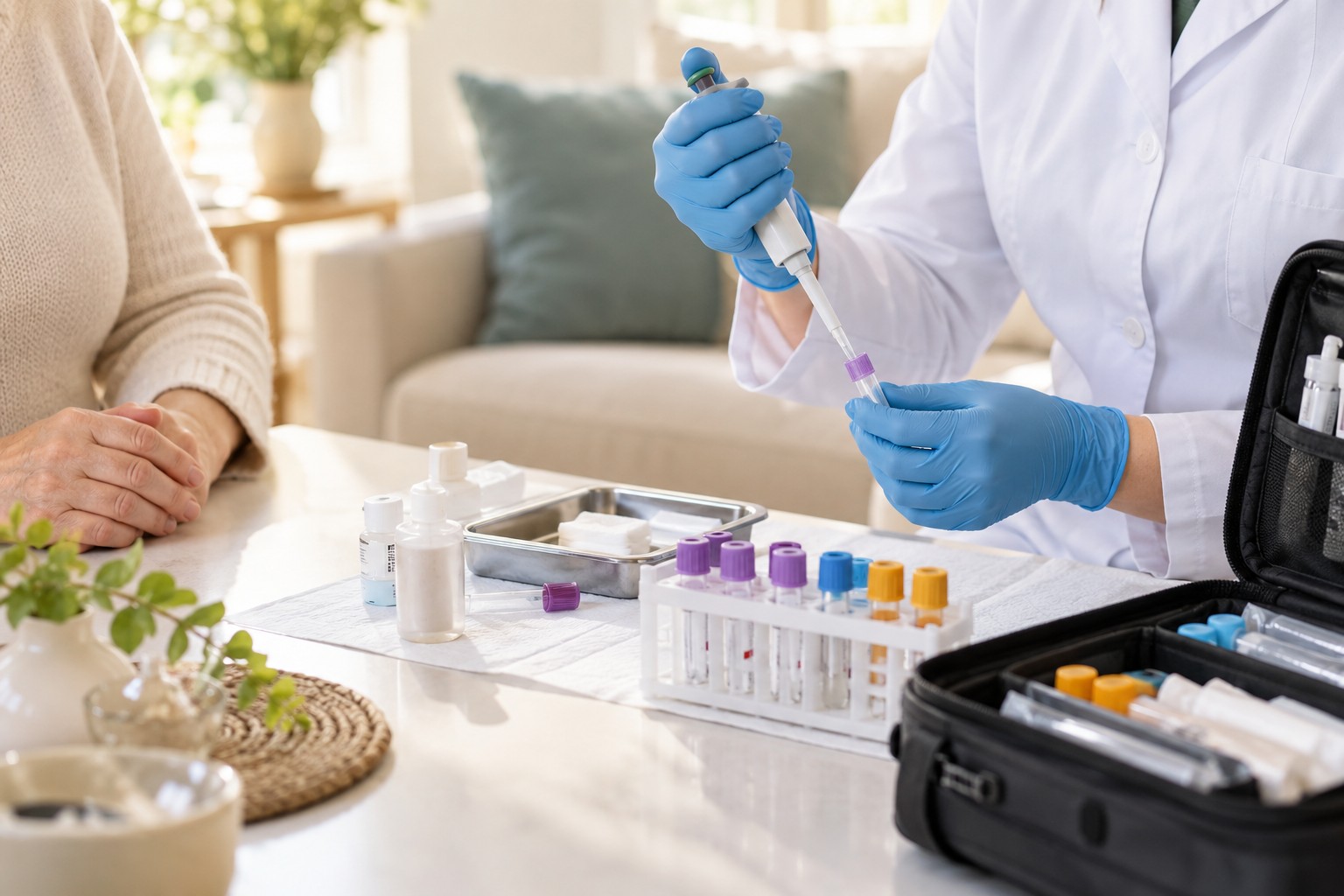

The vitamin B12 test measures the blood level of this vitamin, which is essential for blood formation and the nervous system; it offers guidance in weakness, numbness and anemia.
- Sample
- Blood
- Fasting
- Required
- Turnaround time
- Usually 1 business day
- Test group
- Biochemistry
Preparation: Fasting for 6–8 hours is usually recommended. Mention it if you take B12 tablets or injections; ask your doctor about biotin supplements.
Insurance: We work with private health insurers. For this test, we obtain the pre-approval and collect your sample once approval is received; we do not charge a co-payment. Insurance and payment
Contents
What is vitamin B12?
Vitamin B12, also known as cobalamin, is a water-soluble vitamin needed for the production of red blood cells, DNA synthesis and the healthy functioning of the nervous system. The body cannot produce this vitamin itself; it must be obtained from animal foods such as meat, fish, eggs, milk and dairy products. For the B12 in food to be absorbed, it must bind to a protein called intrinsic factor, which is produced in the stomach, and reach the last part of the small intestine.
Excess B12 is stored in the liver, and these stores can last for years; this is why a deficiency usually develops slowly and symptoms begin insidiously. In B12 deficiency, red blood cells become larger than normal and dysfunctional, and the protective sheath of nerve cells can also be damaged. The test is performed on the serum of blood drawn from the arm using automated chemiluminescence-based methods; if the result is borderline, your doctor may order additional tests such as homocysteine or methylmalonic acid.
When is a vitamin B12 test ordered?
The B12 test is ordered both when there are symptoms of anemia and when there are neurological complaints. In people at high risk of deficiency, it may be checked for screening purposes even without symptoms, and it is also used to monitor the level after treatment has started. Because folic acid deficiency also causes a similar type of anemia, the two tests are often ordered together.
- Persistent tiredness, weakness and pale skin
- Numbness or tingling in the hands and feet, or balance problems
- Forgetfulness, difficulty concentrating or changes in mood
- Red blood cells larger than normal on the blood count, i.e. a high MCV
- Vegan diet, older age, stomach or bowel surgery and malabsorption disorders
- Certain medications used for diabetes or long-term use of stomach acid suppressants
How do you prepare for a vitamin B12 test?
Fasting for 6–8 hours is usually recommended before a vitamin B12 test, so it is best to give your blood in the morning before breakfast. During this time you should not eat or drink anything except plain water. If you take a multivitamin, tablets or injections containing B12, tell your doctor when you took the last dose, because a recently taken supplement can make the result appear higher than it really is.
Hair, skin and nail supplements containing high-dose biotin can make the B12 result misleading with some laboratory methods; ask your doctor whether you should pause this supplement before the test. Because some medications can also affect B12 levels in the long term, share your medication list with your doctor and do not change your treatment on your own. A nurse can stop by your home or workplace before breakfast to take the sample.
What does a vitamin B12 result mean?
A low B12 level suggests insufficient intake from food or an inability to absorb the vitamin. The main causes include a vegan diet, pernicious anemia, in which the stomach produces less intrinsic factor, atrophic gastritis, stomach or bowel surgery, malabsorption disorders such as celiac disease and Crohn's disease, long-term alcohol use and certain medications. Finding the cause of the deficiency is important because it determines the form of treatment; a deficiency that goes unnoticed for a long time can lead to permanent nerve damage.
Borderline results do not always rule out a deficiency; in this case your doctor may complete the assessment with additional tests. High B12, on the other hand, is mostly due to the use of supplements or injections; rarely, it can also be seen in liver disease, kidney failure or certain blood disorders. The cut-off values used for B12 can differ between laboratories depending on the measurement method, age and sex; you can find the laboratory's own range on this page. Your doctor should evaluate what your result means together with your symptoms, your blood count and other tests.
Reference range
Unit: pg/mL- 197 - 771
This is the value used by our laboratory; it may vary depending on age, sex, the method used and the laboratory. Review your result together with your doctor.
How is Vitamin B12 (Cobalamin) done at home?
-
01
Book your appointment
Fill in the online form or call us, and let's plan a day and time that suit you together.
-
02
Your blood is drawn at home
Our nurse comes to your address and collects your blood sample using sterile, single-use supplies.
-
03
You receive your result
Your sample is transported to the laboratory under appropriate conditions; your result is sent to you when it is ready.
Frequently asked questions
The information on this page is for general information only; it does not replace diagnosis or treatment. Consult your doctor for decisions about your health.