

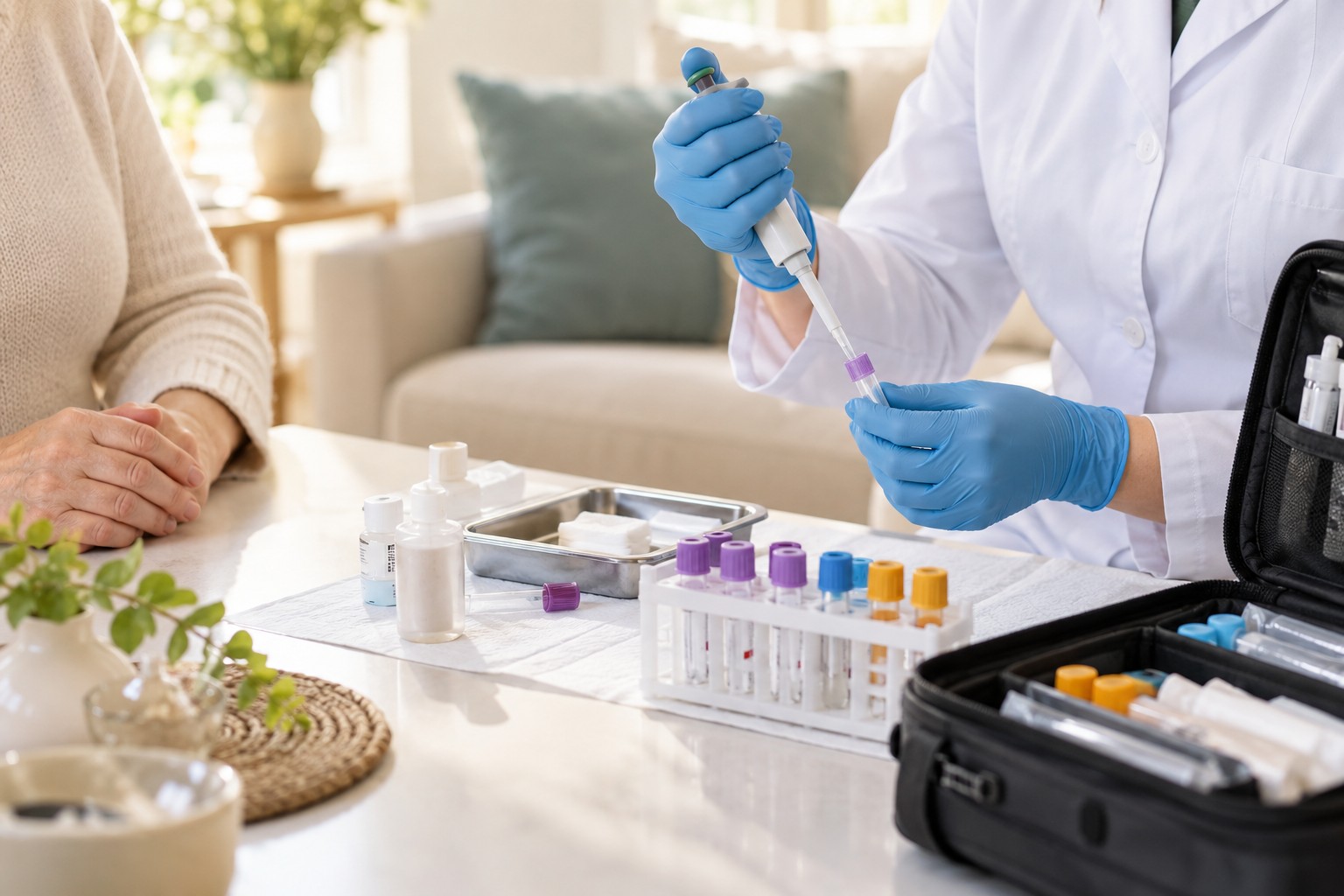
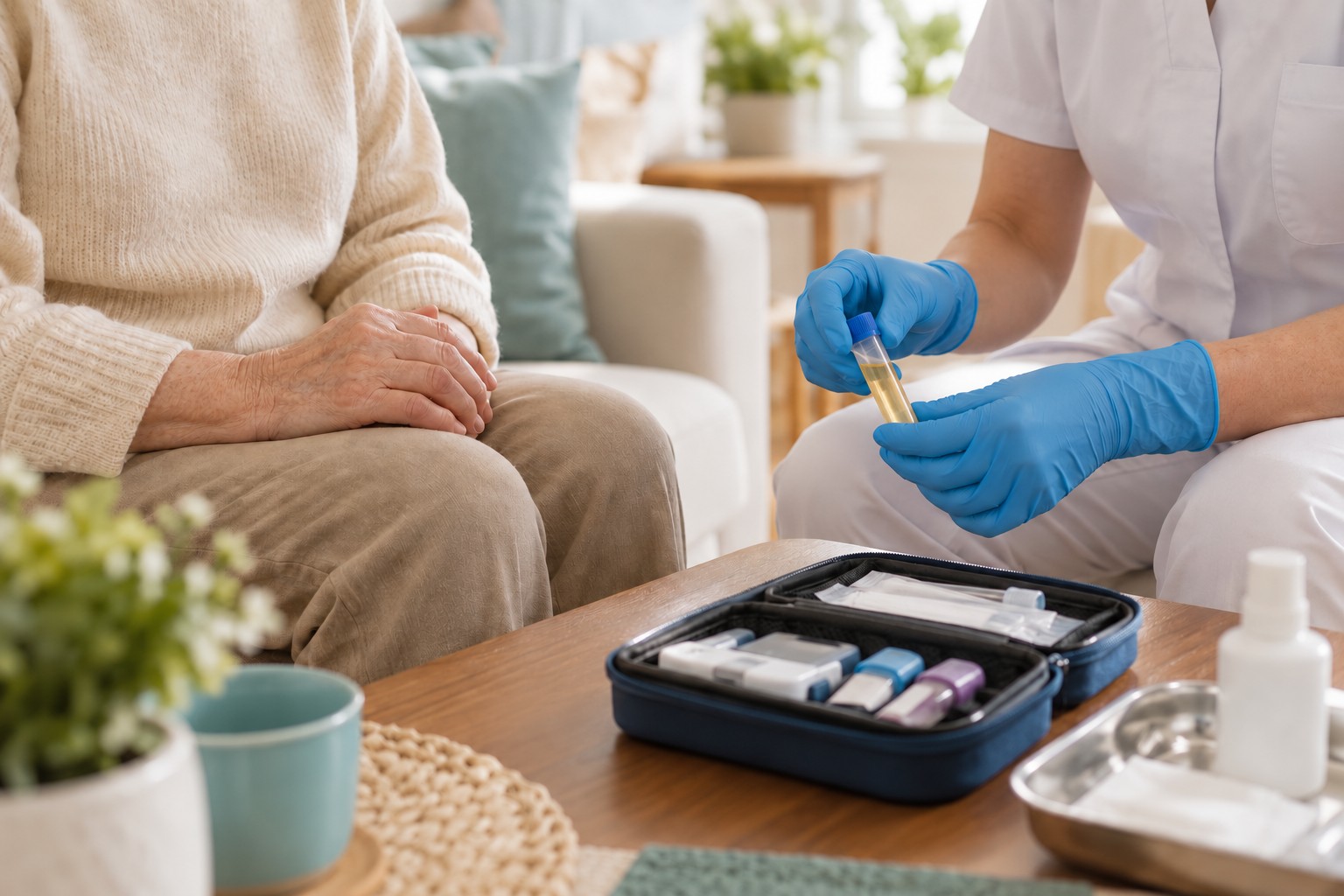
The total protein test measures the total amount of albumin and globulins in the blood; it gives insight into nutritional status and liver and kidney health.
- Sample
- Blood
- Fasting
- Not required
- Turnaround time
- As soon as possible
- Test group
- Biochemistry
Preparation: Fasting is usually not required; if ordered with other tests, give the sample in the morning on an empty stomach. Report any medications you take.
Insurance: We work with private health insurers. For this test, we obtain the pre-approval and collect your sample once approval is received; we do not charge a co-payment. Insurance and payment
Contents
What is total protein?
The liquid part of the blood contains many different proteins, and the total protein test measures their total amount. The two main groups of these proteins are albumin and globulins. Albumin, produced in the liver, prevents fluid inside the blood vessels from leaking into the tissues and carries many substances in the blood, such as hormones and medications. Globulins are a large group made up of the immune system's antibodies, some enzymes and carrier proteins.
Proteins are the building blocks of muscles, tissues and enzymes; they are needed for the body's repair, growth and defense against infections. In the laboratory, total protein is measured in a serum sample using a chemical method based on a color change and is often evaluated together with albumin. By subtracting albumin from total protein, the amount of globulin and the albumin/globulin ratio can also be calculated.
When is a total protein test ordered?
Total protein is part of the comprehensive biochemistry panels used in routine health check-ups and gives an idea of your general health. It is also ordered when nutritional problems or liver or kidney diseases are suspected, or while the course of these diseases is being monitored. If the result is abnormal, your doctor may investigate which protein group is affected with more detailed tests such as protein electrophoresis. It can also be used to monitor nutritional status in older adults who have been bedridden for a long time or whose appetite has decreased markedly.
- Unexplained weight loss, weakness or malnutrition
- Swelling in the legs, abdomen or around the eyes, known as edema
- Assessment and monitoring of liver and kidney diseases
- Celiac disease or inflammatory bowel diseases that impair absorption from the intestine
- Long-standing inflammatory diseases or conditions related to the immune system
- Suspicion of certain bone marrow diseases such as multiple myeloma
How do you prepare for a total protein test?
Fasting is not mandatory for a total protein measurement; if it has been ordered together with a biochemistry panel, laboratories mostly prefer a morning fasting sample. Because dehydration concentrates the blood and can make protein levels appear higher than they are, it is important to keep up your usual fluid intake before the test. Having been seated for a while, rather than standing, when your blood is drawn also gives a more consistent result.
Cortisone-type medications, some hormone medications and birth control pills can affect protein levels; tell your doctor about the medications you take. Because leaving the tourniquet tight for a long time during the blood draw can also raise the result, it is important that the procedure is completed quickly. The nurse who comes to your home or workplace usually takes the sample within a few minutes.
What does a total protein result mean?
High total protein is most often caused by the blood becoming concentrated due to fluid loss. Chronic inflammatory diseases, prolonged infections, some autoimmune diseases and bone marrow diseases that lead to abnormal protein production, such as multiple myeloma, can also raise the value. In this case, the globulin level and protein electrophoresis help identify the cause of the increase. The degree of the elevation and the protein group it comes from determine the next steps.
Low total protein, on the other hand, can be seen when the liver cannot produce enough protein, when protein is lost through the kidneys or the intestine, and in malnutrition, malabsorption disorders, severe burns or the dilution of the blood during pregnancy. When the decrease is marked, swelling can develop in the legs and abdomen because there is less albumin to hold fluid inside the blood vessels. Because reference values can vary by age, sex and laboratory method, your result should be compared with the laboratory range shown on this page. Your doctor interprets the result taking into account albumin, liver and kidney tests and your symptoms.
Reference range
Unit: g/dL- 6.6 - 8.7
This is the value used by our laboratory; it may vary depending on age, sex, the method used and the laboratory. Review your result together with your doctor.
How is Total Protein done at home?
-
01
Book your appointment
Fill in the online form or call us, and let's plan a day and time that suit you together.
-
02
Your blood is drawn at home
Our nurse comes to your address and collects your blood sample using sterile, single-use supplies.
-
03
You receive your result
Your sample is transported to the laboratory under appropriate conditions; your result is sent to you when it is ready.
Frequently asked questions
The information on this page is for general information only; it does not replace diagnosis or treatment. Consult your doctor for decisions about your health.