

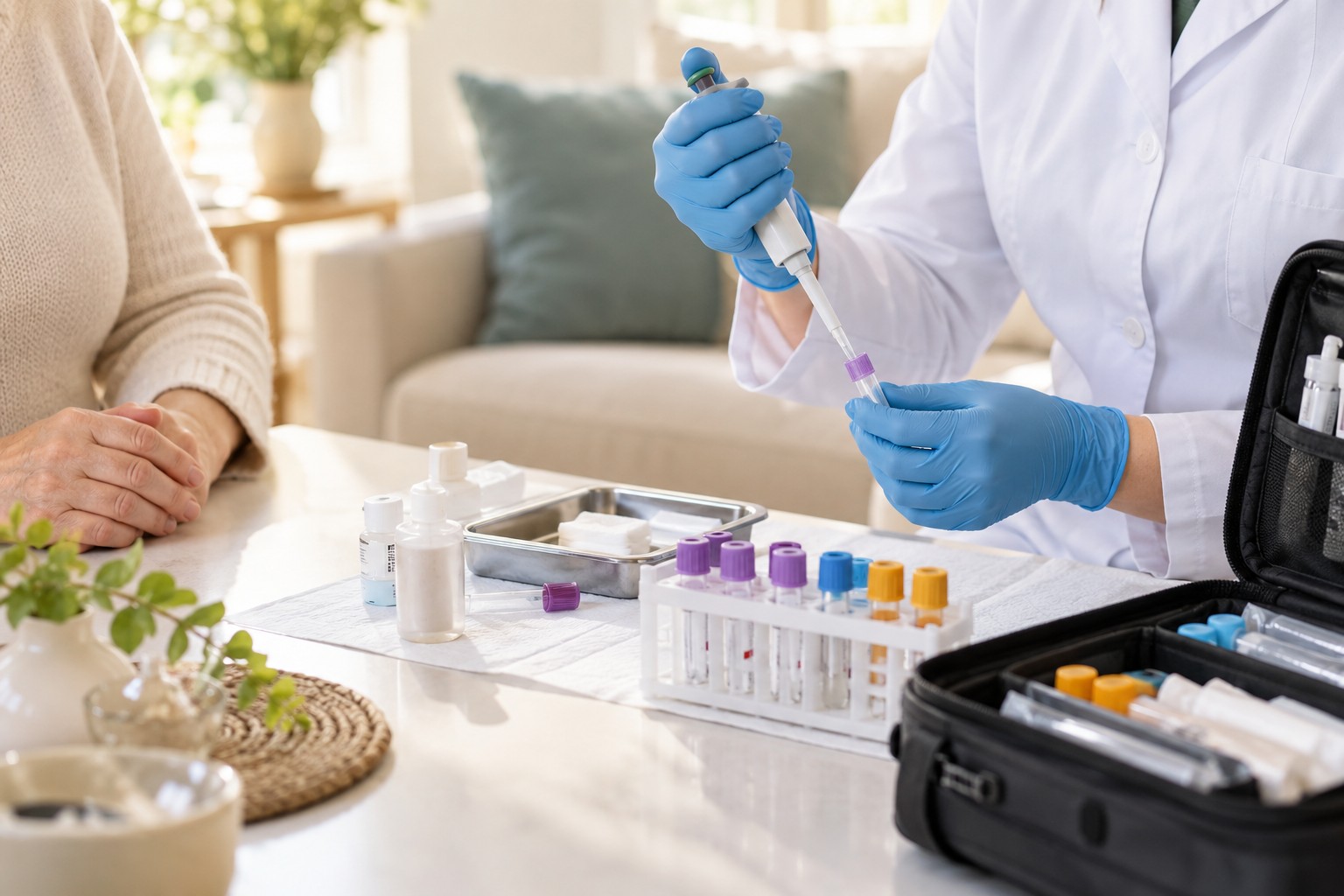
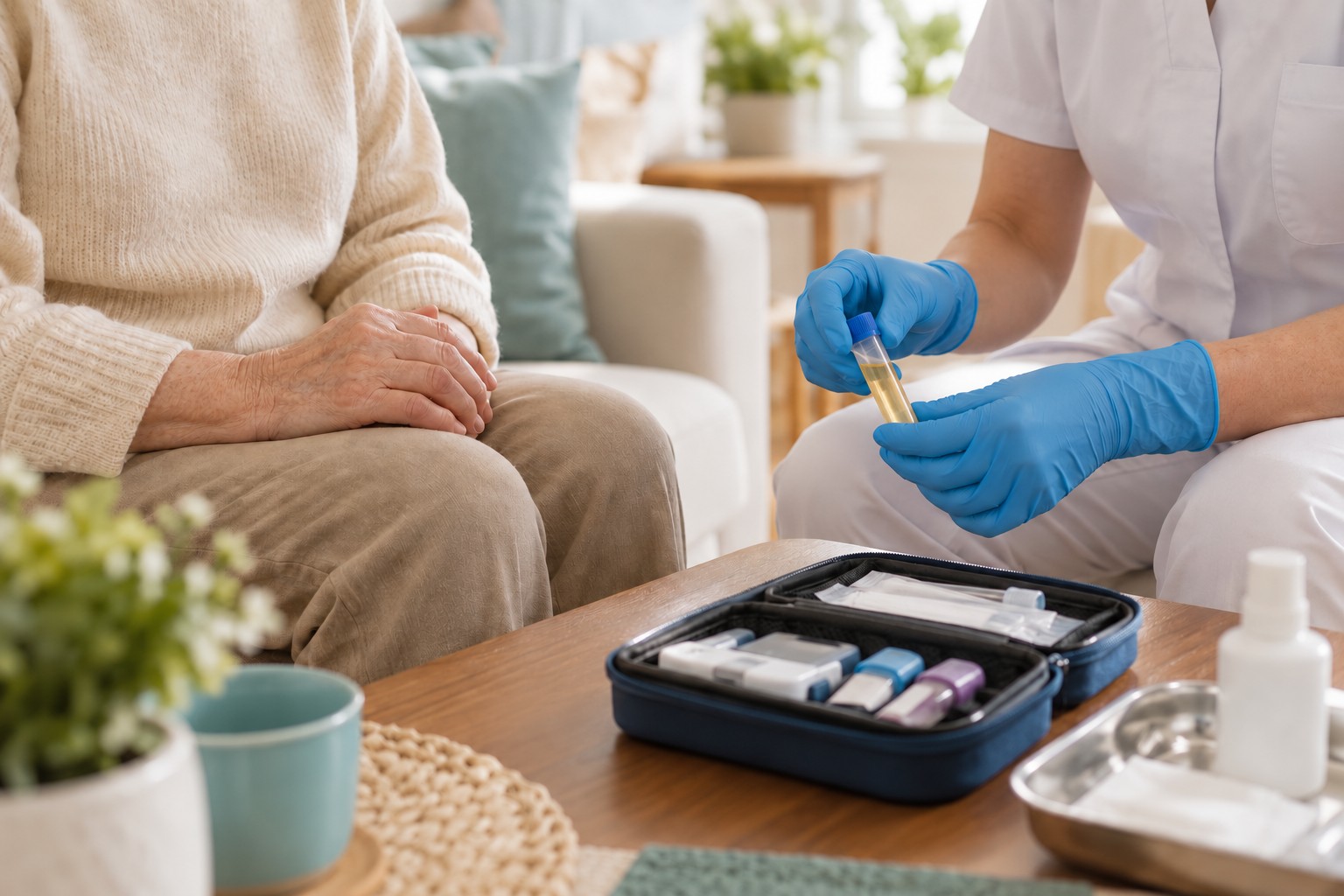
The Anti-HBs test measures your response to the hepatitis B vaccine and your protective antibody level. You can find out your immunity status by giving your blood sample at home.
- Sample
- Blood
- Fasting
- Not required
- Turnaround time
- Usually 1–2 business days
- Test group
- Serology and Infection (ELISA)
Preparation: No fasting required. If the test is a post-vaccination check, it is recommended to give blood about 1–2 months after the last vaccine dose.
Insurance: We work with private health insurers. For this test, we obtain the pre-approval and collect your sample once approval is received; we do not charge a co-payment. Insurance and payment
Contents
What is Anti-HBs?
Anti-HBs is the antibody that forms against the surface antigen of the hepatitis B virus (HBsAg) and provides protection against the virus. This antibody can develop in two ways: through hepatitis B vaccination or through recovery from a past infection. The test measures the amount of anti-HBs in your blood quantitatively, and the result is reported in mIU/mL. A person with a protective level of anti-HBs in their blood usually does not become ill when exposed to the virus.
Because the vaccine only produces immunity against the surface antigen, people protected by vaccination test positive only for anti-HBs among the hepatitis B markers. In people who have had the infection and recovered, anti-HBc is also positive along with anti-HBs; this difference helps identify the source of immunity. In Türkiye, the hepatitis B vaccine is part of the routine immunization schedule from birth. The measurement is performed on a serum sample using immunological methods such as chemiluminescence or ELISA.
When is the Anti-HBs test ordered?
The Anti-HBs test is most often ordered to check whether the hepatitis B vaccine has produced a protective response. While most healthy people do not need routine testing, the test is recommended for people who are more likely to be exposed to hepatitis B or who may respond poorly to the vaccine. It can also be used before vaccination to determine existing immunity. The result makes it easier to decide whether vaccination is needed or whether an additional dose is required.
- Post-vaccination check in healthcare workers and students training in healthcare fields
- Monitoring the level of protection in dialysis patients and immunocompromised people
- Evaluation after the vaccine series in babies born to mothers who carry hepatitis B
- The spouse or household members of a person who carries hepatitis B
- Determining whether vaccination is needed in people whose vaccination history is unknown
- Rapid assessment of protection status after contact with blood or a needle
How do you prepare for the Anti-HBs test?
The Anti-HBs measurement does not require fasting; you can choose a time that suits you for the blood draw. If the test is done to assess vaccine response, the most meaningful result is usually obtained from a sample taken about 1–2 months after the last dose of the vaccine series. Measurements taken too early or years later may show the vaccine response differently from what it actually is. If you have not yet completed the vaccine series, it is better to plan the timing of the test together with your doctor.
If you have received hepatitis B immunoglobulin, blood or blood products in recent months, tell your doctor, as these can cause a temporary rise in anti-HBs. Sharing the dose dates on your vaccination card makes interpretation easier. Blood is drawn from a vein in the arm, and our nurse can do this at your home or workplace.
What does the Anti-HBs result mean?
According to the generally accepted approach, an anti-HBs level of 10 mIU/mL or higher is considered protective against hepatitis B. Because immune memory develops in people who reach this level after vaccination, protection usually continues even if the antibody level falls over the years. Anti-HBs that is positive together with anti-HBc indicates a past infection that has resolved.
A result below the protective level may indicate that the vaccine did not produce an adequate response, that antibodies have declined over time, or that the person was never vaccinated. In that case, your doctor may recommend an additional dose or a repeat of the vaccine series; if there is still no response, they may investigate the possibility of infection with tests such as HBsAg and anti-HBc. Because measurements can differ between methods, the result is evaluated according to each laboratory's own reference, and factors such as older age and sex can also affect vaccine response; this laboratory's reference value is shown on this page. Your doctor, who evaluates your result together with your symptoms and other tests, decides whether vaccination or an additional dose is needed.
Reference range
Unit: mIU/mL- Immune: ≥ 10
This is the value used by our laboratory; it may vary depending on age, sex, the method used and the laboratory. Review your result together with your doctor.
How is Anti-HBs (Hepatitis B Surface Antibody) done at home?
-
01
Book your appointment
Fill in the online form or call us, and let's plan a day and time that suit you together.
-
02
Your blood is drawn at home
Our nurse comes to your address and collects your blood sample using sterile, single-use supplies.
-
03
You receive your result
Your sample is transported to the laboratory under appropriate conditions; your result is sent to you when it is ready.
Frequently asked questions
The information on this page is for general information only; it does not replace diagnosis or treatment. Consult your doctor for decisions about your health.