


The ASO test measures antibodies formed against a past streptococcal infection; it is used to investigate complications such as acute rheumatic fever.
- Sample
- Blood
- Fasting
- Not required
- Turnaround time
- Usually 1–2 business days
- Test group
- Serology and Infection (ELISA)
Preparation: You do not need to fast. Mention any throat or skin infection you have had in recent weeks and any antibiotics you have taken.
Insurance: We work with private health insurers. For this test, we obtain the pre-approval and collect your sample once approval is received; we do not charge a co-payment. Insurance and payment
Contents
What is ASO?
ASO (anti-streptolysin O) is a blood test that measures the antibodies the body produces against an enzyme called streptolysin O, which is released by group A beta-hemolytic streptococcus bacteria. These bacteria most often cause throat infections, scarlet fever and some skin infections. The antibodies that form after the infection are an indirect sign of recent exposure to the bacteria.
The ASO level usually begins to rise about a week after the infection, reaches its peak within a few weeks and slowly decreases over the following months. The test therefore shows the traces of a past streptococcal infection rather than a current throat infection. The measurement is performed on a serum sample using turbidimetry, nephelometry or similar immunological methods, and the result is reported numerically in IU/mL.
When is the ASO test ordered?
ASO is ordered when complications are suspected that can appear a few weeks after a streptococcal infection and are linked to an excessive immune response. Chief among these are acute rheumatic fever, which can affect the heart, joints and nervous system, and post-streptococcal glomerulonephritis, which affects the kidneys. Your doctor uses this test to understand whether the findings are related to a recent streptococcal infection.
- Joint pain and swelling that moves from joint to joint, starting a few weeks after a throat infection
- Palpitations, chest pain or a newly noticed heart murmur together with fever
- Dark urine, swollen eyelids or high blood pressure
- Suspected involuntary, irregular movements in children (Sydenham's chorea)
- Evaluations the doctor considers necessary after scarlet fever or strep throat
How do you prepare for the ASO test?
It is fine to eat before the ASO measurement; the blood sample can be taken in the morning or in the evening. If you have had a sore throat, scarlet fever or a skin infection in recent weeks and took antibiotics during that time, tell your doctor. Because antibiotic treatment started early and some immunosuppressive medications can reduce the antibody response, this information is important for interpreting the result.
Instead of a single measurement, two measurements taken a few weeks apart can provide more meaningful information by showing a rise or fall in the antibody level; your doctor decides whether a repeat test is needed. Blood is drawn from a vein in the arm, and the procedure is usually completed within a few minutes, in children as well. Especially for young children, you may prefer to have the blood drawn by a nurse at home, in a familiar environment.
What does the ASO result mean?
A high ASO value shows that a group A streptococcal infection has occurred in recent weeks or months. However, on its own it does not establish a diagnosis of acute rheumatic fever or kidney inflammation; these diagnoses are made based on examination findings, symptoms and other tests. Because school-age children frequently have throat infections, slightly elevated values can also be seen in people without any complaints. A marked rise in the level across consecutive measurements more strongly supports a recent infection.
A result within normal limits makes a recent streptococcal infection less likely but does not completely rule it out. ASO may not always rise, particularly after skin infections; in that case, the doctor may order additional tests such as anti-DNase B. The reference range differs by laboratory and method and also varies with age; in school-age children, the upper limit may be considered higher than in adults, and this laboratory's reference range is shown on this page. Your result must always be interpreted by your doctor together with examination findings, your symptoms and other laboratory tests.
Reference range
Unit: IU/mL- 0 - 200
This is the value used by our laboratory; it may vary depending on age, sex, the method used and the laboratory. Review your result together with your doctor.
How is ASO (Anti-Streptolysin O) done at home?
-
01
Book your appointment
Fill in the online form or call us, and let's plan a day and time that suit you together.
-
02
Your blood is drawn at home
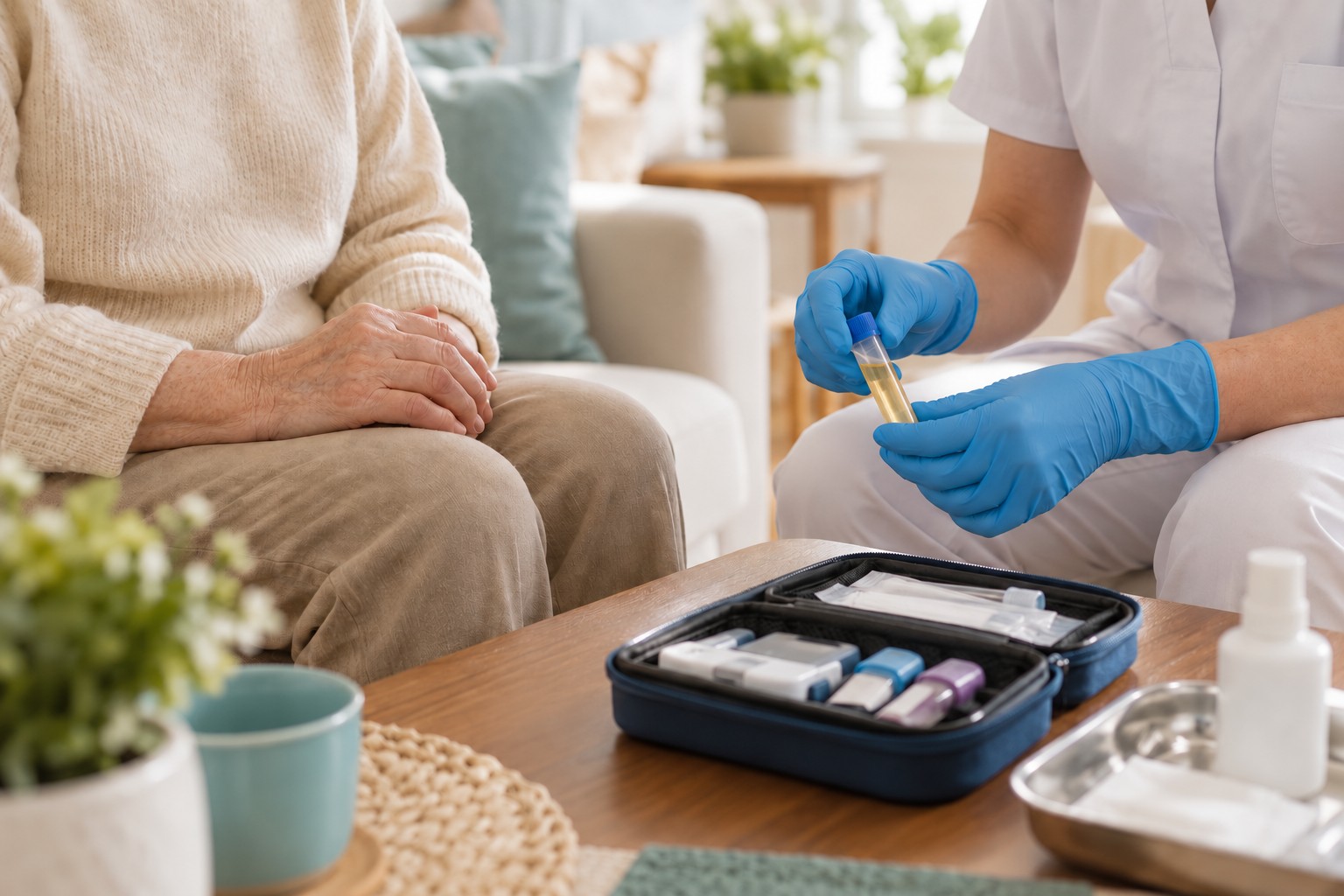
Our nurse comes to your address and collects your blood sample using sterile, single-use supplies.
-
03
You receive your result
Your sample is transported to the laboratory under appropriate conditions; your result is sent to you when it is ready.
Frequently asked questions
The information on this page is for general information only; it does not replace diagnosis or treatment. Consult your doctor for decisions about your health.