

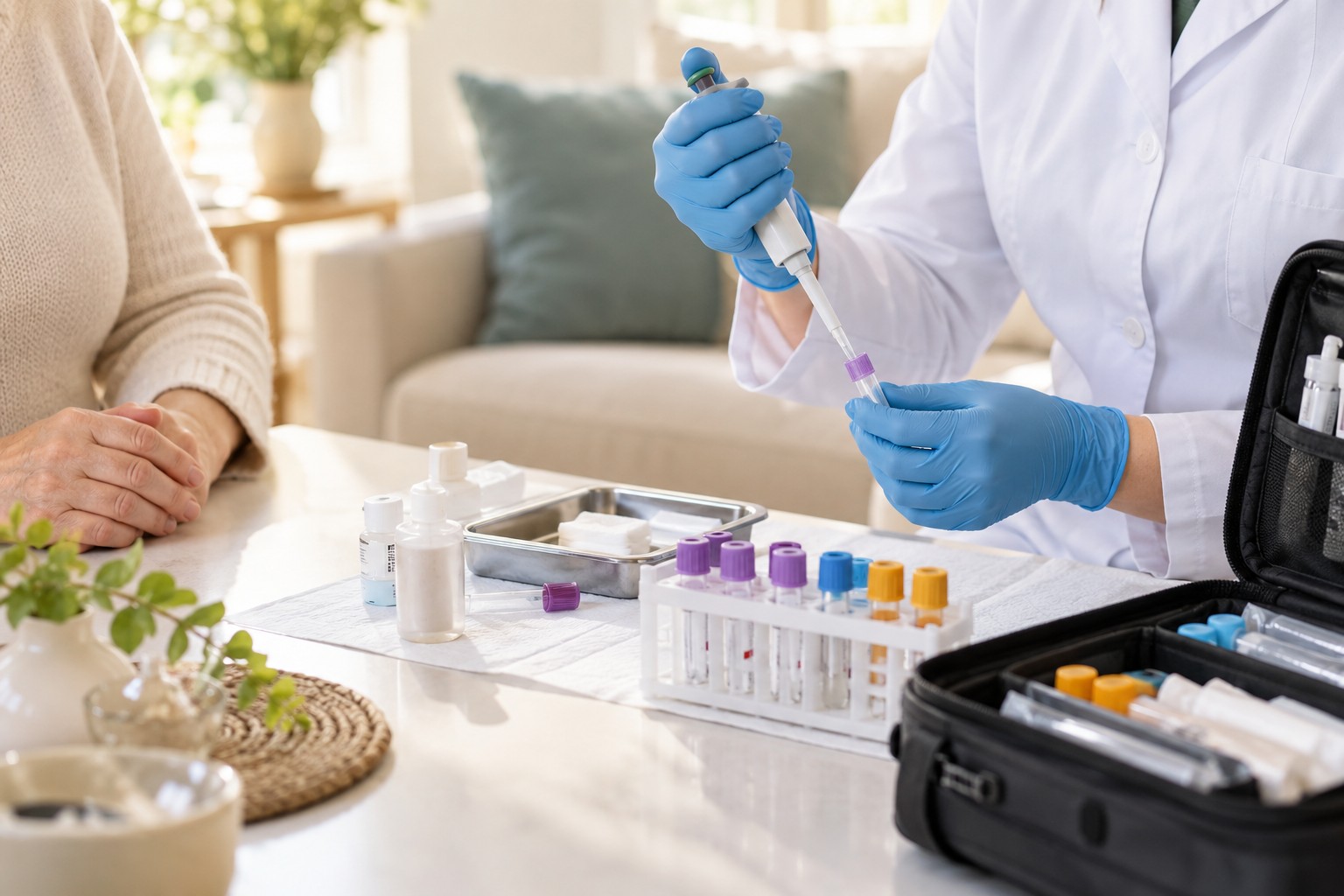
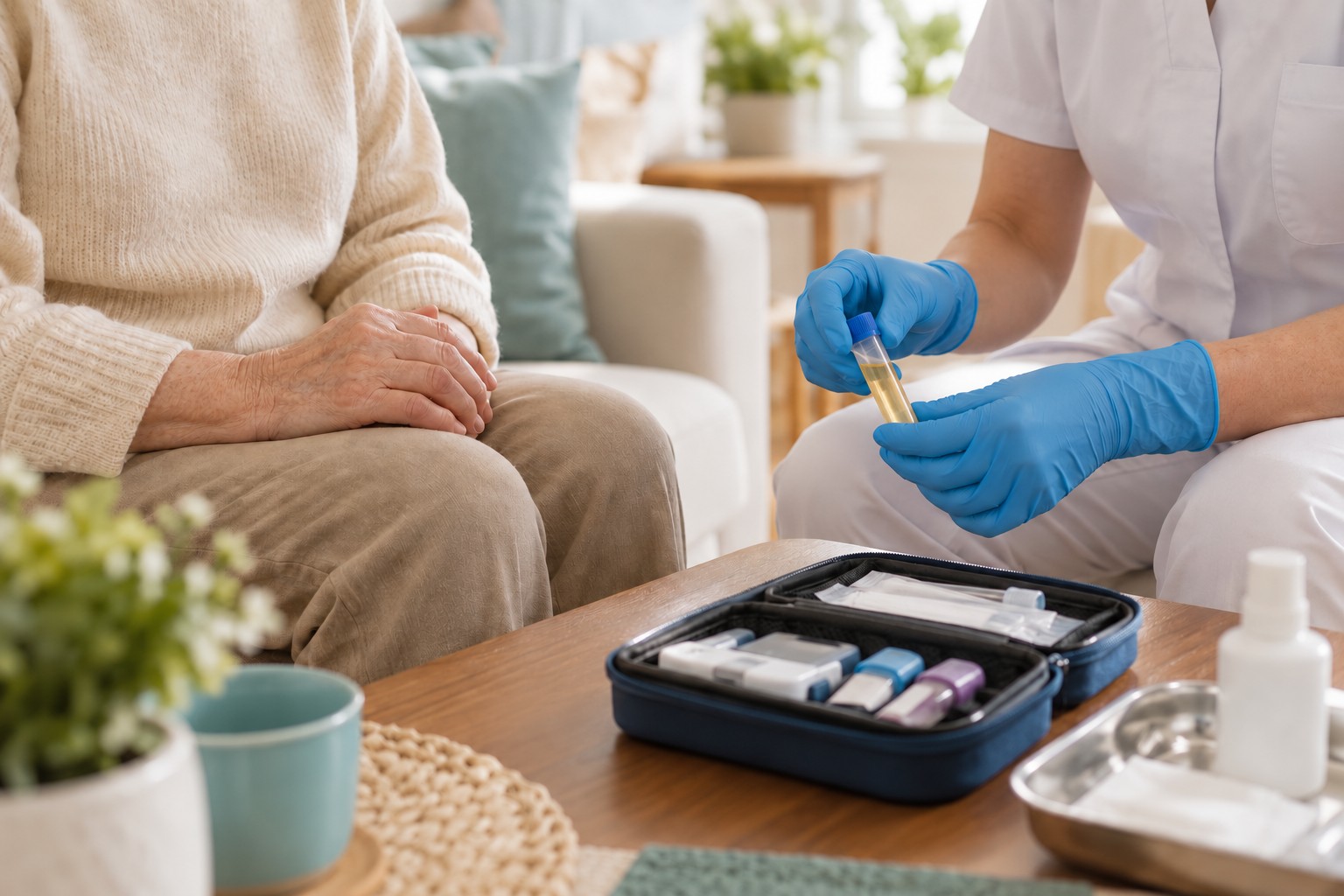
The HBsAg test looks for the surface antigen of the hepatitis B virus in the blood and helps detect a current infection early. The sample can be taken at home.
- Sample
- Blood
- Fasting
- Not required
- Turnaround time
- Usually 1–2 business days
- Test group
- Serology and Infection (ELISA)
Preparation: No fasting required. Mention if you have had a hepatitis B vaccine in the last few weeks or are taking high-dose biotin.
Insurance: We work with private health insurers. For this test, we obtain the pre-approval and collect your sample once approval is received; we do not charge a co-payment. Insurance and payment
Contents
What is HBsAg (hepatitis B surface antigen)?
HBsAg is a protein found on the outer surface of the hepatitis B virus and is one of the first markers that can be detected in the blood after the virus enters the body. Its presence in the blood shows that the person currently has a hepatitis B infection. Hepatitis B is a viral infection that affects the liver and can be transmitted through blood, sexual contact, or from mother to baby during childbirth.
In some people the infection clears on its own within a few months, while in others it can become chronic; if the antigen stays in the blood for more than six months, the infection is considered chronic. The likelihood of the infection becoming chronic is closely related to the age at which it is acquired; infections acquired in infancy become chronic much more often. This test does not show immunity; the anti-HBs test is used to find out whether you are protected against the virus. The laboratory looks for this antigen in the serum portion of the blood using the ELISA technique and reports the result qualitatively, that is, as negative or positive.
When is the HBsAg test ordered?
HBsAg is the most commonly used test in hepatitis B screening and is often ordered together with the anti-HBs and anti-HBc tests. Because hepatitis B can progress for a long time without symptoms in most people, screening is also important in people without complaints. The aim of screening is to detect the infection early in order to protect liver health and to protect family members from transmission.
- Pregnancy follow-up and pregnancy planning
- Evaluation before chemotherapy or immunosuppressive treatments
- Fatigue, loss of appetite, dark urine or yellowing of the eyes
- Unexplained elevation of liver enzymes
- Having a family member or partner diagnosed with hepatitis B
- Occupational accidents involving contact with blood, such as needlestick injuries
How do you prepare for the HBsAg test?
No fasting is needed before the HBsAg test; the blood sample can be taken at any time of day. Since temporary positivity has been reported shortly after hepatitis B vaccination, be sure to mention it if you have been vaccinated in the last few weeks. Supplements containing high-dose biotin can affect some immunological measurements; if you take them, consult your doctor. You can drink water before giving blood and, unless your doctor tells you otherwise, keep taking your regular medications.
A small amount of blood drawn from a vein in the arm is enough for the test. A Curavita nurse can perform the blood draw at your home or workplace, so you may not need to go to a separate healthcare facility for your pregnancy or pre-surgery tests.
What does the HBsAg result mean?
A negative result usually shows that there is no hepatitis B infection at the moment; however, it does not mean that you are immune to the virus. Because the antigen may not yet have reached detectable levels in the first weeks after exposure, your doctor may recommend repeating the test if you have recently been in a risky situation. Doctors usually recommend the hepatitis B vaccine for people who are unvaccinated and whose anti-HBs level is found to be insufficient.
A positive result shows that the hepatitis B virus is present in the blood; samples that are reactive on the screening test are usually verified with a confirmatory test. To understand whether the infection is new or chronic, additional tests such as anti-HBc IgM, HBeAg and HBV DNA are used; chronic hepatitis B can be kept under control with regular follow-up and, when needed, treatment. Your hepatitis B result is among the health data whose confidentiality is protected by law. The kits and cut-off values used can vary between laboratories; although age and sex affect the reference for many tests, this test is reported qualitatively, and the laboratory's reference value is provided on this page. The final evaluation should be made by your doctor, together with your symptoms and complementary tests.
Expected result
- Negative
This is the value used by our laboratory; it may vary depending on age, sex, the method used and the laboratory. Review your result together with your doctor.
How is HBsAg (Hepatitis B Surface Antigen) done at home?
-
01
Book your appointment
Fill in the online form or call us, and let's plan a day and time that suit you together.
-
02
Your blood is drawn at home
Our nurse comes to your address and collects your blood sample using sterile, single-use supplies.
-
03
You receive your result
Your sample is transported to the laboratory under appropriate conditions; your result is sent to you when it is ready.
Frequently asked questions
The information on this page is for general information only; it does not replace diagnosis or treatment. Consult your doctor for decisions about your health.