

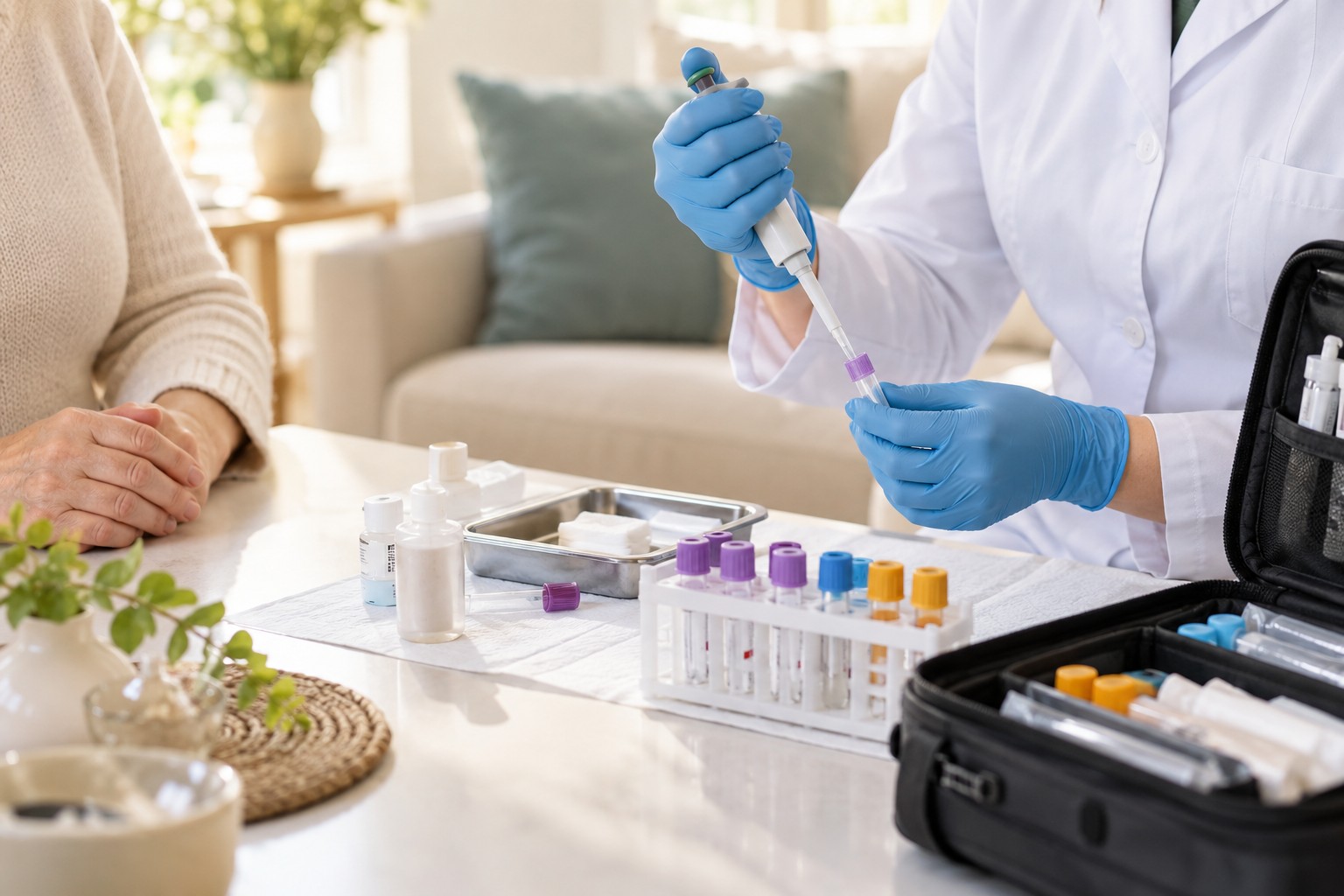
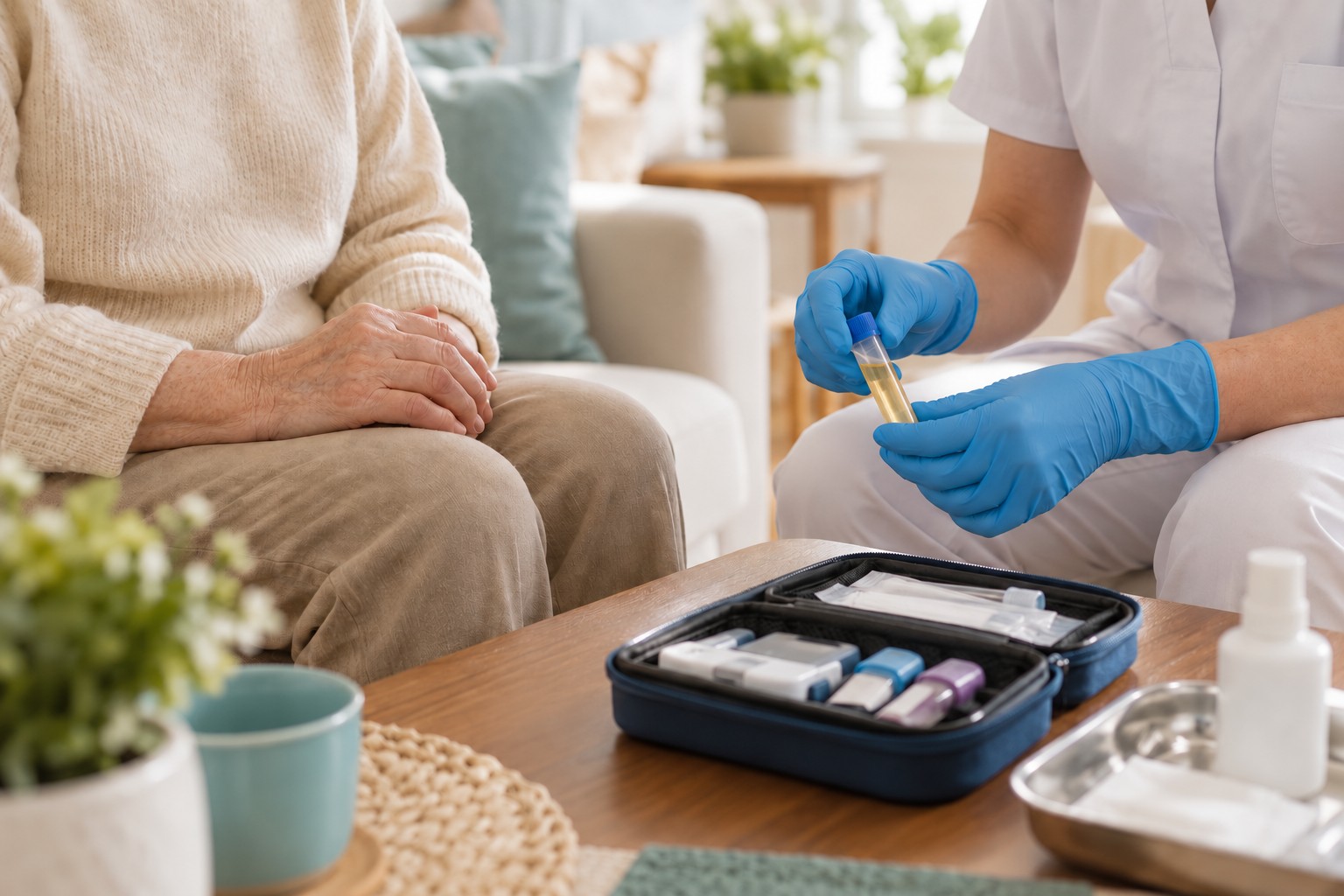
The H. pylori stool antigen test detects the stomach bacterium linked to gastritis and ulcers; it is also used for checks after treatment. The sample can be given at home.
- Sample
- Stool
- Fasting
- Not required
- Turnaround time
- Usually 1 business day
- Test group
- Culture and Microbiology
Preparation: No fasting is needed. With your doctor's approval, it is advised to pause stomach-protecting drugs 2 weeks, and antibiotics and bismuth 4 weeks, before the test.
Insurance: We work with private health insurers. For this test, we obtain the pre-approval and collect your sample once approval is received; we do not charge a co-payment. Insurance and payment
Contents
What is the H. pylori stool antigen test?
Helicobacter pylori is a bacterium, commonly referred to simply as the stomach bacterium, that can settle in the layer of mucus lining the inside of the stomach. It can live there for years without causing symptoms; however, it is one of the major causes of gastritis and of stomach and duodenal ulcers. It is also among the known risk factors for the development of gastric cancer. The bacterium is mostly transmitted in childhood, by the oral route and within families.
This test detects the bacterium's protein fragments, or antigens, excreted in the stool, with the help of specific antibodies. Whereas antibody tests performed on blood can remain positive for a long time after a past infection, the stool antigen test shows an active infection that is present at the time. This makes it a reliable option both for diagnosis and for checking whether treatment has been successful. The result is reported as positive or negative.
When is an HPSA test ordered?
Your doctor may order this test when they think your stomach complaints may be related to this bacterium, or when they want to see whether the bacterium has been cleared after treatment. The test is a painless method that does not require endoscopy, and it can also be used in children when the doctor considers it necessary. The test may also be recommended for people with a history of ulcers who need to take aspirin or painkillers for a long time.
- Indigestion, a burning sensation in the stomach, bloating or upper abdominal pain
- A history of stomach or duodenal ulcer
- A history of gastric cancer in first-degree relatives
- Unexplained iron-deficiency anemia
- Checking the success of eradication treatment
How do you prepare for an HPSA test?
No fasting is required for the test, and the stool can be collected at any time of day. Some medicines can temporarily reduce the number of bacteria and lead to a false-negative result. For this reason, with your doctor's approval, it is recommended to stop stomach-protecting medicines called proton pump inhibitors usually two weeks before the test, and medicines containing antibiotics or bismuth four weeks before. If the test is a check after treatment, it is scheduled at least four weeks after the end of treatment.
For the sample, it is enough to take a hazelnut-sized piece of fresh stool, not mixed with urine or water, using the spoon of the container. Because very watery stool can affect the result with some test kits, it helps to mention it if you currently have diarrhea. If you choose to give the sample at home, a sterile container is delivered to you, you collect the sample yourself, and our nurse picks up the container and takes it to the laboratory. Keep the sample, with its lid tightly closed, in a cool place until you hand it over.
What does an HPSA result mean?
A negative result suggests that no H. pylori antigen was detected in the sample and that there is no active infection. In a check after treatment, a negative result indicates that the bacterium has most likely been cleared. However, if stomach-protecting medicines or antibiotics were used before the test, the result may be falsely negative; in that case, your doctor may recommend repeating the test at a suitable time.
A positive result indicates an active Helicobacter pylori infection in the stomach. In this case, your doctor will plan treatment after evaluating your complaints and risk factors and may recommend further investigations such as endoscopy if necessary. A positive result that persists after treatment suggests that the bacterium has not been cleared and that a different treatment approach may be needed. The kit used and the reporting format may vary by laboratory; this laboratory's reference wording is shown on the page. The result should be interpreted by a doctor together with your symptoms and other test findings.
Expected result
- Negative
This is the value used by our laboratory; it may vary depending on age, sex, the method used and the laboratory. Review your result together with your doctor.
How is H. pylori Stool Antigen (HPSA) done at home?
-
01
Book your appointment
Fill in the online form or call us, and let's plan a day and time that suit you together.
-
02
Your sample container is delivered
A sterile sample container and instructions are brought to your address; once you have provided your sample, our nurse collects it.
-
03
You receive your result
Your sample is transported to the laboratory under appropriate conditions; your result is sent to you when it is ready.
Frequently asked questions
The information on this page is for general information only; it does not replace diagnosis or treatment. Consult your doctor for decisions about your health.