

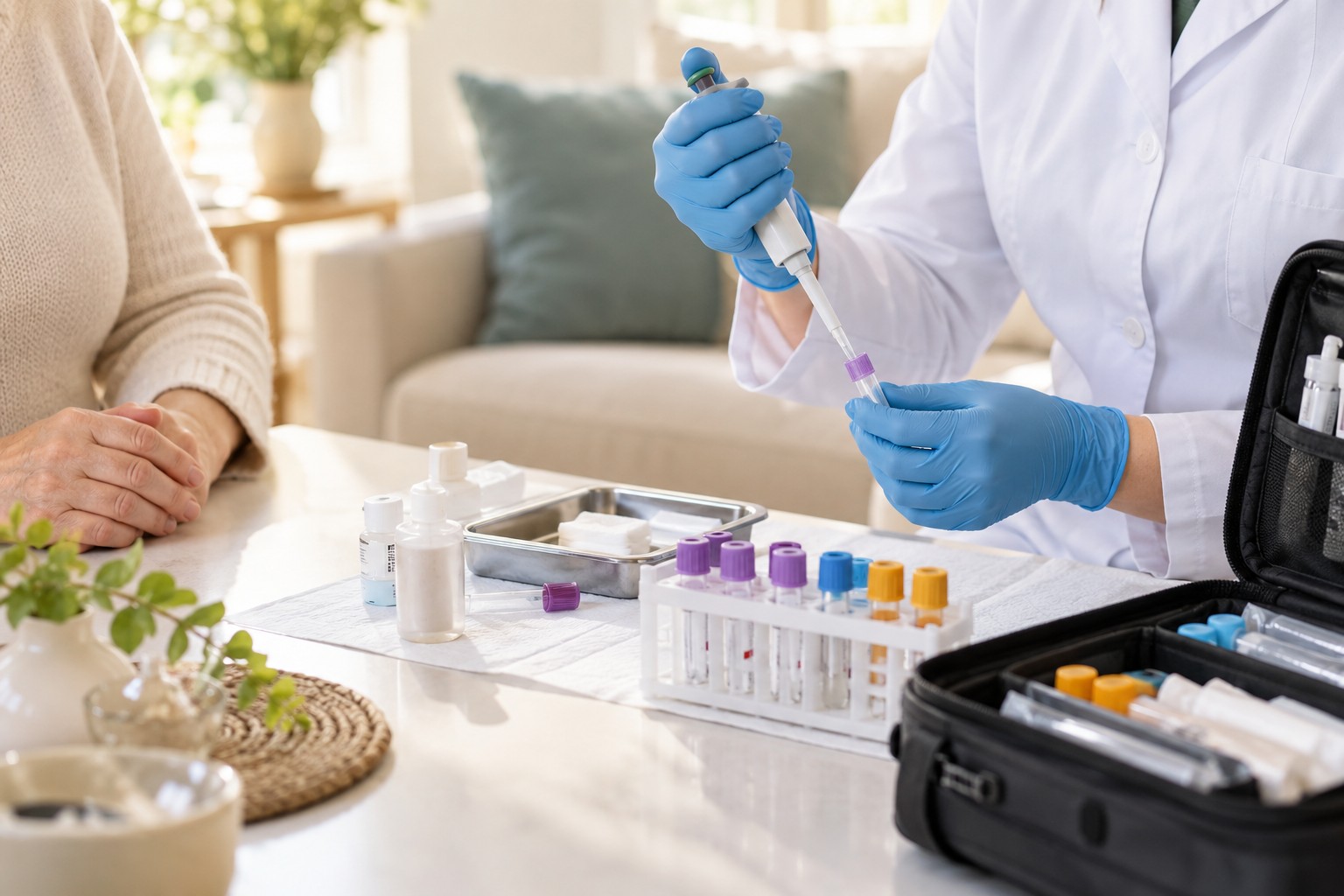
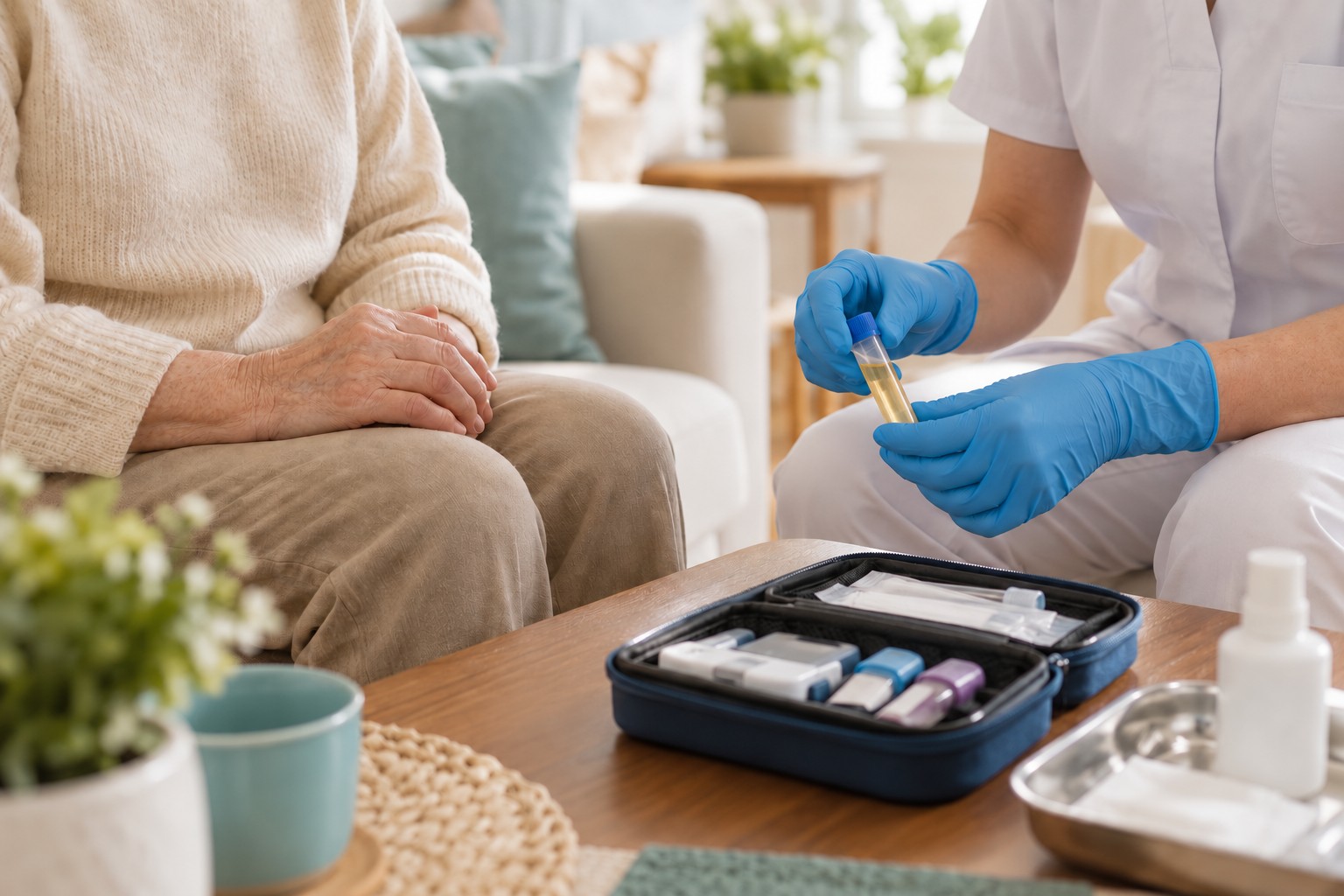
The HbA1c test shows the average blood sugar over the past 2–3 months; it is used to diagnose and monitor diabetes. No fasting is needed, and the blood sample can be given at home.
- Sample
- Blood
- Fasting
- Not required
- Turnaround time
- As soon as possible
- Test group
- Biochemistry
Preparation: No fasting is needed; the sample can be given at any time of day. Report any recent blood loss or blood transfusion.
Insurance: We work with private health insurers. For this test, we obtain the pre-approval and collect your sample once approval is received; we do not charge a co-payment. Insurance and payment
Contents
What is hemoglobin A1c (HbA1c)?
Hemoglobin is an oxygen-carrying protein found in red blood cells. Over time, sugar in the blood binds permanently to hemoglobin; this sugar-bound type of hemoglobin is called HbA1c. This binding continues slowly but steadily for as long as blood sugar is high. The higher blood sugar runs, the greater the proportion of sugar bound to hemoglobin.
Because red blood cells live for about three months, HbA1c provides information about the average blood sugar over the past two to three months. Since it is not greatly affected by daily fluctuations, it gives a broader picture than a single blood sugar measurement. The test is run on whole blood using chromatographic methods such as HPLC or immunological methods, and the result is reported as a percentage.
When is an HbA1c test ordered?
HbA1c is one of the tests used to diagnose diabetes and to screen for prediabetes. In people with diabetes, it is the main way to monitor how well treatment keeps blood sugar under control and is usually repeated every three to six months.
The test results guide the doctor in adjusting medication doses or updating lifestyle recommendations. In people at risk of diabetes, assessing it together with fasting blood glucose helps detect changes at an early stage.
- Suspected diabetes or prediabetes
- Excessive thirst, frequent urination or unexplained weight loss
- Regular monitoring of diabetes treatment
- Assessing the effect of a change in treatment
- A family history of diabetes, excess weight or previous gestational diabetes
How do you prepare for an HbA1c test?
You do not need to fast for the HbA1c test; the blood sample can be given at any time of day, before or after a meal. Your last meal or your blood sugar on that day does not noticeably change the result. This also makes it a practical test for people who find it difficult to give blood in the morning on an empty stomach. Unless your doctor tells you otherwise, you can keep taking your diabetes medications on your usual schedule.
If you have recently experienced a condition that affects the lifespan of red blood cells, such as serious blood loss, a blood transfusion, pregnancy or anemia, tell your doctor; these conditions can make the result misleading. Some inherited hemoglobin variants can also affect the measurement. HbA1c is measured in whole blood taken from a vein in the arm; our nurse can take this blood sample at your home or workplace.
What does an HbA1c result mean?
A high HbA1c value shows that blood sugar has been running above normal in recent months. According to generally accepted criteria, an HbA1c value of 6.5% or higher, preferably confirmed by a repeat measurement, supports a diagnosis of diabetes; values slightly above normal that do not reach this threshold are evaluated for prediabetes. In people with diabetes, the target value is set individually by the doctor based on age, coexisting conditions and the risk of low blood sugar.
A low HbA1c is usually not a problem; however, it can be caused by conditions in which red blood cells are broken down rapidly, recent blood loss or frequently recurring low blood sugar. Iron-deficiency anemia, kidney failure and some hemoglobin variants, on the other hand, can make the result appear different from the true value. Reference ranges may vary by laboratory and the method used; age, sex and certain personal characteristics are also taken into account in interpretation, and this page shows the range of the laboratory that performs the analysis. Your HbA1c result should be interpreted by your doctor together with your symptoms and other tests, such as fasting blood glucose.
Reference range
Unit: %- < 5.7
This is the value used by our laboratory; it may vary depending on age, sex, the method used and the laboratory. Review your result together with your doctor.
How is Hemoglobin A1c (HbA1c) done at home?
-
01
Book your appointment
Fill in the online form or call us, and let's plan a day and time that suit you together.
-
02
Your blood is drawn at home
Our nurse comes to your address and collects your blood sample using sterile, single-use supplies.
-
03
You receive your result
Your sample is transported to the laboratory under appropriate conditions; your result is sent to you when it is ready.
Frequently asked questions
The information on this page is for general information only; it does not replace diagnosis or treatment. Consult your doctor for decisions about your health.