

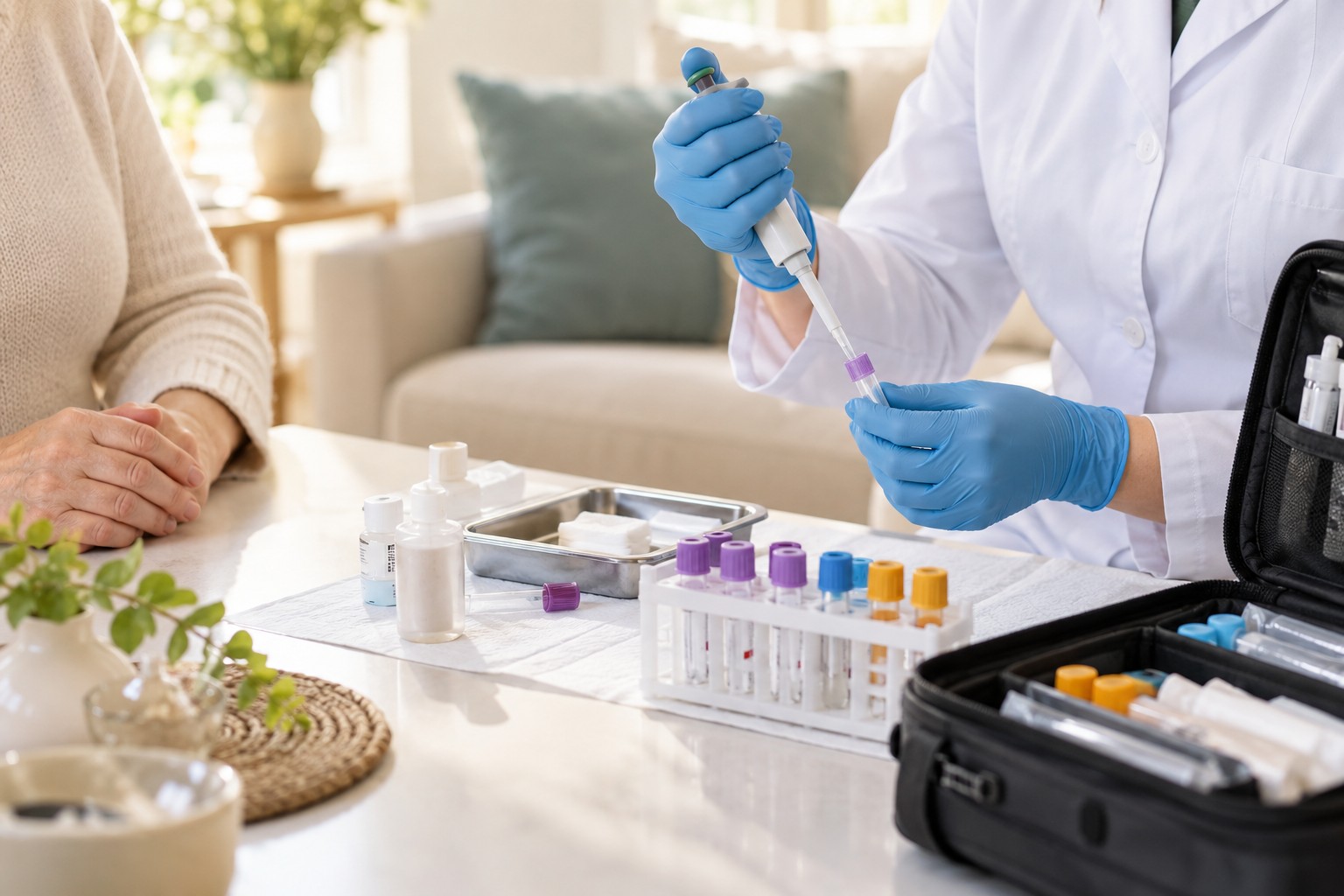
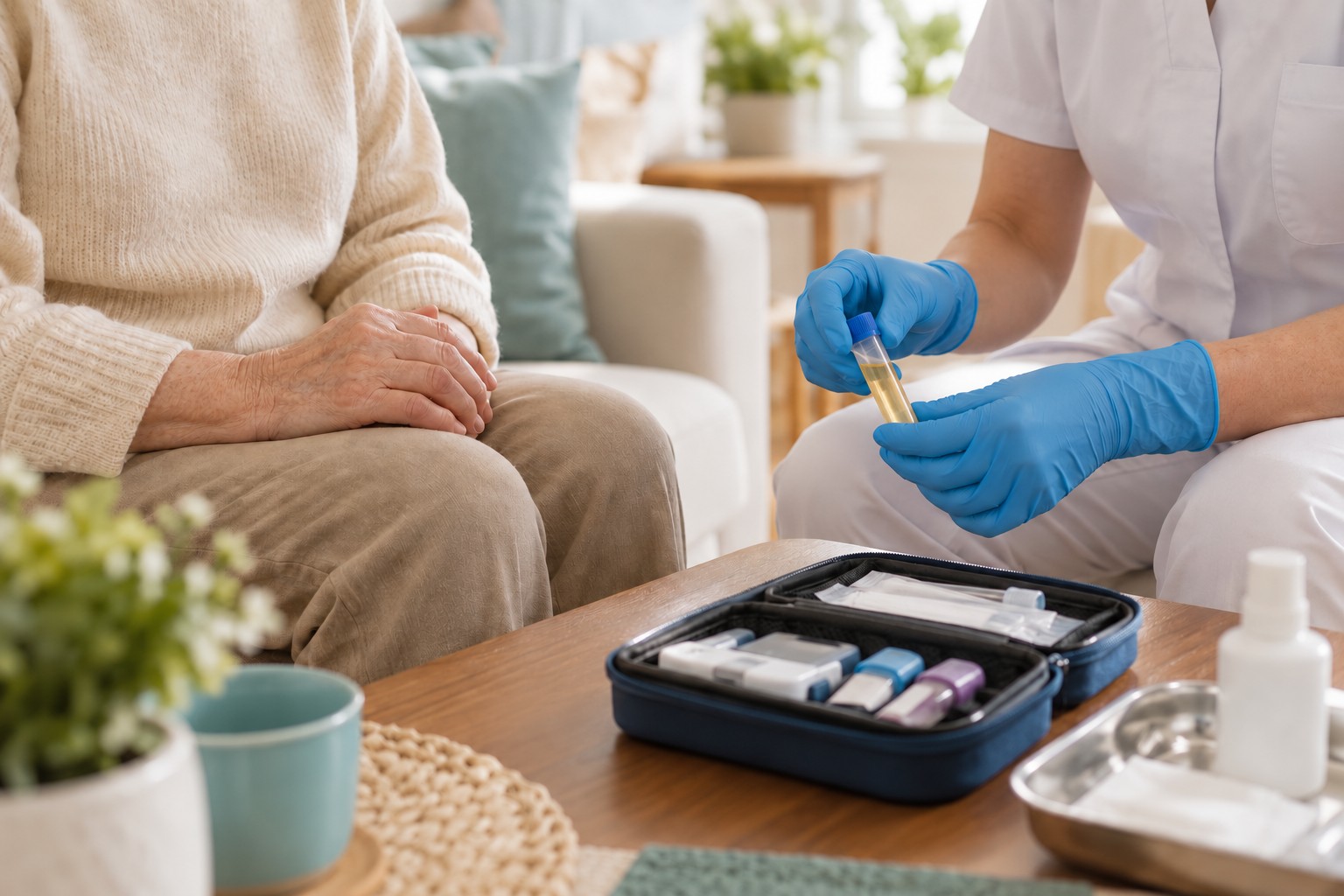
The TSH test is the first and most sensitive test used to detect an underactive or overactive thyroid gland. Your blood sample can be taken at home or at your workplace.
- Sample
- Blood
- Fasting
- Not required
- Turnaround time
- As soon as possible
- Test group
- Hormones
Preparation: No fasting required; similar times of day are preferred for follow-up tests. Take your thyroid medication after giving blood, and report any biotin use.
Insurance: We work with private health insurers. For this test, we obtain the pre-approval and collect your sample once approval is received; we do not charge a co-payment. Insurance and payment
Contents
What is TSH?
TSH (thyroid-stimulating hormone) is secreted by the pituitary gland in the brain and tells the thyroid gland how much hormone it needs to produce. When thyroid hormones in the blood decrease, the pituitary secretes more TSH to stimulate the gland; when the hormones increase, TSH production decreases. Thanks to this feedback loop, TSH responds markedly even to small changes in thyroid hormones.
Because of this sensitivity, TSH is the first-line test for assessing thyroid function and is often sufficient on its own for screening. TSH is a steering signal; it is free T4 that shows how much hormone the gland is actually producing. On the other hand, when the pituitary gland itself is diseased, TSH may not accurately reflect this balance. TSH is measured on a blood sample using an immunological method.
When is the TSH test ordered?
TSH is the first test ordered when symptoms suggest thyroid disease. In people taking thyroid medication, whether the dose is adequate is also monitored largely with TSH; the check after a dose change is usually done a few weeks later. Even without symptoms, the doctor may order a TSH measurement for people with a family history of thyroid disease, people who have received radiation therapy to the neck area and people taking medicines that can affect the thyroid.
- Symptoms of an underactive thyroid, such as weakness, weight gain, feeling cold and constipation
- Symptoms of an overactive thyroid, such as palpitations, weight loss, sweating and hand tremor
- Swelling in the neck, goiter or a thyroid nodule
- Pregnancy planning, pregnancy and infertility investigation
- Dose monitoring in people taking thyroid medication
- Assessment of high cholesterol or menstrual irregularity
How do you prepare for the TSH test?
No fasting is required for TSH. Because the value changes somewhat during the day, giving blood at similar times, preferably in the morning, makes comparison easier, especially for follow-up measurements. If you take thyroid medication, it is common practice to take it after your blood draw unless your doctor tells you otherwise.
Supplements containing biotin (vitamin B7) can make TSH appear falsely low with some measurement methods and create a picture that looks like an overactive thyroid gland. For this reason, if you take them, you may need to pause them before the test after consulting your doctor. Cortisone-type medicines and a period of serious illness can also temporarily affect TSH. The blood sample can be taken quickly by a nurse at your home or workplace.
What does the TSH result mean?
A high TSH usually indicates that the thyroid gland is underactive (hypothyroidism); the pituitary is stimulating the gland more to make up for the insufficient hormone. The most common cause is Hashimoto's thyroiditis, in which the immune system damages the thyroid. If TSH is slightly high and free T4 is normal, this is called subclinical hypothyroidism and does not always require treatment.
A low TSH, on the other hand, most often suggests that the thyroid gland is overactive or that the dose of thyroid medication is too high. Rarely, in pituitary gland problems, TSH may appear low or normal while thyroid hormones are also low; for this reason, free T4 is added when results are abnormal. TSH can naturally decrease, especially in the first months of pregnancy. The reference range can differ by laboratory, age, sex and stage of pregnancy; the laboratory's own range is shown on this page. Your TSH result should be interpreted by your doctor, taking your symptoms and other thyroid tests into account.
Reference range
Unit: µIU/mL- 0.27 - 4.2
This is the value used by our laboratory; it may vary depending on age, sex, the method used and the laboratory. Review your result together with your doctor.
How is TSH (Thyroid-Stimulating Hormone) done at home?
-
01
Book your appointment
Fill in the online form or call us, and let's plan a day and time that suit you together.
-
02
Your blood is drawn at home
Our nurse comes to your address and collects your blood sample using sterile, single-use supplies.
-
03
You receive your result
Your sample is transported to the laboratory under appropriate conditions; your result is sent to you when it is ready.
Frequently asked questions
The information on this page is for general information only; it does not replace diagnosis or treatment. Consult your doctor for decisions about your health.