

The DHEA-SO4 test measures an androgen hormone produced in the adrenal glands; it helps investigate the cause of excess hair growth, acne and irregular periods.
- Sample
- Blood
- Fasting
- Not required
- Turnaround time
- Usually 1–2 business days
- Test group
- Hormones
Preparation: No fasting required; blood is preferably drawn in the morning. Mention any cortisone, hormone medications, and DHEA and biotin supplements.
Insurance: We work with private health insurers. For this test, we obtain the pre-approval and collect your sample once approval is received; we do not charge a co-payment. Insurance and payment
Contents
What is DHEA-SO4?
Dehydroepiandrosterone sulfate (DHEA-SO4 or DHEA-S) is a steroid hormone produced almost entirely in the adrenal glands. It is itself a weak androgen, but in the tissues it can be converted into more potent sex hormones such as testosterone and estrogen. In women, a significant proportion of androgens is supplied this way. It is one of the most abundant steroid hormones in the blood.
Because DHEA-SO4 levels do not fluctuate much during the day, it is considered a reliable marker of androgen production by the adrenal glands. The level rises during puberty, peaks in young adulthood and declines markedly with age. The test is performed on serum using immunological methods, and the result is reported in µg/dL.
When is the DHEA-SO4 test ordered?
This test is usually ordered when there are signs of androgen excess, to distinguish whether the problem originates in the ovaries or in the adrenal glands. It is often evaluated together with tests such as total and free testosterone, prolactin and 17-OH progesterone. It also provides guidance when early or delayed puberty is being investigated in children. In men, it is considered mainly when adrenal gland disease is suspected.
- Increased facial and body hair in women (hirsutism)
- Persistent acne continuing into adulthood, or male-pattern hair loss
- Evaluation of irregular periods, absent periods and polycystic ovary syndrome (PCOS)
- The appearance of masculine features such as a deepening voice or increased muscle mass
- Early pubic or body hair growth, or signs of early puberty, in children
- Suspected adrenal tumor or adrenal insufficiency
How do you prepare for the DHEA-SO4 test?
You do not need to fast for DHEA-SO4. Although this hormone does not fluctuate markedly during the day, a morning blood draw is preferred, because hormones often ordered along with it, such as testosterone and cortisol, are higher in the morning. For women who menstruate, your doctor may recommend one of the first days of your period so that the result is consistent with other hormone tests. Sleeping well the night before the test and avoiding strenuous exercise help the other hormones ordered with it to be interpreted more reliably.
Medications containing cortisone, birth control pills, hormone therapies and DHEA products sold as supplements can change the result significantly; do not stop your medications on your own, but mention all of them when the sample is collected. High-dose biotin supplements can also interfere with immunological measurements. Blood is drawn from a vein in the arm, and a Curavita nurse can perform this procedure at your home or workplace.
What does the DHEA-SO4 result mean?
Values above what is expected for your age and sex suggest that the adrenal glands are producing excess androgens. This may be seen at a mild level in polycystic ovary syndrome, but it can also be caused by conditions such as congenital adrenal hyperplasia or a hormone-secreting mass in the adrenal gland. Marked elevations may require further investigations, including imaging. Mild elevations, on the other hand, often do not indicate a serious disease and can be re-evaluated with a repeat measurement.
Low values may be seen in adrenal insufficiency, pituitary gland disorders or long-term cortisone use; the decline in older age is mostly natural. When adrenal insufficiency is suspected, the diagnosis is supported by tests such as cortisol and ACTH. For this test, reference ranges vary very widely by age and sex and may also differ from one laboratory to another; the information from the laboratory that performs the test on this point is provided on this page. This result does not establish a diagnosis on its own and needs to be interpreted by your doctor together with your symptoms and other hormone tests.
Expected result
Unit: µg/dL- Varies by age and sex
This is the value used by our laboratory; it may vary depending on age, sex, the method used and the laboratory. Review your result together with your doctor.
How is DHEA-SO4 (DHEA-S) done at home?
-
01
Book your appointment
Fill in the online form or call us, and let's plan a day and time that suit you together.
-
02
Your blood is drawn at home
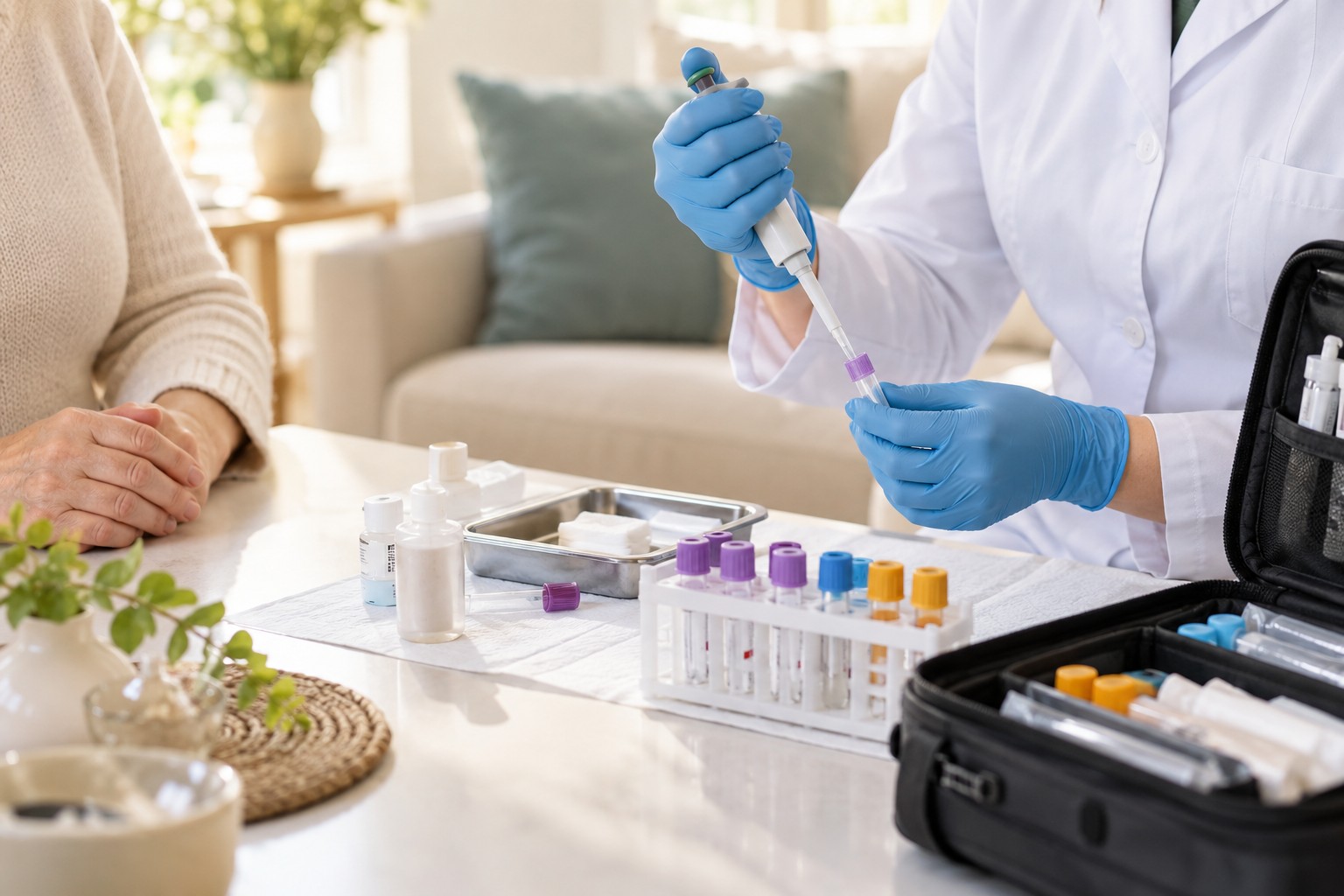
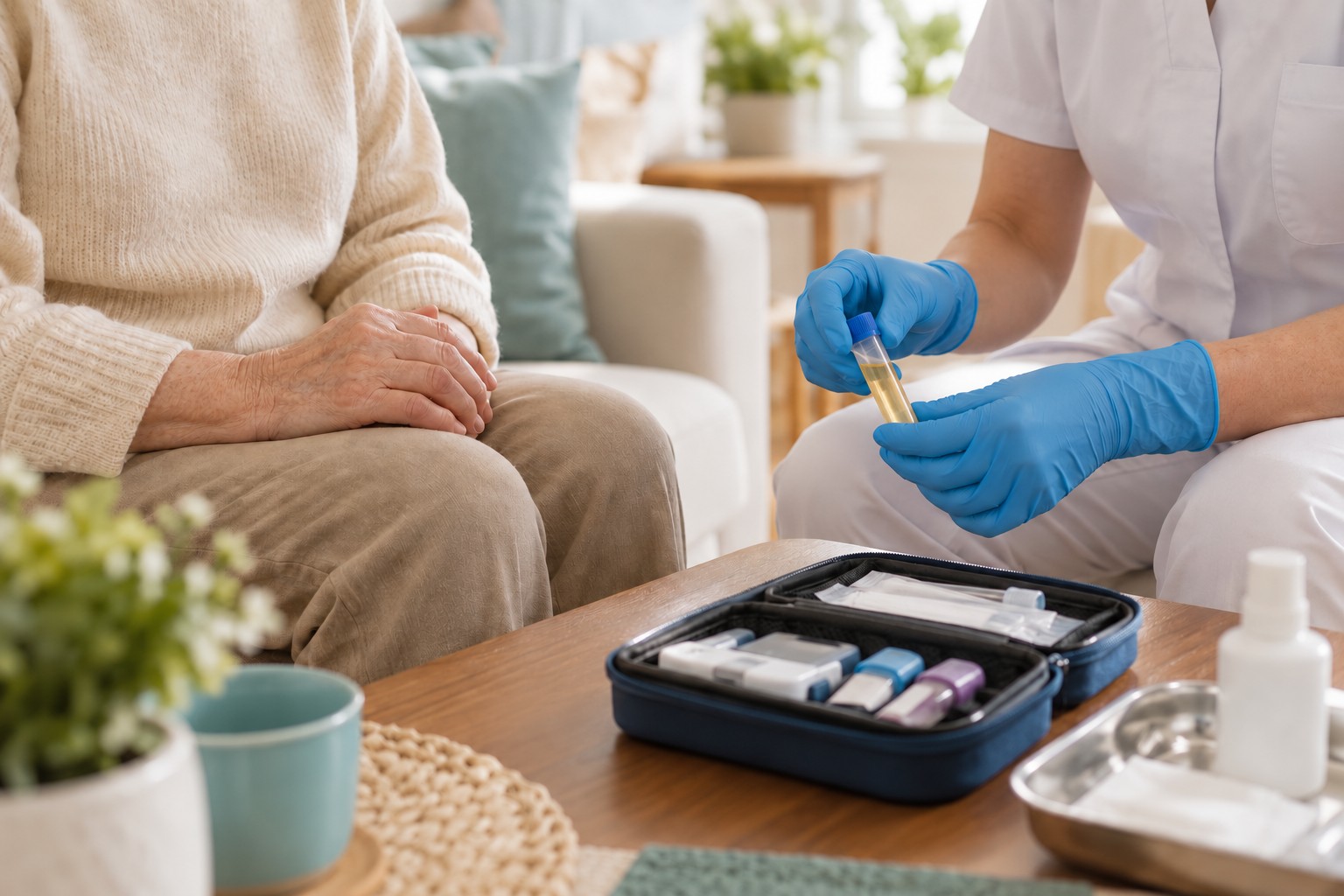
Our nurse comes to your address and collects your blood sample using sterile, single-use supplies.
-
03
You receive your result
Your sample is transported to the laboratory under appropriate conditions; your result is sent to you when it is ready.
Frequently asked questions
The information on this page is for general information only; it does not replace diagnosis or treatment. Consult your doctor for decisions about your health.