

The FSH test measures the pituitary hormone that regulates ovarian and testicular function; it is used in the evaluation of infertility, irregular periods and menopause.
- Sample
- Blood
- Fasting
- Not required
- Turnaround time
- Usually 1–2 business days
- Test group
- Hormones
Preparation: No fasting required. In women, blood is usually drawn on day 2–3 of the period; in men, the day does not matter. Mention any biotin use.
Insurance: We work with private health insurers. For this test, we obtain the pre-approval and collect your sample once approval is received; we do not charge a co-payment. Insurance and payment
Contents
What is FSH?
Follicle-stimulating hormone (FSH) is secreted by the pituitary gland in the brain and is one of the key hormones that control the reproductive system. In women, in each cycle it stimulates the growth of the follicles in the ovary, the small sacs that contain the egg cell, as well as estradiol production. In men, it is involved in maintaining sperm production in the testes.
FSH secretion is triggered by signals from the hypothalamus and held in check by hormones such as estradiol and inhibin from the ovaries or testes. Because of this feedback, the pituitary secretes more FSH when the ovaries or testes are not working adequately. In women, its level changes throughout the cycle and rises briefly together with LH at ovulation. The test is measured on serum using an immunological method, and the result is reported in mIU/mL.
When is the FSH test ordered?
FSH is one of the most frequently ordered hormone tests for evaluating complaints related to reproductive health and is usually interpreted together with LH, estradiol and prolactin. It helps distinguish whether the problem originates in the ovaries or testes themselves, or in the pituitary and hypothalamus that control them. It is also one of the tests used when puberty starts early or late in children.
- Irregular periods, absent periods or longer intervals between periods
- Difficulty getting pregnant and assessment of ovarian reserve
- Menopausal symptoms such as hot flashes and night sweats, or periods stopping before age 40
- Low sperm count, small testes or low testosterone in men
- Signs of early or delayed puberty in children
- Suspected pituitary gland disease
How do you prepare for the FSH test?
You do not need to fast for FSH. In women who menstruate, the test is usually done on day 2 or 3 of the cycle; the day bleeding starts counts as day 1. A value obtained in this early phase gives more reliable information about ovarian reserve, which is why estradiol is often measured from the same blood sample. In women with irregular periods or no periods at all, and in men, the test can be done on any day; morning hours are still preferred.
Birth control pills, hormone therapies, testosterone and some fertility medications change FSH levels; consult your doctor before stopping any medication, and mention them when the sample is collected. High-dose supplements containing biotin (vitamin B7) can interfere with the measurement method and lead to inaccurate results. Blood is drawn from a vein in the arm; if you book an appointment when your period starts, a Curavita nurse can come to your home or workplace on day 2 or 3.
What does the FSH result mean?
In women, a high FSH in the first days of the period suggests that the ovaries are responding more weakly to stimulation from the pituitary and that ovarian reserve may be diminished. FSH rises markedly in menopause and in premature ovarian insufficiency. In men, a high value may point to a problem with sperm production in the testes; possible causes include Klinefelter syndrome, testicular inflammation following mumps, and chemotherapy.
Low FSH, on the other hand, may be seen with problems originating in the hypothalamus or pituitary gland, excessive weight loss, intense exercise, high prolactin, pregnancy or the use of hormonal medications. Because FSH can fluctuate greatly from month to month during the transition to menopause, a single result may not be enough to reach a firm conclusion. Reference ranges vary by laboratory, age, sex and cycle phase; the range of the laboratory that performs the test is shown on this page. Your FSH result needs to be evaluated by your doctor together with your symptoms and other tests such as LH and estradiol.
Reference range
Unit: mIU/mL- Male: 1.5 - 12.4
- Female: depending on the cycle phase
This is the value used by our laboratory; it may vary depending on age, sex, the method used and the laboratory. Review your result together with your doctor.
How is FSH (Follicle-Stimulating Hormone) done at home?
-
01
Book your appointment
Fill in the online form or call us, and let's plan a day and time that suit you together.
-
02
Your blood is drawn at home
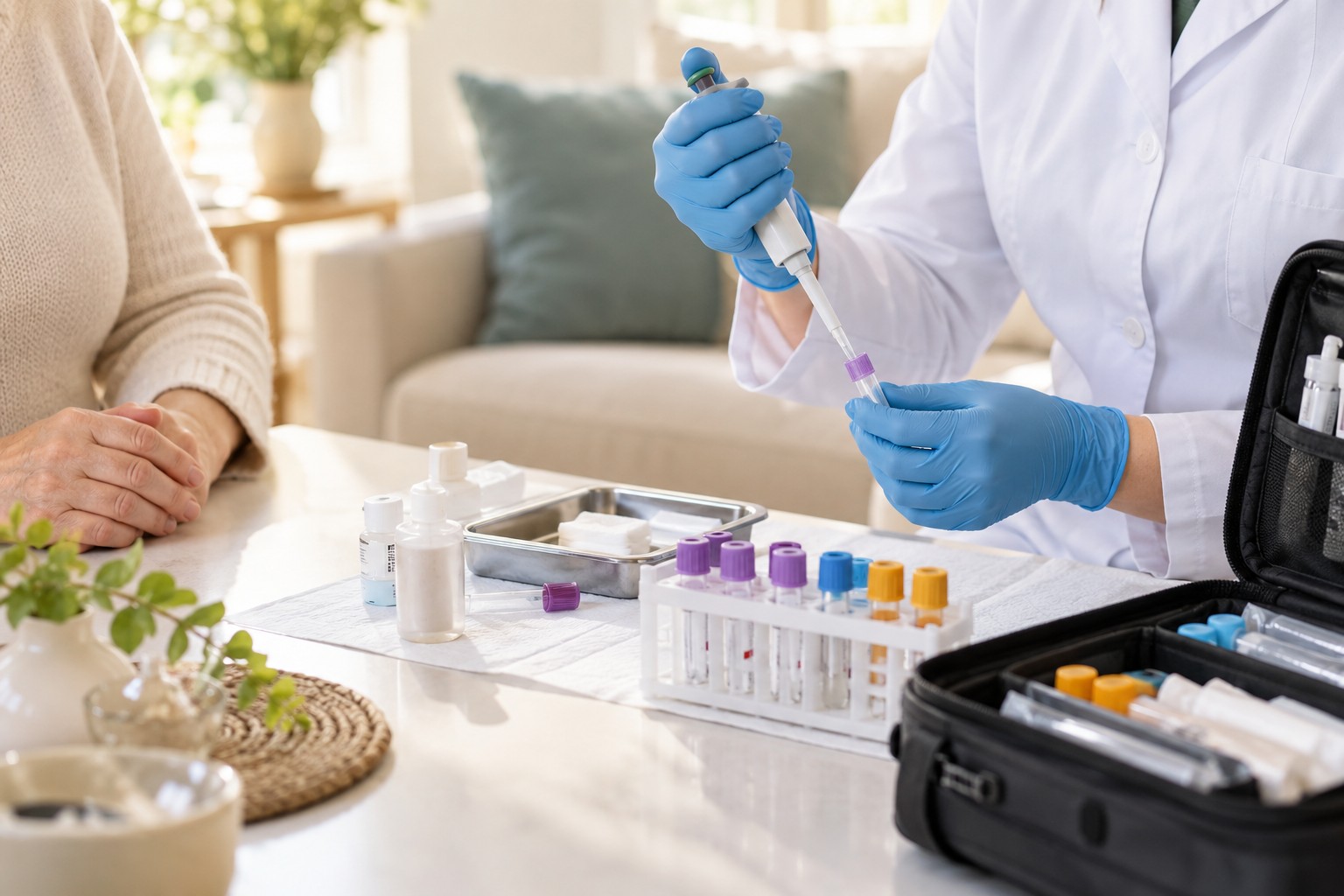
Our nurse comes to your address and collects your blood sample using sterile, single-use supplies.
-
03
You receive your result
Your sample is transported to the laboratory under appropriate conditions; your result is sent to you when it is ready.
Frequently asked questions
The information on this page is for general information only; it does not replace diagnosis or treatment. Consult your doctor for decisions about your health.