


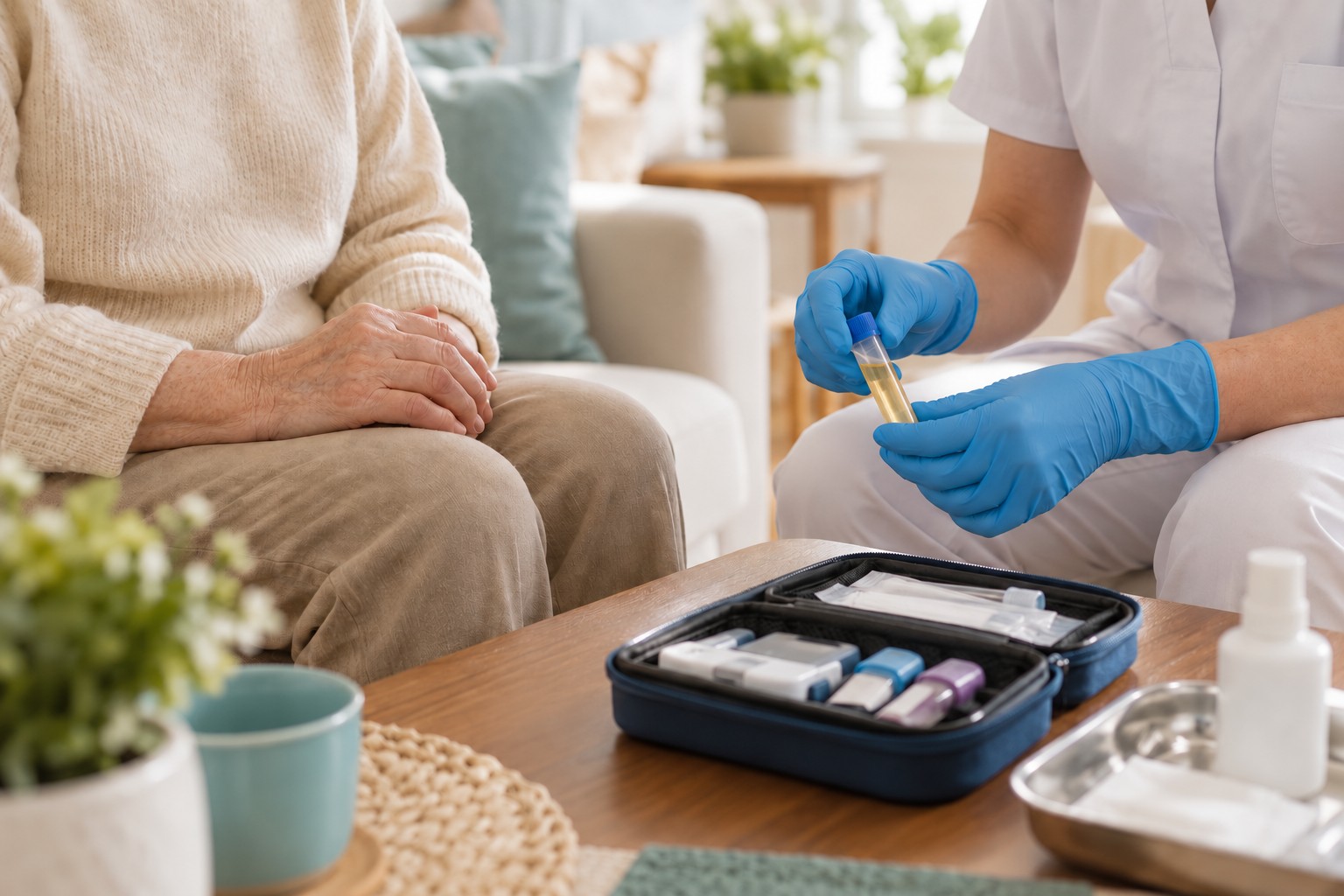
Anti-HBc IgM is the antibody that indicates a recently started hepatitis B infection. It is used to look for acute hepatitis in cases of jaundice, fatigue or elevated liver enzymes.
- Sample
- Blood
- Fasting
- Not required
- Turnaround time
- Usually 1–2 business days
- Test group
- Serology and Infection (ELISA)
Preparation: You do not need to fast before the test. Tell your doctor when your symptoms started and when any possible blood or sexual contact occurred.
Insurance: We work with private health insurers. For this test, we obtain the pre-approval and collect your sample once approval is received; we do not charge a co-payment. Insurance and payment
Contents
What is anti-HBc IgM?
Anti-HBc IgM is a test that measures the IgM-class antibodies that the immune system produces first against the core antigen of the hepatitis B virus. These antibodies usually appear around the time symptoms begin and are considered one of the most reliable signs of acute infection. In most people, they decrease and disappear within about six months, giving way to lasting IgG-class antibodies.
Hepatitis B can be transmitted through blood, sexual contact, shared sharp or piercing instruments, or from mother to baby during birth. In acute infection, there can be a short window period in which HBsAg has disappeared but anti-HBs antibodies have not yet formed, and during this interval anti-HBc IgM may be the only marker that reveals the diagnosis. The laboratory usually reports the result as positive or negative; ELISA or similar antibody detection methods are used for the analysis.
When is an anti-HBc IgM test ordered?
When sudden-onset inflammation of the liver is suspected, anti-HBc IgM is usually one of the basic tests ordered at the same time as HBsAg. The test also helps to determine whether a newly positive HBsAg result reflects an acute infection or one that has been present for a long time. The information obtained also guides the doctor in planning the measures needed to protect close contacts.
- Sudden-onset fatigue, loss of appetite, nausea and jaundice
- Dark urine, pale stools or pain in the upper right abdomen
- Marked and unexplained elevation of liver enzymes
- Symptoms developing after blood or sexual contact with someone who carries the hepatitis B virus
- Distinguishing whether a first positive HBsAg result is acute or chronic
- Suspected sudden flare-up during the course of chronic hepatitis B
How do I prepare for an anti-HBc IgM test?
For anti-HBc IgM, you do not need to fast or wait until the morning. You can continue taking your medications; however, because medications, herbal products and supplements that can affect the liver are important for your doctor's assessment, report all of them. Knowing when your complaints started and the date of any possible contact helps link the result to the right time period.
When acute hepatitis is suspected, your doctor usually orders this test at the same time as liver enzymes and other hepatitis tests. Blood is taken from a vein in the arm using the standard method; if fatigue makes it hard for you to go out, your blood sample can be taken by a nurse at your home. If there are symptoms such as severe vomiting, changes in consciousness or bleeding, seek emergency medical care without waiting for the test.
What does an anti-HBc IgM result mean?
A positive result usually indicates an acute hepatitis B infection that started within the last few months. Less commonly, low-level IgM positivity can also be seen in people who have carried hepatitis B for a long time, during periods when the disease flares up. Most cases of acute hepatitis B acquired in adulthood resolve on their own; during this process, your doctor monitors your liver tests and your HBsAg status to see whether the infection becomes chronic.
A negative result greatly reduces the likelihood of an acute hepatitis B infection; however, it does not rule out a past or chronic infection. Therefore, if IgM is negative while HBsAg or total anti-HBc is positive, the picture may be related to an older infection. Because laboratories use different test kits and cut-off values, interpretation can vary, and the person's age and immune status also affect the assessment; this laboratory's reference information is also shown separately on this page. The meaning of the result should be determined only by your doctor, together with your complaints and the other accompanying tests.
Expected result
- Negative
This is the value used by our laboratory; it may vary depending on age, sex, the method used and the laboratory. Review your result together with your doctor.
How is Anti-HBc IgM (Hepatitis B Core IgM) done at home?
-
01
Book your appointment
Fill in the online form or call us, and let's plan a day and time that suit you together.
-
02
Your blood is drawn at home
Our nurse comes to your address and collects your blood sample using sterile, single-use supplies.
-
03
You receive your result
Your sample is transported to the laboratory under appropriate conditions; your result is sent to you when it is ready.
Frequently asked questions
The information on this page is for general information only; it does not replace diagnosis or treatment. Consult your doctor for decisions about your health.